Dr. Raghu Athré / Facial Lifting Techniques
Endoscopic Deep Plane Midface Lift Scalp Access. Deep Release. Vertical Lift.
For patients with descended cheeks, good skin elasticity and limited neck aging, I can lift deeper facial tissues without an incision in front of the ear.
Through incisions concealed in the temporal scalp, I use a camera to enter the deep plane, release retaining ligaments and reposition the cheek tissues upward. Unlike MACS suspension, this operation releases the deeper attachments rather than relying on SMAS suspension sutures.
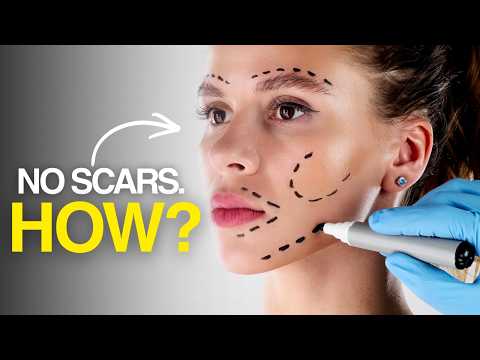
WATCH DR. ATHRÉ / Endoscopic Deep Plane Facelift: The Facelift Without a Scar in Front of Your Ear
Not scarless. The scars are within the hair-bearing scalp, not in front of the ear.
01 / UNDERSTANDING THE APPROACH
Scalp access lets me release the deep attachments of the cheek.
The word endoscopic describes the way I reach the tissues: through incisions within the hair-bearing scalp with a small camera. Deep plane describes where I work beneath the SMAS. I release selected retaining ligaments to allow the descended cheek tissues to move.
This is a different operation from a MACS lift. In MACS surgery, a short ear incision allows SMAS sutures to suspend the cheek. Endoscopic deep plane surgery uses scalp access and deeper release to reposition the midface without routine trimming of excess facial skin.
Hidden scalp incisions
The access points sit within the hair-bearing temporal scalp instead of in front of the ear.
Deep tissue release
I enter the deep plane and release selected retaining ligaments so the deeper facial tissues can move.
Vertical repositioning
The cheek and midface are elevated upward rather than relying on a backward pull toward the ears.
02 / PATIENT SELECTION
The right patient matters more than the incision.
This is the part I want patients to understand before they become attached to the idea of a facelift without an incision near the ear. The technique is useful for a specific pattern of facial aging. It is not a substitute for every open facelift.
I examine the cheek position, skin elasticity, jawline and neck. An operation that avoids a visible incision is not a good choice if it leaves the main problem untreated.
When I consider an endoscopic approach
Descended cheeks. Good skin quality.
- Cheek and midface tissue has moved downward.
- Skin retains enough elasticity to adapt to the repositioned tissues.
- Only mild lower-face or jawline changes are present.
- The neck contour is already satisfactory.
When I recommend another approach
Loose skin. Significant neck or jowl concerns.
- There is substantial excess skin that needs removal.
- Jowls or lower-face laxity are the main concern.
- The neck has significant looseness or muscle banding.
- Skin elasticity is insufficient for an isolated endoscopic lift.
When the jawline and neck require greater correction, I evaluate an open deep plane facelift and appropriate neck surgery instead.
03 / THE SURGICAL TECHNIQUE
Four steps of endoscopic deep plane cheek lifting.
The essential steps follow the same anatomical principles I use in deep plane surgery. The access is different, and the operation focuses on the structures that can be treated through the scalp.
Enter through the scalp
I use an incision within the temporal scalp, usually approximately 4.5 to 5 cm in my described approach. The incision is concealed by hair, but it still creates a scar.
See the deeper anatomy
A small camera and specialized instruments allow me to work through this access and reach the appropriate facial tissue planes.
Free the descended tissue
I enter the deep plane and release the selected retaining ligaments. This lets the cheek tissue move rather than relying on tension alone.
Lift the midface upward
The deeper cheek and midface tissues are secured in a higher position. The planned change is structural, not simply a tighter skin surface.
Important: An endoscopic facelift is not the same as an endoscopic brow lift. The brow lift addresses the forehead and brow. The procedure described here is directed at the deeper cheek and midface. The two can be combined when the examination supports treating both regions.
04 / CHOOSING THE RIGHT APPROACH
Which facelift technique actually fits the anatomy?
Midface identifies the cheek region. MACS describes SMAS suspension through an ear incision. Endoscopic deep plane describes scalp access, ligament release and vertical tissue repositioning. Open deep plane lifting adds broader access when skin, jowls and neck require correction.
I evaluate where the tissues have descended, how much loose skin is present, and whether the neck needs treatment. Choosing the smallest incision is never the first goal.
05 / SCARS AND RECOVERY
Hidden scars do not mean a smaller recovery.
The term "scarless facelift" is misleading. The scalp incisions are concealed, not absent. I also want patients to understand that deep tissue release is still surgery, even when the incisions are away from the ear.
Recovery depends on the extent of the lift, any additional procedures and your own healing. I discuss the expected timeline after examining you and designing the operation.
Swelling and aftercare
Expect swelling, bruising and temporary tightness or altered sensation. Incisions and the lifted tissues need protection while early healing begins.
Initial social recovery
The practice generally advises allowing approximately two weeks for initial recovery. Returning to work and exercise follows your specific postoperative instructions.
Continued settling
Residual swelling and changes in sensation gradually improve as the tissues heal. I assess the final contour over follow-up visits, not on a fixed early date.
Review the practice's postoperative healing guidance and information for traveling patients when planning surgery.
06 / LONGEVITY AND EVIDENCE
What is known about long-term results?
Patients ask whether an endoscopic facelift lasts as long as an open deep plane facelift. Both approaches can release retaining ligaments and reposition the same deeper facial tissue layer. That gives me a sound anatomical reason to expect lasting improvement.
But there is not yet strong direct, long-term, head-to-head evidence proving that the two approaches last the same amount of time. No facelift stops facial aging. I explain what the existing research shows and where the comparison remains uncertain.
Published studies have reported outcomes after endoscopic deep plane and transtemporal lifting. These studies help explain the technique, but they do not replace a direct comparison of long-term durability.
Read the 2025 classified endoscopic deep plane facelift study and the transtemporal endoscopic deep plane facelift study.
07 / ENDOSCOPIC FACELIFT COST
What does an endoscopic facelift cost in Houston?
The practice lists an endoscopic facelift starting at $37,500. That starting amount does not establish that every additional brow, eyelid, fat-transfer or neck procedure is included.
Endoscopic facelift surgery is typically planned under general anesthesia. Facility and anesthesia fees are additional. I provide a specific surgical estimate after deciding what your anatomy requires.
Review our published pricing structure for the current figures and what the estimate includes.
- Estimated facility fee$2,750
- Local anesthesia estimate$1,500
- General anesthesia estimate$2,500
These are the currently published estimates for the endoscopic facelift. Facility and applicable anesthesia fees are additional. Local and general anesthesia are alternative options, not combined charges. Your final quote follows consultation.
08 / FREQUENTLY ASKED QUESTIONS
Questions to ask before choosing an endoscopic facelift.
How is endoscopic deep plane lifting different from a MACS lift?
Both target cheek descent. MACS uses short incisions around the ear, a limited skin flap and SMAS suspension sutures. My endoscopic procedure uses incisions in the temporal scalp, a camera, deep plane ligament release and vertical repositioning. An endoscopic lift does not routinely remove excess skin. Read our MACS Midface Lift page for the other method.
Is an endoscopic facelift truly scarless?
No. The incisions are placed within the hair-bearing scalp instead of in front of the ear. They heal as scars even when they are difficult to see. Avoiding the ear incision is not a reason to choose the operation if your skin and neck require another approach.
Is this a real deep plane facelift?
Yes. In the approach I describe, I enter the deep plane, release selected facial retaining ligaments and reposition deeper tissues. Endoscopic refers to the camera-assisted access, not a more superficial lifting layer. A published series of endoscopic deep plane facelifts discusses patient-specific technique selection.
Where are the incisions located?
I describe a temporal scalp incision of approximately 4.5 to 5 cm within the hair-bearing region. The exact incision plan follows your anatomy. An isolated endoscopic midface lift does not require the standard incision in front of the ear.
Does an endoscopic facelift improve the neck?
No. This approach is focused on the cheek and midface. It does not directly correct substantial loose neck skin or neck muscle banding. When the neck is a major concern, I evaluate a deep plane face and neck lift.
What happens if I have excess facial skin?
Endoscopic deep plane lifting repositions deeper tissues without trimming significant excess skin. Substantial skin laxity, limited elasticity or significant lower-face looseness are reasons to consider an open facelift technique instead.
How is this different from a MACS midface lift?
Midface describes the cheek region. The MACS approach described on our Midface Lift page uses a different access and suspension method. An endoscopic deep plane lift uses scalp access, camera-assisted dissection and release of deeper retaining ligaments.
Is this the same as a ponytail facelift?
"Ponytail facelift" is a name often used for endoscopic vertical-vector facial lifting. The branded Ponytail Lift is associated with Dr. Chia Chi Kao. I describe the operation I perform as an endoscopic deep plane facelift rather than using another surgeon's procedure name.
Is an endoscopic facelift the same as an endoscopic brow lift?
No. An endoscopic brow lift elevates the brow and forehead tissues. The endoscopic deep plane facelift described here repositions the cheeks and midface. Treating both regions is a separate planning decision.
Does an endoscopic facelift last as long as an open facelift?
They share important deep-plane mechanics, but direct long-term comparative research has not proved equal durability. Published endoscopic lifting series, including a 140-patient transtemporal study, report surgical outcomes without settling this long-term comparison. Facial aging continues after either operation.
What is the recovery and what are the risks?
Allow approximately two weeks for initial healing, with continued settling afterward. Risks include bleeding, infection, asymmetry, nerve injury, changes in sensation, scar or hairline concerns, and dissatisfaction requiring further treatment. The exact risks depend on your health and surgical plan. Review our healing guidance and discuss your individual risks during consultation.
Where can I see actual patient results?
Our facelift gallery contains real patient outcomes from several different surgical techniques. Read each case's procedure details before attributing a result to endoscopic lifting. Not every facelift shown is endoscopic.
START WITH YOUR ANATOMY
The right facelift is the one that corrects the right problem.
If you are considering an endoscopic facelift because you want to avoid a scar in front of your ear, I understand that concern. I will examine your cheek, jawline, neck and skin to determine whether this approach can actually deliver the result you want.
Let's Talk About Your Goals
Every face is different and every surgical decision should begin with understanding yours.
During your consultation, Dr. Raghu Athré will listen to your concerns, evaluate your facial anatomy and explain which options will help you achieve your goals.
You'll have an opportunity to ask questions, understand what's realistically possible and make an informed decision about your care.
Call 281-557-3223 to schedule an in-person or virtual consultation, or complete the form and our team will contact you.