
Chin Augmentation Before & After Results
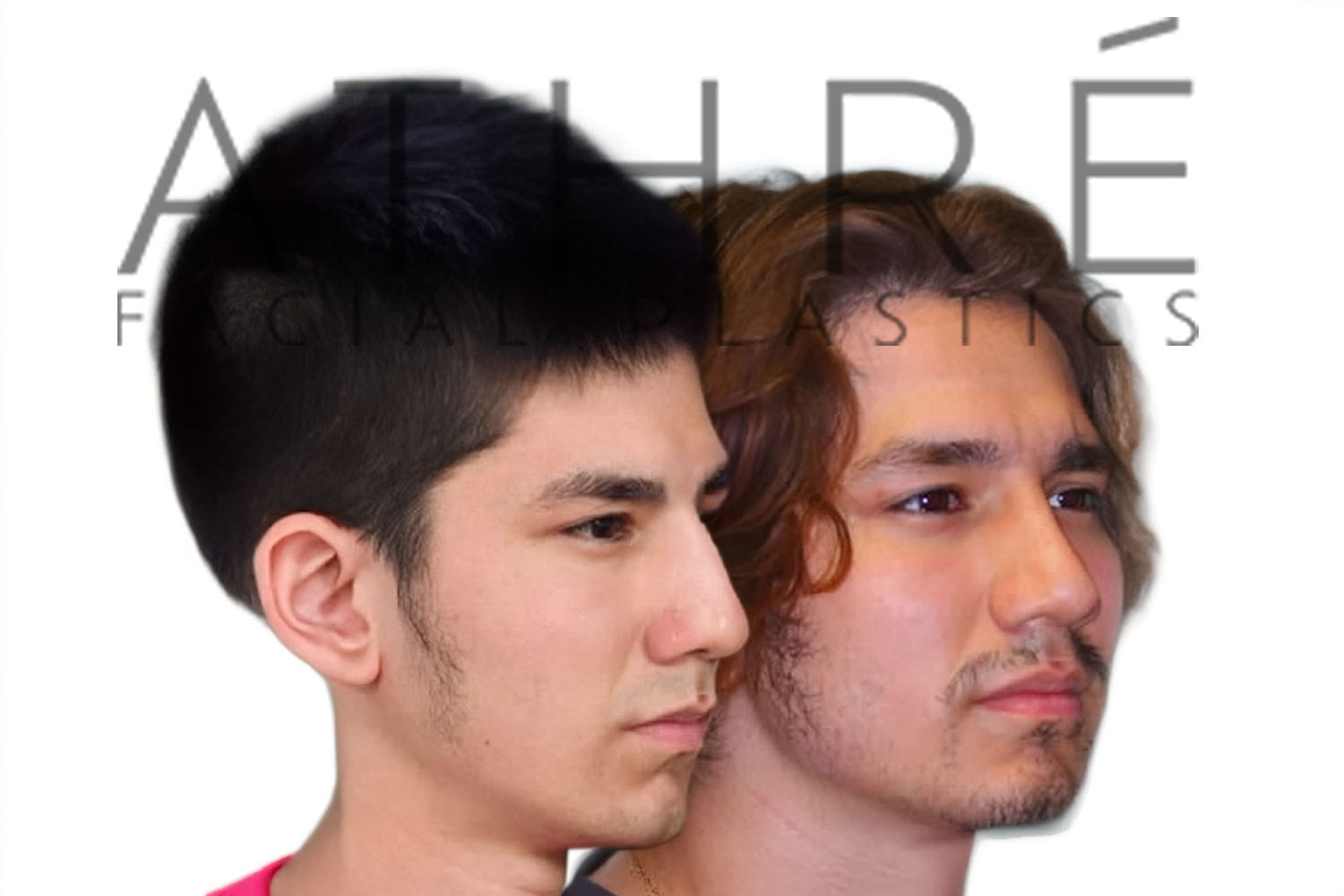
When people examine chin augmentation before and after photos, they usually look at how much farther forward the chin projects.
But the chin is only one part of what I'm evaluating.
A small change in chin projection can change the balance of the entire facial profile.
It's Not About Making the Chin Bigger
The chin helps define the relationship between the nose, lips, jawline and neck. When it sits too far back, the nose may appear more prominent, and the lower face can lack definition. Bringing the chin forward can improve those proportions without changing the other features.
I don't believe every patient needs a stronger or more prominent chin. Some faces need only a subtle adjustment, while others benefit from a more noticeable change in projection.
What matters is whether the result creates better balance. The chin should complement the person's natural facial structure rather than become the feature that attracts all the attention.









Chin Augmentation Begins With Facial Proportions
A recessed chin can affect the appearance of the entire facial profile. But not every patient with a small chin needs the same degree of augmentation.
Some patients need only a subtle increase in projection. Others have a chin that appears small in relation to a prominent nose or a less defined jawline. In certain patients, the concern involves the underlying jaw structure rather than chin projection alone.
That is why I evaluate the entire face before recommending chin augmentation.
I study the relationship between the nose, lips, chin and neck from the side. From the front, I look at chin width, shape and symmetry. A chin that looks balanced in profile also needs to look natural from every other angle.
For patients who need additional projection, a carefully selected silicone chin implant can provide structural enhancement. But an implant isn't appropriate for every anatomical concern. Some patients may benefit from a different approach, such as sliding genioplasty, while significant jaw or bite problems may require a separate evaluation.
The relationship between the nose and chin is particularly important. A recessed chin can make the nose appear larger than it actually is. This is one reason I sometimes combine chin augmentation with rhinoplasty.
I explain this relationship further in What Makes a Balanced Facial Profile?. The objective isn't to make every feature more prominent. It's to determine which changes will improve the face as a whole.
What to Look for in Chin Augmentation Before and After Photos
When evaluating chin augmentation results, start with the profile.
Look at the relationship between the nose, lips and chin. Has the lower face gained definition? Does the chin appear more proportional to the other features? Has the transition into the neck improved?
Then look at the frontal photographs.
The chin should complement the natural width and shape of the jaw. Excessive projection or an implant that is too wide can create an unnatural appearance, even if the profile looks stronger.
I also examine the area beneath the lower lip. The transition into the chin should appear natural rather than creating the impression that a separate structure has been added to the face.
Several patients in this gallery underwent chin augmentation alongside rhinoplasty. Their results reflect changes to both features, so it's important to consider the complete surgical plan rather than attributing every improvement to the chin implant.
The timing of the photographs also matters. Early swelling can temporarily change chin definition and projection. As healing progresses, the surrounding tissues settle and the final contour becomes easier to evaluate. You can learn more about recovery in our post-operative healing resources.
What I'm looking for isn't the largest possible change. It's whether the chin now belongs more naturally within the patient's overall facial proportions.
A successful chin augmentation should improve facial balance without making the chin the center of attention.
FREQUENTLY ASKED
Chin Augmentation Before and After FAQs
Understand chin projection, facial balance, healing, and what to look for when comparing results.
What should I look for in chin augmentation before and after photos?
Start with the profile and look at how the chin relates to the nose, lips and jawline. I also examine the frontal view to determine whether the chin's width and contour remain appropriate for the face. Published research on chin position in facial profile analysis describes several methods for evaluating chin projection and surrounding facial relationships. These measurements are useful, but I don't treat them as a universal formula for an attractive face. The goal is a result that makes sense for the individual patient.
Why can the nose look smaller after chin augmentation?
The appearance of the nose depends partly on its relationship with the chin. When the chin sits relatively far back, the nose may appear more prominent in profile. Increasing chin projection can improve that relationship even without changing the nose itself. A study examining comprehensive facial profile planning emphasizes evaluating multiple facial structures together. I want to understand which features are contributing to the imbalance before recommending surgery.
Why do some patients have chin augmentation and rhinoplasty together?
Some patients have concerns involving both nasal shape and chin projection. In those situations, changing only one feature may not fully address the facial profile. A study evaluating chin projection in rhinoplasty patients illustrates why chin position deserves consideration during nasal surgery planning. Several patients in this gallery underwent both procedures, so their results reflect combined changes. That doesn't mean every rhinoplasty patient needs chin augmentation. If the chin already has appropriate projection, I would not recommend increasing it unnecessarily.
Can chin augmentation improve the jawline and neck without a neck lift?
It can improve the appearance of the lower facial profile when insufficient chin projection contributes to poor definition. However, a chin implant does not remove excess neck skin, correct significant jowling or directly reposition the deeper tissues of the neck. A clinical review of chin augmentation evaluation emphasizes assessing facial proportions and the relationship between the chin and neck. I determine whether the patient's concern comes from chin structure, aging changes in the neck or both before recommending treatment.
How do you decide how much chin projection a patient needs?
I evaluate the chin in relation to the nose, lips, lower facial height and overall jaw structure. Some patients need only a subtle increase in projection, while others may benefit from a more noticeable correction. The implant's width and contour are also important because the chin needs to look appropriate from the front as well as the side. A review of clinical methods for evaluating chin projection describes several anatomical reference points used in surgical planning. I use those measurements to guide judgment rather than applying the same projection to every patient.
What is the difference between a chin implant and sliding genioplasty?
A chin implant increases projection by placing a shaped implant over the existing chin bone. Sliding genioplasty involves surgically repositioning part of the chin bone itself. Both can improve chin projection, but they are not interchangeable for every patient. A 2025 systematic review comparing chin implants and osseous genioplasty found that both techniques can provide effective augmentation, although their complication profiles and anatomical applications differ. The appropriate approach depends on the patient's skeletal structure, degree of correction needed and whether other jaw concerns are present.
Can chin filler create the same result as a chin implant?
Filler can improve chin projection and contour in selected patients, but it is not identical to a structural implant. Injectable filler provides temporary volume, while a chin implant is designed to produce long-lasting augmentation. A 2026 systematic review comparing surgical and nonsurgical chin augmentation found favorable outcomes with both approaches while identifying differences in durability, complications and the quality of available evidence. I consider the amount of correction required and whether a temporary or surgical approach makes more sense for the individual patient.
How long after chin augmentation should before and after photos be taken?
There is no single date when every patient's result has completely settled. Early photographs can show increased chin projection, but swelling and changes in the surrounding soft tissues can affect the appearance during recovery. The chin may initially look larger or less defined than it will after healing. Recovery also varies depending on whether the patient underwent an implant alone or combined surgery such as rhinoplasty. I want patients to consider the timing of each photograph rather than assuming an early postoperative appearance represents the final contour.
Will a chin augmentation scar be visible in before and after photos?
Not necessarily. Chin implants can be placed through an incision beneath the chin or an incision inside the mouth. An intraoral incision does not create an external skin scar, while a submental incision leaves a scar whose visibility depends on its placement and healing. A systematic review of chin implant materials and surgical approaches examined complications associated with different techniques. Standard facial photographs may not reveal where an incision was made, so I discuss incision placement separately during the consultation.
How long do chin implants last, and can they require revision surgery?
Chin implants are designed to provide long-lasting augmentation and do not require routine replacement on a fixed schedule. However, potential concerns include infection, implant displacement, asymmetry, changes in sensation, bone remodeling and dissatisfaction with the size or contour. A systematic review of nearly 4,900 chin augmentation patients examined outcomes and complications across several techniques. Another review focused on chin implant complications evaluated issues that may require revision or removal. I discuss these possibilities before surgery because long-term success involves more than the appearance shown in a photograph.