Patients sometimes come into my office very focused on one feature.
“My nose is too big.”
“My chin is too small.”
“I don’t like my profile.”
I listen to that because what you notice about your own face matters. But then I take a step back and look at the face as a whole.
Sometimes the feature you are focused on really is the primary issue. Sometimes it isn’t.
A nose can appear more prominent because the chin is relatively recessed. A chin can look different because of its relationship with the lips, jawline and neck. As we age, changes in the lower face and neck can alter those relationships again.
That is what facial balance means to me. It is not about making every feature a certain size or trying to fit your face into a mathematical formula. It is about understanding how your features relate to one another.
FACIAL PROPORTION
A Balanced Profile Is a Relationship, Not a Measurement
There are measurements I use when I analyze a face. Facial thirds, angles, projection and proportions can all give me useful information.
But I don’t believe there is one equation for an attractive face.
Men and women are different. Facial structures vary between families and ethnic backgrounds. A feature that looks completely natural and balanced on one person could look out of place on somebody else.
This is why I don’t start a consultation by asking how closely your face matches an ideal set of measurements. I start by looking at you.
I look at the forehead, nose, lips, chin, jawline and neck. I look at the front of the face and then the profile. I am interested in where the eye goes first and whether one feature is dominating the others.
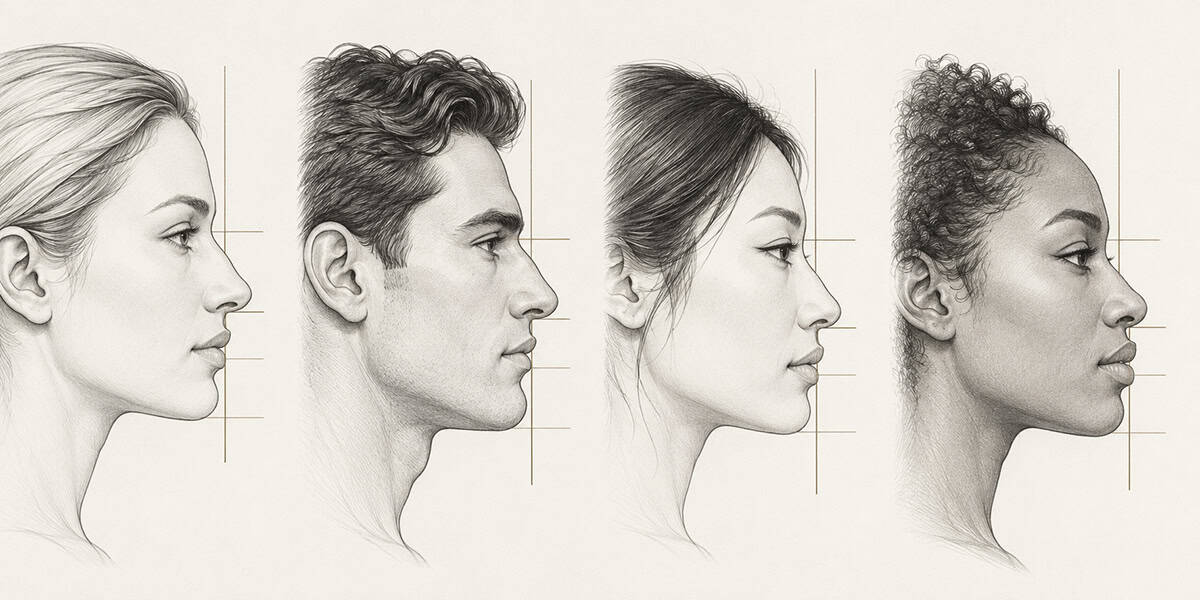
These profiles are intentionally different. That is the point. Balance does not require everyone to have the same nose, chin, lips or jawline. I am looking at how those structures work together within the individual face.
Sometimes the Nose Isn’t the Whole Problem
One of the best examples of facial balance is the relationship between the nose and chin. A patient may come to see me convinced that her nose is too large. When I look at the profile, I may agree that the nose can be refined, but I may also see that the chin sits relatively far back.
If I only make the nose smaller, I can improve the nose without fully addressing what the patient was seeing in the profile.
In another patient, the chin may already have appropriate projection. Adding more chin simply because we are performing rhinoplasty would make no sense.
This is why I evaluate the nose and chin together even when the patient initially comes to me for rhinoplasty.
Chin Projection Can Change the Entire Profile
The chin occupies a relatively small part of the face, but its projection has a tremendous effect on how we perceive the profile.
When the chin is recessed, the nose can appear more prominent and the transition into the neck can look less defined. Increasing chin projection can change those relationships without changing the nose at all.
For the right patient, chin augmentation can create a stronger relationship between the lower face and the rest of the profile. For another patient, it may not be necessary.
The decision is not “Would a bigger chin look better?” The question I am asking is whether changing the chin improves the balance of the entire face.
The Jawline and Neck Are Part of the Profile Too
Patients tend to think of the profile as the nose and chin, but I don’t stop there.
The jawline and neck create the lower boundary of the face. A strong chin can still look poorly defined if there is fullness beneath it or if the transition between the jaw and neck has become less distinct.
Age changes this relationship as well. The jawline can soften, tissues can descend and the neck can become fuller. In that situation, adding projection somewhere else may not address the actual problem.
Sometimes the conversation is about facial structure. Sometimes it is about aging. Sometimes it is both. This is where a facial plastic surgeon has to understand the difference between changing the skeleton and repositioning or refining the soft tissues that sit over it.

INSIGHTS FROM DR. ATHRÉ
How I Evaluate Facial Balance
My first degree was in chemical engineering, and I later trained in head and neck surgery before specializing in facial plastic surgery. That background probably explains part of the way I look at faces.
I naturally think about structure and relationships.
But facial plastic surgery is not engineering. I cannot plug a series of measurements into an equation and tell you what your face should look like. I use measurements to help me understand the anatomy. Then I have to make an aesthetic judgment.
I look at projection. I look at angles. I look at the relationship between the nose and chin. I look at the jawline and neck. I also look at characteristics that should remain because they are part of the person’s identity.
Then I listen.
That last part is important. I can tell you what I see anatomically, but I also need to understand what you see when you look in the mirror and what you actually want to change.
You can read more about my training and approach to facial plastic surgery here.
I am not trying to make one feature perfect. I am trying to make sure no single feature overwhelms the face.
What About Facial Thirds and the “Perfect” Facial Ratio?
You will see a lot of diagrams online dividing the face into thirds or drawing lines between various landmarks. Those concepts have a place in facial analysis and I use anatomical relationships and proportions when I evaluate patients.
Where I disagree is when those tools are presented as a beauty test. A face does not become attractive because three measurements are equal. Real faces have differences in bone structure, soft tissue, sex, age, ancestry and individual character.
I would never recommend changing a feature that works beautifully on your face simply because it misses an arbitrary measurement. Measurements should help me understand the face. They should not dictate what the face is allowed to look like.
Facial Balance Does Not Mean Erasing Ethnic or Family Features
This is particularly important in rhinoplasty. There is no single nose that belongs on every face. Nasal bridge height, width, tip shape, skin thickness and nostril shape vary enormously, including among people who share the same ethnic background.
When I perform ethnic rhinoplasty, my goal is not to move a patient toward some universal definition of an ideal nose. I want to understand which characteristics the patient wants changed and which characteristics should remain.
The same principle applies to facial balance as a whole. I don’t want to erase the things that make your face yours in the process of improving one relationship within it.
Facial Balance Changes With Age
The face you have at 55 is not simply an older version of the face you had at 30. Soft tissues move. Volume changes. The jawline becomes less distinct. The neck changes. The relationship between the cheeks, lower face and neck changes with it.
That is why facial rejuvenation is also a question of balance.
When I perform a facelift or neck procedure, I am not trying to turn a 55-year-old face into a 25-year-old face. I am trying to restore relationships that have changed with time while keeping the patient recognizable.
That philosophy is central to the way I approach facial surgery. The goal is improvement without losing identity.
BEFORE & AFTER
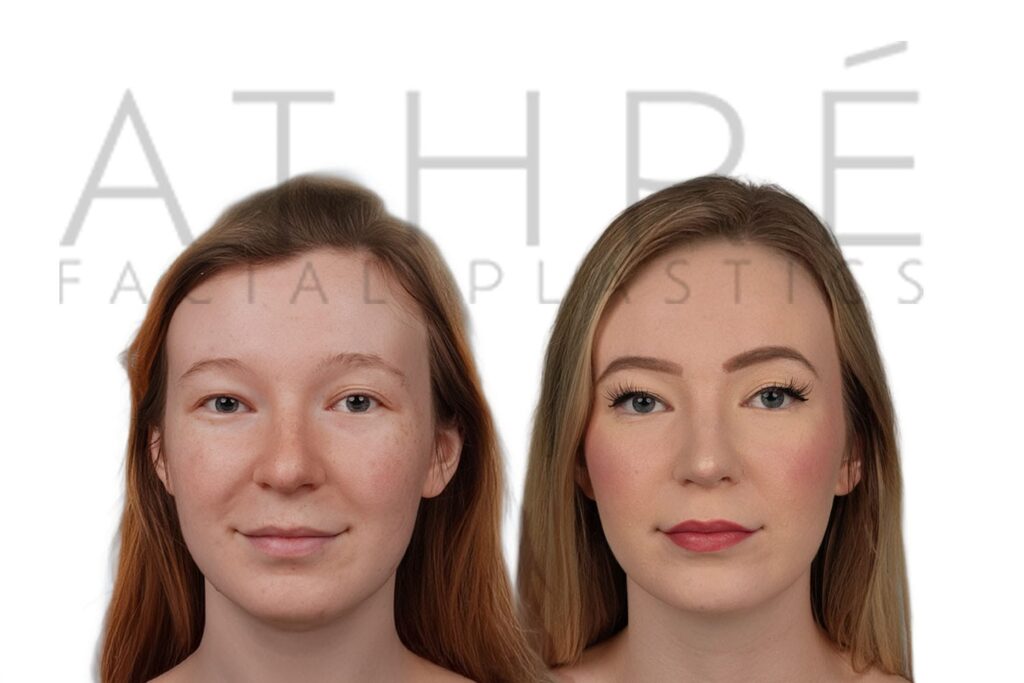
Facial Balance in Real Patients
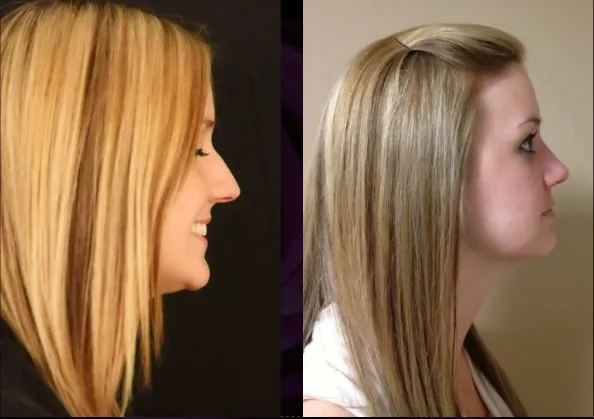
These patients did not need the same changes because they did not have the same anatomy. Look at the relationship between the nose, chin, jawline and the rest of the face rather than focusing on one feature by itself.



FREQUENTLY ASKED
Facial Balance FAQs
Facial balance is not one measurement or one ideal profile. These are some of the questions I hear from patients when we start looking at how the nose, chin, jawline, neck and surrounding features work together.
What makes a face look balanced?
I think of facial balance as the relationship between features rather than a specific set of measurements. The forehead, nose, lips, chin, jawline and neck all contribute. Facial measurements and proportions are useful analytical tools, but a balanced face does not mean every feature has to match a predetermined number. I am looking at how the features work together on the individual patient.
Can a weak chin make my nose look bigger?
Yes. The nose and chin have to be evaluated in relation to one another. A relatively recessed chin can make the nose appear more prominent in profile, which is why chin position is an important part of evaluating the facial profile. Sometimes rhinoplasty is the appropriate treatment, sometimes the chin deserves consideration too, and sometimes the best result involves both.
Do I need chin augmentation with rhinoplasty?
No. I only consider chin augmentation when chin projection is actually contributing to the profile concern. Chin projection can be evaluated using several facial and soft-tissue relationships, but that does not mean every rhinoplasty patient needs the chin changed. Many patients already have appropriate chin projection and do not need anything done to it.
What are facial thirds?
Facial thirds are one way of studying the vertical proportions of the face. They are part of a much larger group of anthropometric measurements used in facial analysis. I use measurements as reference points, not as a pass-or-fail test for attractiveness. A face does not need to fit three mathematically identical sections to look balanced.
Is there a perfect facial ratio?
No. This is one area where the internet has gotten ahead of the evidence. You will see the golden ratio presented as though it is a mathematical formula for facial beauty, but there is no convincing evidence that the golden ratio defines ideal human facial proportions or facial beauty. Measurements help me analyze anatomy. They do not tell me what your face is supposed to look like.
Can rhinoplasty improve facial balance?
Yes, when the nose is contributing to the imbalance. But I don’t evaluate the nose in isolation. The nose, midface and chin all contribute to the profile, and profile analysis can require looking at these structures together. The important part is deciding how much nasal change improves the entire face rather than simply trying to make the nose smaller.
Does ethnicity affect facial balance?
Background can influence facial and nasal anatomy, but there is tremendous variation within every population. That is why I don’t believe in using one ethnic template to decide what somebody’s nose or face should look like. Modern rhinoplasty literature has also questioned broad racial and ethnic classifications because individual anatomical patterns can be more useful than broad ethnic categories. I evaluate the anatomy in front of me, along with the patient’s identity and goals.
Can aging change my facial profile?
Absolutely. Aging is not just a change in the skin. Structural and volumetric changes occur throughout the facial skeleton and soft-tissue envelope, and those changes can alter the cheeks, jawline, neck and overall profile. That is why I distinguish between a structural proportion issue and an aging issue before recommending treatment.
How do I know which procedure will improve my facial balance?
That is what I determine during facial analysis. I want to understand what bothers you first, then evaluate the anatomy creating that appearance. Facial analysis uses measurements and anatomical relationships to help guide treatment, but those measurements are most useful when they help individualize treatment. The answer may be one procedure, a combination of procedures or, in some cases, leaving a feature alone because changing it would not improve the overall face.