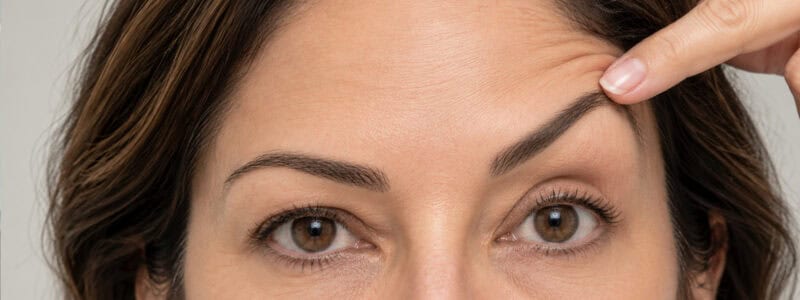
Patients often come into my office saying they have under-eye bags, loose skin or eyes that make them look tired. But what you see in the mirror as a single problem can actually come from several different anatomical changes.
The lower eyelid does not exist by itself. I have to look at the lower-eyelid fat, the skin, the tear trough, the orbital rim and the relationship between the eyelid and cheek. Changes in any of those areas can affect how tired or aged the eyes appear.
This is also why I do not automatically recommend a lower blepharoplasty simply because someone tells me they have bags under their eyes. Sometimes protruding fat is the problem. Sometimes the cheek has lost volume or descended. Sometimes the skin has become thin and crepey. Frequently, more than one change is occurring at the same time.
“Under-eye bags” describe what you see. They do not tell me what is causing it.
START WITH THE ANATOMY
Why the Lower Eyelid and Cheek Have to Be Evaluated Together
One of the most important things to understand about lower-eye aging is that the lower eyelid blends into the cheek. When that transition is smooth, we tend to perceive the area as youthful. As the anatomy changes, the border between those two regions can become much more obvious.
The orbital rim is the bony boundary underneath the eye. Above it sit the lower-eyelid fat compartments. Below it are the soft tissues and fat of the cheek and midface.
With aging, the cheek can lose volume and descend. The tear trough can become more visible. At the same time, orbital fat may begin to protrude forward and the skin itself can become thinner or looser.
Why the Area Below the Eyelid Matters
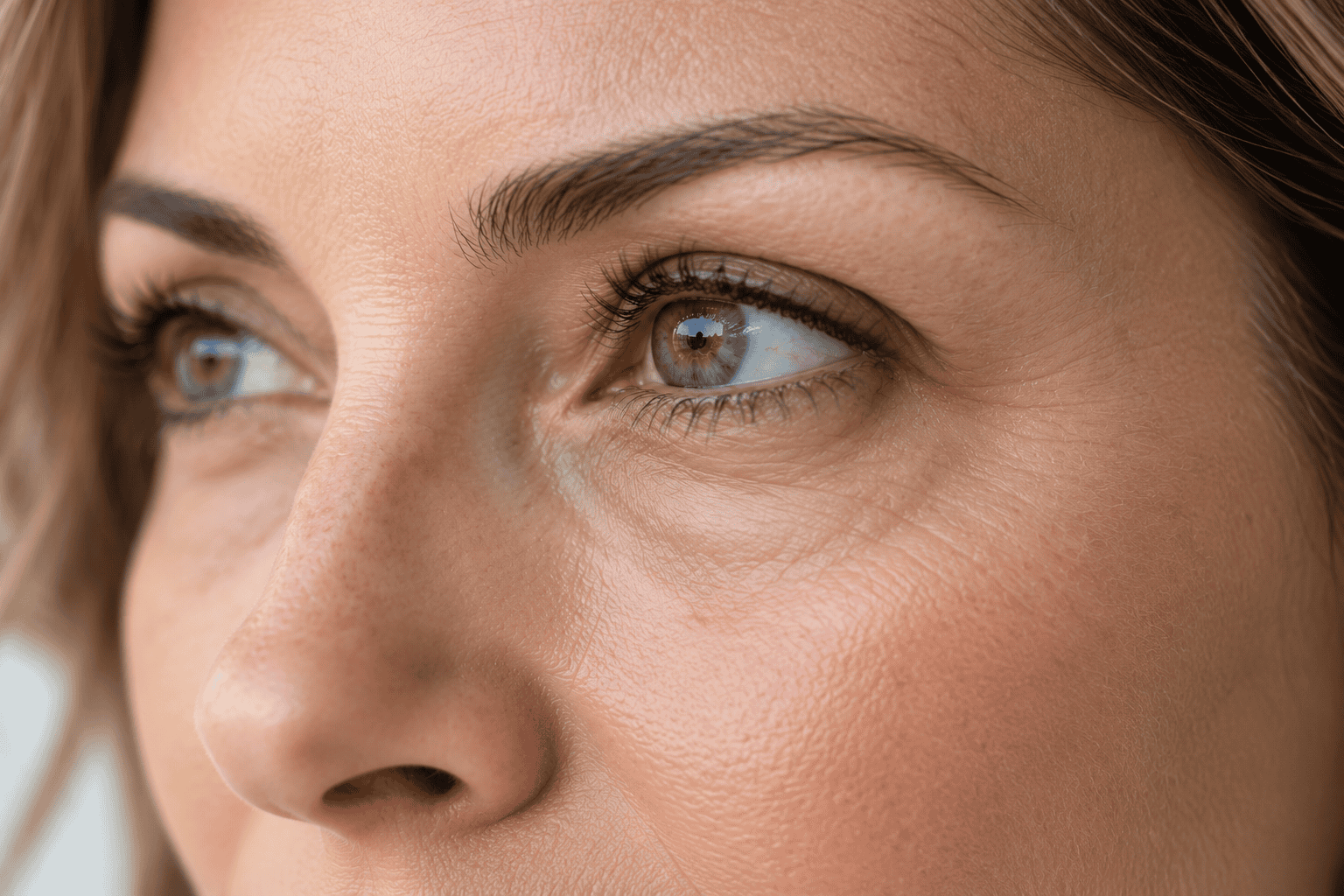
The lower eyelid blends into the cheek across the orbital rim. As cheek volume changes and the tear trough becomes more visible, this transition can create the shadow or hollow that patients often describe as looking tired.
The important point is that a visible groove or shadow underneath the eye can make the area above it look more prominent. What appears to be a large under-eye bag may therefore be partly a problem of the eyelid and partly a problem of the cheek underneath it.
INSIGHTS FROM DR. ATHRÉ
Lower Eyelid Aging Explained
In this video I explain the anatomy of the lower eyelid-cheek complex, why a tear trough can make an under-eye bag look more prominent and how I think about different patterns of lower-eyelid aging before choosing a treatment.
UNDER-EYE BAGS
An Under-Eye Bag Is Not Always Just Excess Fat
There are patients who truly do have protruding lower-eyelid fat. The fat that normally sits within the orbit can push forward and create visible fullness beneath the eye.
But that is not the only way a bag develops visually.
If the cheek loses volume or moves downward, the groove underneath the eyelid can deepen. That creates a stronger contrast between the fullness above the groove and the hollow below it. The lower eyelid can then look baggier even when there is relatively little fat protruding forward.
This distinction matters because removing fat from a patient whose primary problem is volume loss below the eyelid does not address the same anatomy as treating true fat prominence.
The question is not simply, “Do you have an under-eye bag?” The question is what anatomy is creating the appearance of that bag.
What Is the Tear Trough?
The tear trough is the groove that begins near the inner corner of the lower eyelid and extends along the junction between the eyelid and cheek. As that groove becomes deeper, it can create shadowing underneath the eye. That shadow can make someone look tired even when they are well rested.
This is one reason I do not think about lower-eyelid rejuvenation as simply removing things. In some patients, rejuvenation is partly about restoring the contour that has been lost.
Depending on the anatomy, that may involve repositioning existing orbital fat, adding volume with fat transfer, treating the cheek or combining volume restoration with lower-eyelid surgery.
Sometimes the apparent bag becomes more obvious because the area underneath it has become hollow.
SKIN QUALITY
Crepey Lower-Eyelid Skin Is a Different Problem
Lower-eyelid skin is very thin. As collagen and elastin change with age, the skin can develop fine lines and a crepey texture even when there is not enough redundant skin to justify removing it.
Crepey Skin Is Not the Same as Excess Skin
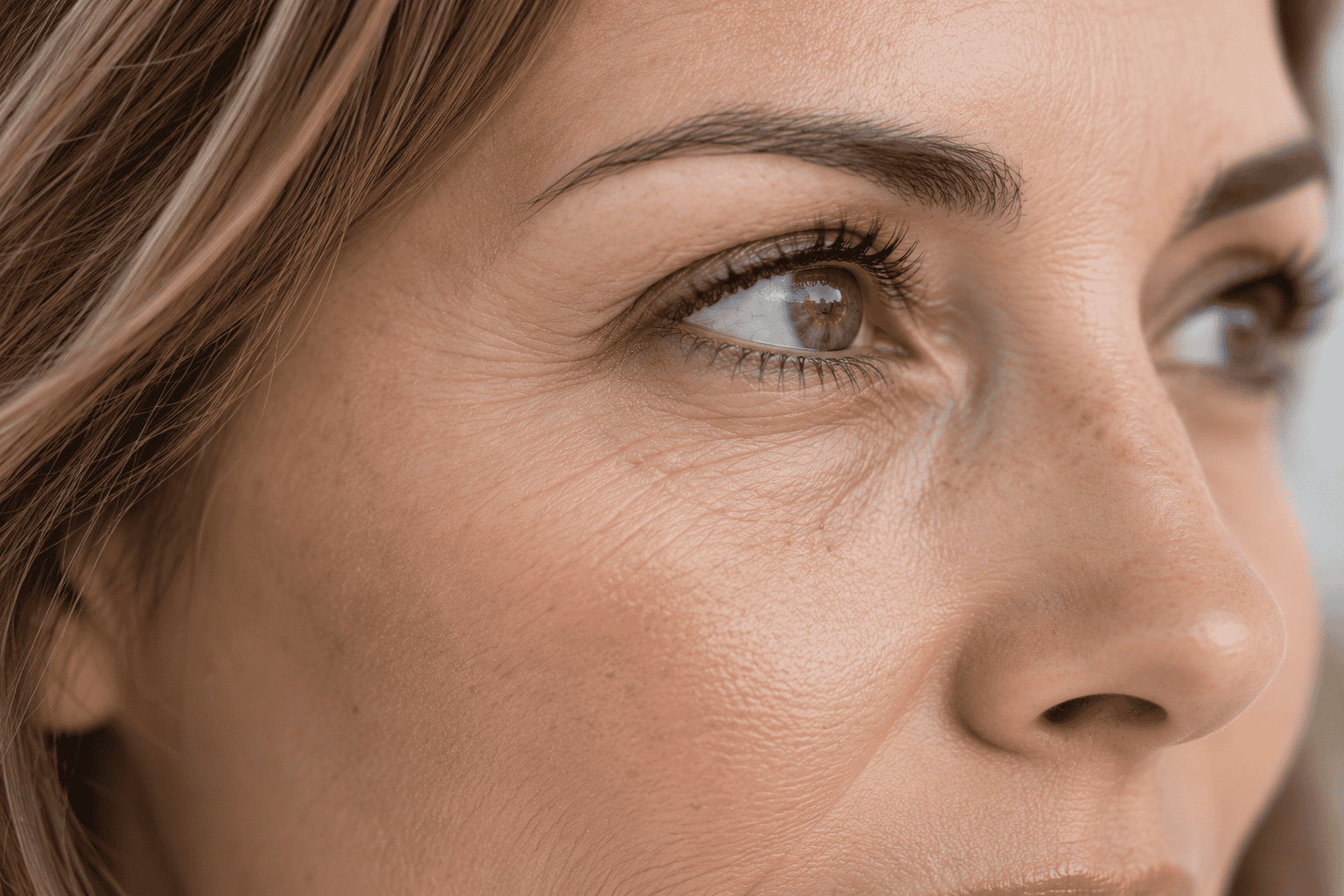
Fine lines and crepey texture do not necessarily mean there is a large amount of skin to remove. Skin quality and true skin excess are different findings, and that distinction can change how I approach treatment.
If there is mild skin laxity or thin, crepey skin, resurfacing with a laser or chemical peel may be considered to improve the skin without removing a large amount of tissue. If there is more significant true skin excess, then carefully removing skin may become part of the surgical plan.
Those are different problems, and I do not want to treat them as though they are interchangeable.
A SPECTRUM OF AGING
Lower-Eyelid Rejuvenation Is Not One Procedure
In my educational video, I use stages to explain how the lower-eyelid complex can change as aging becomes more advanced. I use that framework to illustrate the anatomy. It is not a system for diagnosing yourself at home.
At an earlier stage, a patient may primarily have volume loss and descent through the midface without significant protruding lower-eyelid fat. In that situation, restoring volume may be more important than removing fat.
Another patient may have both volume loss and fat beginning to protrude. Depending on the anatomy, I may consider a transconjunctival lower blepharoplasty through the inside of the eyelid while also addressing the volume deficit.
As skin quality changes, resurfacing can become another part of the discussion. With more advanced skin excess, an external approach beneath the eyelashes may sometimes be appropriate.
CASE STUDY
When Tired Eyes Do Not Need Lower-Eyelid Fat Removal
This patient came to me because she felt that her eyes made her look tired. She had very little upper-eyelid excess, good brow position and no significant protruding lower-eyelid fat. In the video I explain why the lower-eyelid/cheek transition, volume loss and skin quality changed the treatment plan.
THE DIAGNOSIS CHANGED THE PLAN
Why I Did Not Remove Her Lower-Eyelid Fat
This patient’s case is useful because her complaint was very common: she was tired of looking tired.
But when I looked carefully at her lower eyelid, the fat itself was not significantly protruding. The more important change was underneath it. The midface had begun to descend and lose volume, making the junction between the lower eyelid and cheek much more obvious.
She also had thin, crepey skin.
Her treatment therefore focused on restoring volume with processed fat and improving the skin with laser resurfacing rather than simply removing lower-eyelid fat.
If I misidentify the structure creating the problem, I can choose the wrong surgery even when the patient’s complaint sounds straightforward.
WHEN SURGERY IS APPROPRIATE
When Does Lower Blepharoplasty Make Sense?
Lower blepharoplasty becomes part of the discussion when the anatomy of the lower eyelid itself needs to be treated.
If orbital fat is protruding, I may need to remove or reposition some of that fat. If there is significant true skin excess, I may need to address the skin. If the eyelid has laxity or needs additional support, that becomes another part of the surgical plan.
The incision is also not the same for every patient. A transconjunctival approach is performed from inside the lower eyelid and avoids an external skin incision. A transcutaneous or subciliary approach uses an incision just beneath the eyelashes and may be appropriate when I need access to skin and other structures from the outside.
Neither approach is automatically the best surgery for everybody. The choice depends on what I need to correct and how I can do it while protecting the position and function of the lower eyelid.
Why Removing More Lower-Eyelid Skin Is Not Always Better
The lower eyelid has an important functional job. It has to remain positioned against the eye while blinking normally and protecting the ocular surface.
That is why I am conservative about removing lower-eyelid skin. If too much tension is created or the supporting anatomy is not respected, the lower lid can be pulled downward or away from the eye.
When the problem is primarily skin texture rather than a large amount of redundant skin, resurfacing can sometimes allow me to treat that component without relying on more aggressive skin removal.
I am not trying to remove the maximum amount of tissue. I am trying to correct the aging while preserving a natural lower eyelid.
PROJECT ATHRÉ
A Patient’s Under-Eye Rejuvenation Journey
Nicole came to me bothered by her lower eyes after previously trying filler. In this Project Athré patient journey, she discusses the consultation, why we chose fat transfer and CO₂ laser resurfacing, what the procedure was like under local anesthesia with oral sedation and her experience during recovery.
THE PATIENT PERSPECTIVE
Sometimes the Procedure You Expect Is Not the One You Need
Nicole’s story illustrates another part of this process that I think is important.
Patients often arrive at a consultation with a procedure already in mind. That is understandable. You research what bothers you, look at before-and-after results and start forming an idea of what might fix it.
But I still have to start over with the anatomy.
In Nicole’s case, the plan centered on fat transfer to the lower-eyelid and cheek region along with CO₂ laser resurfacing rather than treating her concern as though it automatically required traditional lower blepharoplasty.
Her experience is her own, and another patient may need something completely different. That is exactly the point.
WHAT ABOUT THE UPPER EYES?
Not Every Eye-Aging Concern Comes From the Lower Eyelid
The lower eyelid is only one part of the periorbital area. A patient can also have excess upper-eyelid skin, descent of the brow or true eyelid ptosis.
Those problems can make the eyes look heavy, but they require a different evaluation from the lower-eyelid concerns we have been discussing here.
If your primary concern is hooding or heaviness above the eye, I explain that distinction in more detail in my discussion of upper blepharoplasty versus brow lift.
The principle is the same: I want to identify which structure is creating the appearance before deciding which procedure makes sense.
THE CONSULTATION
What I Look at When You Tell Me Your Eyes Look Tired
I start by asking what you actually see when you look in the mirror. Is it a bag? A hollow? Loose skin? Fine lines? A dark shadow? Does the problem change with lighting or facial expression?
Then I examine the anatomy underneath that complaint.
I look at the lower-eyelid fat and the position of the lid itself. I evaluate the tear trough and orbital rim. I look at the volume and position of the cheek and midface. I assess how much true skin excess is present and whether the skin problem is primarily laxity, texture or both.
I also look beyond the lower eyelid. Upper-eyelid skin and brow position can contribute to the overall appearance of the eyes, and facial volume changes can influence how the entire periorbital area is perceived.
Only after that evaluation do I want to talk about whether the plan involves lower blepharoplasty, fat transfer, resurfacing, a combination of treatments or something else.
PATIENT RESULTS
Different Lower-Eye Problems Require Different Surgical Plans
These patients did not all require exactly the same lower-eyelid treatment. Their results illustrate why I choose the procedure after evaluating the skin, fat, volume and lower-eyelid/cheek relationship rather than applying one surgery to every under-eye concern.
BEFORE & AFTER
Lower Eyelid Results


The Goal Is to Treat the Anatomy, Not the Label
If there is one thing I want you to take away from this discussion, it is that lower-eye aging is not one problem.
A bag can be caused by protruding fat, but the appearance can also be influenced by a deeper tear trough or loss of cheek volume. Thin, crepey skin is different from significant skin excess. Lower-eyelid laxity introduces another consideration entirely.
That is why two people who both walk into my office saying, “I look tired,” may leave the consultation with very different recommendations.
I am not trying to fit every patient into a lower blepharoplasty. I am trying to determine which anatomical changes are responsible for what you see and then choose the treatment that addresses those changes while preserving the natural shape and function of the eye.
The surgery should follow the anatomy.
FREQUENTLY ASKED
Common Questions About Under-Eye Bags and Lower Eyelid Rejuvenation
These are some of the questions patients commonly ask when trying to understand what is causing a tired appearance underneath the eyes and whether lower blepharoplasty is the right treatment.
Are under-eye bags always caused by excess fat?
No. Lower-eye aging can involve fat prominence, tear-trough hollowing, skin changes and midface descent. A systematic review of lower-eyelid anatomy describes these age-related changes and how they can influence the appearance of the lower eyelid.
Can a tear trough make my under-eye bags look worse?
Yes. A deeper hollow at the lid-cheek junction can increase the contrast between the lower eyelid and cheek. Current tear-trough research emphasizes matching treatment to the underlying anatomy rather than treating every visible bag as excess fat.
Does everyone with under-eye bags need lower blepharoplasty?
No. Treatment depends on whether the main problem is fat prominence, volume loss, skin, lid support or a combination. An evidence-based approach to lower blepharoplasty recommends tailoring treatment to the anatomical findings.
Can fat transfer be used around the lower eyelids?
Yes, in appropriately selected patients. Modern periorbital fat-grafting research describes fat transfer to the tear trough and other areas of volume loss as part of anatomy-based eye rejuvenation.
Can laser resurfacing improve crepey lower-eyelid skin?
It can be useful when fine lines or mild skin laxity are part of the problem. An evidence-based review of lower-eyelid treatment includes laser or chemical resurfacing among the options for improving fine lines when skin removal is not the only issue.
What is the difference between transconjunctival and external lower blepharoplasty?
A transconjunctival approach works through the inside of the lower eyelid, while a transcutaneous approach uses an external incision. A recent review of transconjunctival lower blepharoplasty discusses the tissue-preserving advantages of the internal approach.
Is lower blepharoplasty safe?
Lower blepharoplasty generally has a favorable safety profile, but complications are possible. A 2025 systematic review of lower blepharoplasty safety found an overall low complication profile across 36 included studies.
Why does lower-eyelid skin removal have to be conservative?
The lower lid has to maintain its position against the eye. Published lower-eyelid surgery literature emphasizes careful technique and eyelid support to reduce complications such as lid malposition.
“`