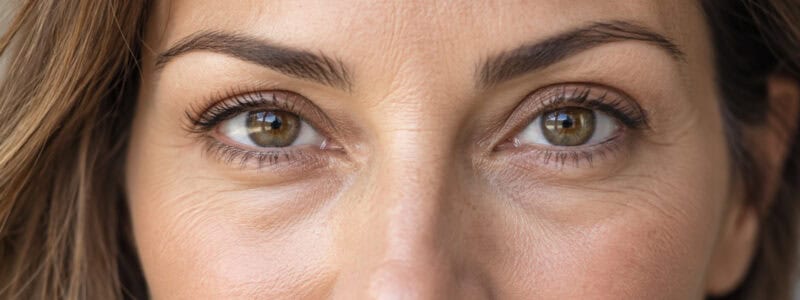
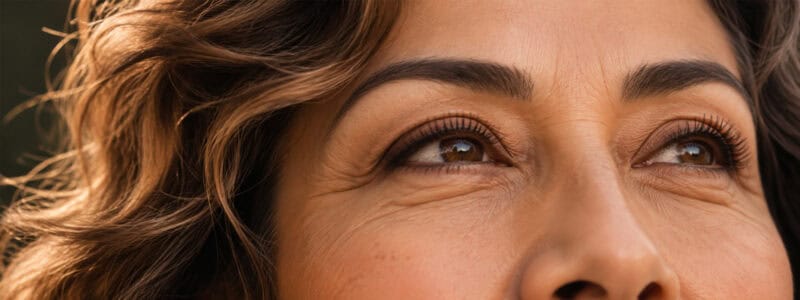
If your upper eyes look hooded, heavy or tired, it is easy to assume you have an eyelid problem. Sometimes you do. But sometimes the eyelid is only where you are seeing the problem.
A descending brow can push tissue downward over the upper eyelid. Excess upper-eyelid skin can create a similar appearance. The eyelid itself can also sit too low because of true eyelid ptosis.
Most patients I examine are not a perfect example of only one of these. They have some combination. The important question is how much each structure is contributing to the appearance you want to change.
Before I decide what surgery makes sense, I first have to determine where the heaviness is actually coming from.
INSIGHTS FROM DR. ATHRÉ
Do You Have an Eyelid Problem or a Brow Problem?
I explain why brow descent, excess upper-eyelid skin and true eyelid ptosis can create a similar complaint and why identifying the source matters before deciding what to operate on.
SAME COMPLAINT, DIFFERENT ANATOMY
Three Different Problems Can Make Your Upper Eyes Look Heavy
When someone tells me, “My eyelids are drooping,” I do not automatically assume the answer is to remove eyelid skin. I separate the upper face into the structures that can actually create that appearance.
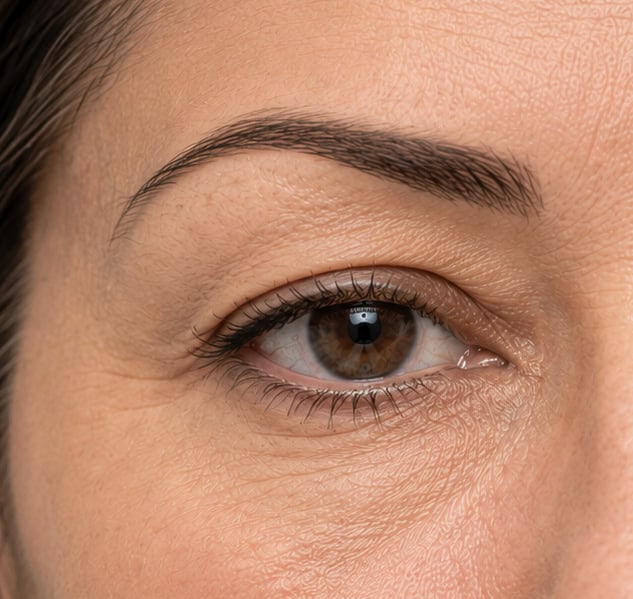
Excess Upper-Eyelid Skin
Redundant skin can fold over the upper eyelid and create true hooding. When this is the primary problem, upper blepharoplasty may be the appropriate treatment.
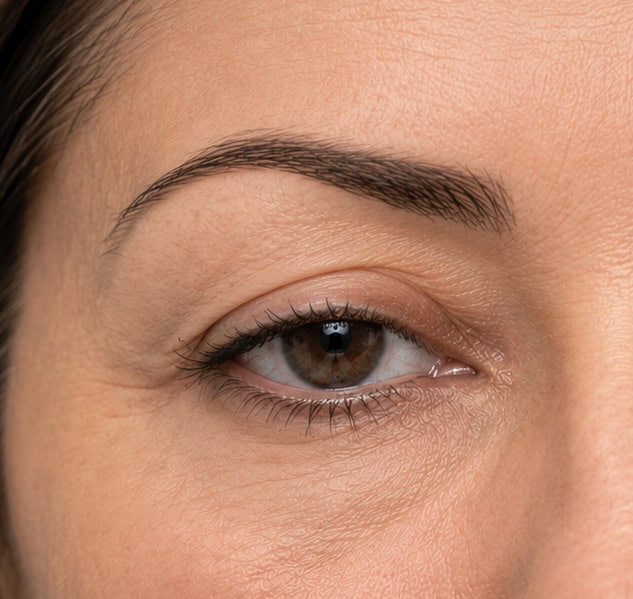
True Eyelid Ptosis
The upper lid margin itself sits too low. Removing skin does not correct the underlying eyelid-position problem.
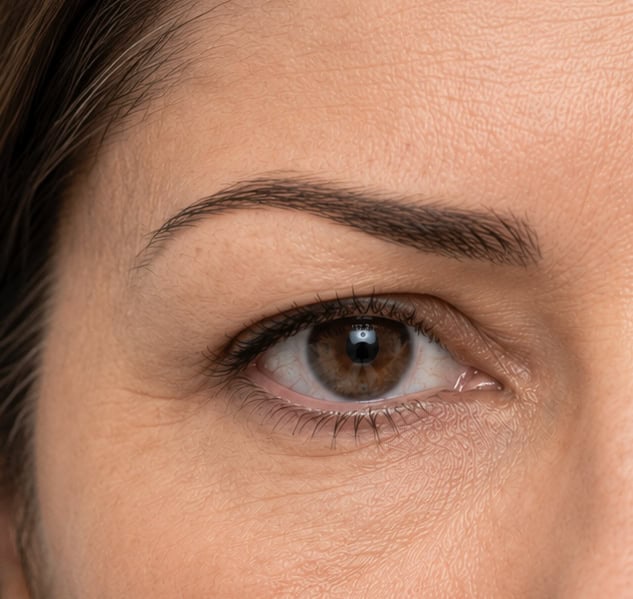
Brow Descent
A lower brow pushes forehead tissue toward the upper eyelid and can make it appear as though considerably more eyelid skin is present.
Those problems can exist separately, but they frequently overlap. That is why I am less interested in putting a label on your eyes than I am in determining the proportion each structure contributes.
When the Problem Really Is Excess Upper-Eyelid Skin
Dermatochalasis is redundant upper-eyelid skin. As the skin loses elasticity, it can fold over the natural upper-eyelid crease and create the hooded appearance patients often notice in the mirror.
If your brow remains in an appropriate position and the eyelid margin itself is not drooping, removing a carefully measured amount of redundant skin with upper blepharoplasty may be enough.
The word measured matters. My goal is not to remove every visible fold or create an unnaturally hollow, wide-open eye. The upper eyelid needs enough skin to close normally and still look like your eye.
When the Eyelid Itself Is Sitting Too Low
True eyelid ptosis is different. Here, the problem is not simply skin hanging over the lid. The upper eyelid margin itself sits lower than it should.
The levator mechanism is responsible for elevating the upper eyelid. If that system has stretched, weakened or become detached, the lid can remain low even if the excess skin above it is removed.
That is why eyelid position is part of my examination before I recommend upper blepharoplasty.
When a Low Brow Looks Like an Eyelid Problem
The brow and upper eyelid are not independent structures. As the brow descends, it carries forehead tissue downward. That tissue can accumulate over the upper eyelid and create what looks like a large amount of redundant eyelid skin.
If I evaluate only the eyelid, I can miss the structure that is driving part of the problem.
This does not mean every patient with a low brow needs a brow lift. It means I need to account for brow position before deciding how much eyelid skin, if any, should be removed.
A patient can point to the eyelid and correctly identify where she sees the problem. That does not necessarily tell me where the problem begins.
A Simple Way to See Why Brow Position Matters
There is a simple observation I demonstrate to patients. Relax your forehead and gently elevate the outer portion of one brow by only a few millimeters.
If a substantial amount of the upper-eyelid heaviness changes when the brow moves, that tells you something important about the relationship between the brow and the eyelid. If the fold remains despite the brow being repositioned, redundant eyelid skin may be contributing more significantly.
This is not a self-diagnostic test. It does not tell you which surgery you need. It simply makes the anatomy easier to understand.
Your Forehead May Be Helping Hold Your Brows Up
Some patients unconsciously recruit the forehead muscles to elevate their brows and keep the upper eyes more open. They may not realize they are doing it because the compensation has developed gradually.
That is one reason I want to examine the brow with the forehead relaxed. I want to see where the brow actually rests rather than where the forehead can temporarily hold it.
Old photographs can also be useful. Looking at where your brows sat relative to the orbital bone 10, 15 or 20 years ago can provide context for how your upper face has changed.
What If Both the Brow and Upper Eyelid Contribute?
This is common. A patient may have genuine redundant upper-eyelid skin and a brow that has descended. In that situation, the question is not whether the problem is the brow or the eyelid. I need to determine how much each contributes and plan the surgery accordingly.
Sometimes that means combining a brow lift with upper blepharoplasty. Sometimes the brow contribution is small enough that I do not think it justifies brow surgery. Sometimes the eyelid itself needs a different type of correction.
The surgery should follow the diagnosis, not the name of the complaint.
PATIENT JOURNEY
Brow Lift + Upper Blepharoplasty: A Patient’s Facial Rejuvenation Journey
This patient underwent brow lift and upper blepharoplasty as part of broader facial rejuvenation. Other procedures also contributed to her overall result.
Does a Low Brow Automatically Mean You Need a Brow Lift?
No. The brow lift has a reputation for creating an excessively elevated or surprised appearance because that is what patients notice when the surgery is overdone. That is not the objective.
If I recommend brow surgery, I am usually talking about millimeters. I am trying to restore a brow that has descended, particularly where that descent is affecting the upper-eye area. I am not trying to place every patient’s eyebrows high on the forehead.
And if your brow position is appropriate and the real problem is redundant upper-eyelid skin, I may recommend upper blepharoplasty without a brow lift.
When Heavy Upper Eyelids Become More Than a Cosmetic Concern
For some patients, upper-eyelid heaviness affects more than appearance. Redundant skin or a low eyelid can interfere with the superior visual field and make certain visual tasks more difficult.
When a patient describes a functional vision problem, I want to know that before surgery. Evaluation may include measurements of eyelid position and, when appropriate, formal visual-field testing.
That is a different conversation from someone whose concern is entirely cosmetic, even though the eyes may initially look similar.
PATIENT RESULTS
Why These Results Are Different
These patients did not all need the same surgery. Some had upper eyelid surgery, some had brow surgery, and some had both as part of broader facial rejuvenation.
The results illustrate why the procedure should be selected only after determining which structures are contributing to the appearance of the upper eyes.
PATIENT RESULTS
Different Anatomy. Different Surgical Plans.


How I Evaluate Heavy or Hooded Upper Eyes
I begin by looking at the upper face as a unit rather than deciding in advance that you need eyelid surgery. I evaluate where the brows rest when the forehead is relaxed. I look at the amount and distribution of upper-eyelid skin, the position of the lid margin, preexisting asymmetry and how the eyelid opens and closes.
I also want to know about dry-eye symptoms, previous eye surgery and any functional vision complaints. Those details matter because eyelid surgery changes structures that participate in blinking, eyelid closure and the ocular surface.
Then I determine what proportion of the appearance is coming from the brow, the eyelid skin and the eyelid itself.
The question is not, “Which procedure do you want?” The question is, “What anatomy is creating the problem you want me to correct?”
Start With the Diagnosis, Not the Procedure
If you look in the mirror and see heavy or hooded upper eyes, there may be more than one anatomical reason for it. Sometimes the answer is upper blepharoplasty. Sometimes the brow is an important part of the problem. Sometimes the eyelid itself is sitting too low. Often there is overlap.
I do not want to decide what to operate on based solely on where you point. I want to understand what changed, how the brow and eyelid relate to one another and what correction will preserve a natural relationship between the two.
Three different anatomical problems can create the same complaint.
The diagnosis is what determines the surgery.
COMMON QUESTIONS
Upper Blepharoplasty, Brow Lift and Hooded-Eye FAQs
These are some of the questions patients commonly ask when trying to understand whether heaviness around the upper eyes is coming from the eyelids, brows or both.
How do I know if I need upper blepharoplasty or a brow lift?
It depends on what is creating the heaviness. Excess eyelid skin, brow descent and true eyelid ptosis can overlap, which is why upper-eyelid and brow evaluation should consider more than visible skin alone.
Can a brow lift fix hooded eyes?
It can when brow descent is contributing to the hooding. If true excess eyelid skin remains, upper blepharoplasty may also be appropriate. Research on upper-eyelid show and brow position supports evaluating these structures together.
Can upper blepharoplasty fix a drooping eyelid?
Not when the primary problem is true eyelid ptosis. Blepharoplasty removes redundant tissue, while eyelid ptosis correction addresses the low position of the eyelid itself.
Can hooded eyelids affect vision?
Yes. Significant dermatochalasis or eyelid ptosis can interfere with visual function. An American Academy of Ophthalmology review of upper-eyelid surgery found functional benefits after appropriately indicated blepharoplasty and ptosis surgery.
Will a brow lift make me look surprised?
That is not the goal. Modern brow and upper-eyelid planning considers the relationship between the brow and eyelid rather than simply trying to raise the brow as high as possible.
Can upper blepharoplasty affect dry eyes?
It can affect the ocular surface, particularly in susceptible patients. Because studies of dry eye after blepharoplasty show that outcomes can vary, existing dryness and irritation should be discussed before surgery.
Can I need both a brow lift and upper blepharoplasty?
Yes. Brow descent and excess upper-eyelid skin often coexist. Published experience with combined brow lift and upper blepharoplasty reflects how commonly surgeons need to evaluate both areas.
Are hooded eyelids always caused by aging?
No. Natural anatomy influences how much upper eyelid is visible even in younger people. Aging can then add skin redundancy, brow descent or ptosis. Research into factors that influence upper-eyelid show describes several anatomical contributors.