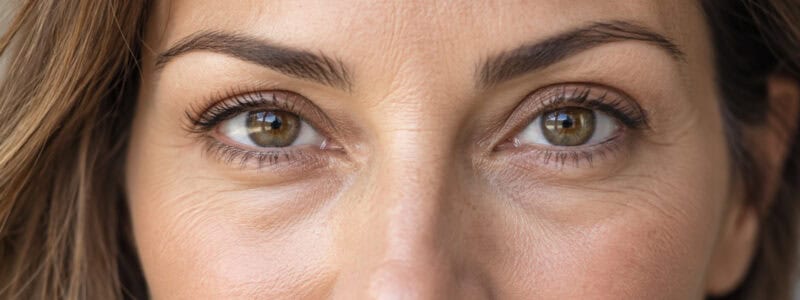
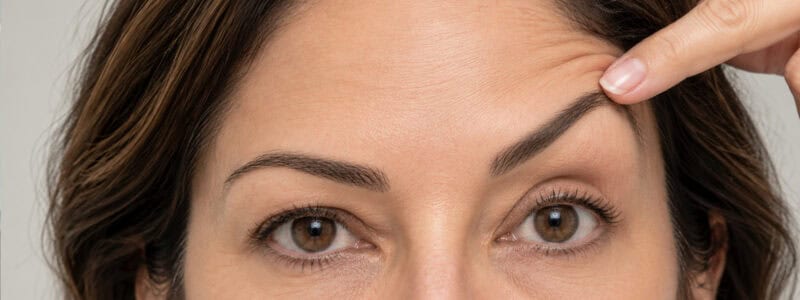
I often meet patients who know their eyes look tired but are not sure which part is responsible. Some point to skin hanging over the upper eyelids. Others point to bags or shadows underneath. And some have changes in both areas. Those are three different starting points, and they do not necessarily call for the same surgery.
Blepharoplasty is the surgical term for eyelid rejuvenation. Upper blepharoplasty primarily addresses excess skin and selected fat changes above the eye. Lower blepharoplasty addresses particular problems below it, including prominent fat pads and, in some patients, loose skin or the transition between the lower eyelid and cheek.
What I want to establish first is which anatomical change is creating the concern. A heavy upper eyelid may be caused by excess skin, a low eyebrow or a true drooping eyelid margin. An apparent lower-eyelid bag may be bulging fat, a hollow underneath the eye or a combination of both.
The decision is not simply upper eyelid surgery versus lower eyelid surgery. It is whether either procedure addresses the actual reason your eyes look the way they do.
UNDERSTANDING THE DIFFERENCE
Upper vs. Lower Blepharoplasty: What Does Each Procedure Treat?
Upper Blepharoplasty: Skin and Fullness Above the Eye
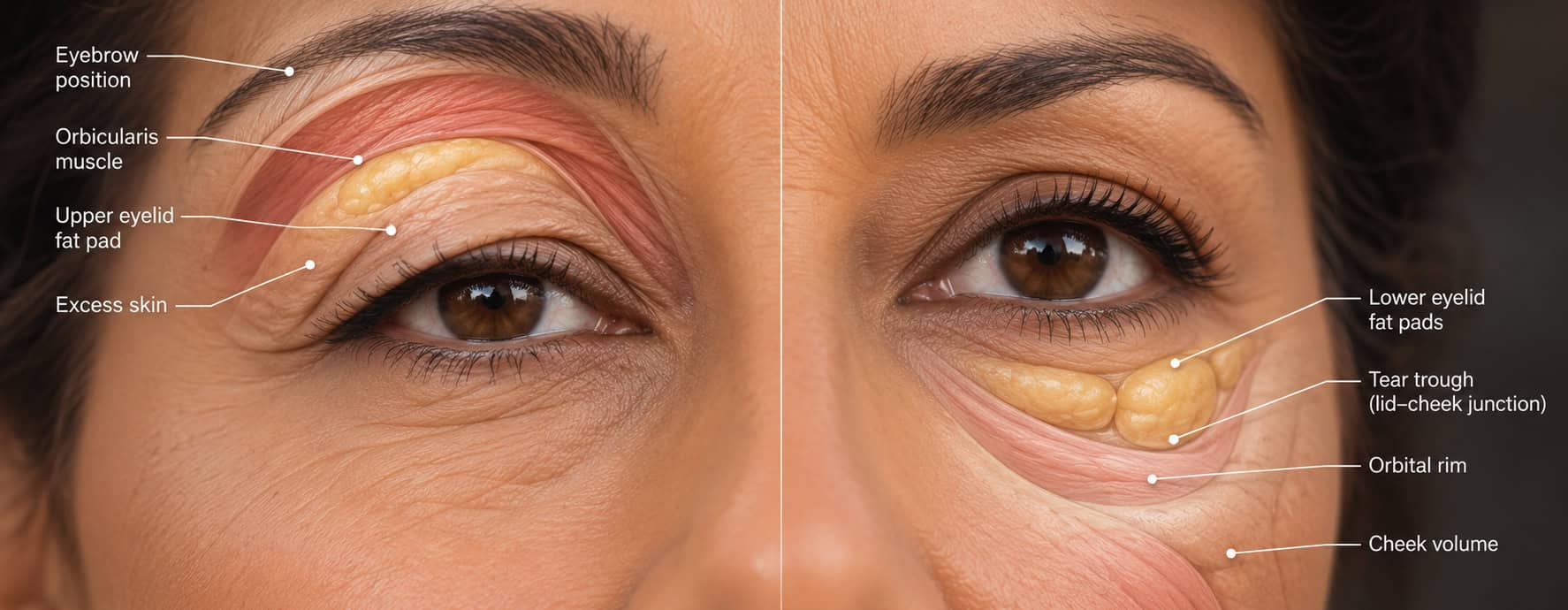
An upper blepharoplasty is generally designed to improve loose or redundant upper-eyelid skin, sometimes called dermatochalasis. The skin can fold onto the eyelashes, obscure the natural eyelid crease or produce a heavy appearance. Some patients also have fat fullness in the upper lid that needs to be evaluated.
When the problem is genuinely excess upper-eyelid skin, I usually place the incision in the natural lid crease and remove a carefully planned amount of tissue. I want the eye to look more open without creating an overly hollow upper lid or interfering with normal closure.
Lower Blepharoplasty: Bags, Contour and the Lid–Cheek Junction
A lower blepharoplasty addresses a different set of structures. The lower lid contains fat compartments behind a thin supporting layer. As those tissues change, fat may become prominent beneath the eye. Loose skin can add wrinkles or crepiness, while loss of cheek volume can make the hollow below the eyelid more noticeable.
Depending on the anatomy, I may address lower-lid fat from an incision inside the eyelid, remove a small amount of excess skin or combine surgery with volume restoration or resurfacing. Not every patient needs all of those steps.
THE UPPER EYELIDS
When Is Upper Blepharoplasty the Right Choice?
The clearest indication is excess upper-eyelid skin that remains after I account for eyebrow position and the way the eyelid itself opens. Patients may tell me their makeup disappears into a fold, that their upper lids feel heavy or that they are constantly raising their eyebrows to make their eyes feel more open.
I examine the lid crease, the amount of skin, fat fullness, eyelid symmetry and whether both eyes close comfortably. I also ask about dry eyes, contact lenses, previous eyelid surgery and any symptoms affecting vision.
Hooded Skin, a Low Brow and True Ptosis Are Not the Same Thing
If the eyebrow has descended, some of the fullness over the eyelid may actually be brow tissue pushing down. Taking away more upper-eyelid skin does not reposition the eyebrow. In those patients, a brow lift, with or without upper blepharoplasty, may be worth discussing.
Ptosis is different again. It occurs when the upper-eyelid margin itself sits too low because of a problem with the structures that raise the lid. Routine removal of excess skin does not reliably correct that muscle-related problem. I may need to plan a separate ptosis repair, depending on the examination.
I go deeper into the upper-eyelid and eyebrow distinction in my article on hooded eyelids. Patients who want to understand the examination can also watch my upper blepharoplasty explanation, where I discuss eyelid anatomy, natural creases and the importance of checking eye closure before surgery.
There are patients whose redundant upper-eyelid skin interferes with their upper field of vision. In appropriately selected cases, upper blepharoplasty may provide functional as well as aesthetic improvement. That requires an actual examination rather than a decision based on photographs alone.
THE LOWER EYELIDS
When Is Lower Blepharoplasty the Right Choice?
Patients frequently come in asking me to remove their under-eye bags. But one of the first things I look for is whether the fullness is truly protruding lower-eyelid fat.
The lower eyelid does not stop abruptly where the cheek begins. There is a transition across the orbital rim into the upper cheek. When cheek volume decreases or descends, a groove can appear beneath the eyelid. That hollow can cast a shadow and make the tissue immediately above it appear to be a bag, even if there is very little fat bulging forward.
True Under-Eye Bags
If the main problem is prominent orbital fat, I may consider a transconjunctival approach, which reaches the lower-lid fat through an incision on the inside of the eyelid. The surgical decision includes whether fat should be conservatively removed, repositioned or left in place. I do not want to exchange puffiness for an unnaturally hollow appearance.
Loose or Crepey Lower-Eyelid Skin
Skin texture is a separate issue. A patient may have fine lines and loose skin without significant fat protrusion. In some cases a conservative lower-eyelid skin pinch or laser resurfacing may be part of the plan. Those treatments address different tissue layers and should not be assumed to produce the same result.
Hollows and the Tear Trough
If the main concern is the hollow where the lid meets the cheek, fat removal alone may make the area appear more sunken. In selected patients, facial fat transfer or another volume-based treatment may address the contour more directly. I consider the cheek and lower eyelid together rather than treating an isolated shadow as a fat bag.
There is another important structural assessment: lower-lid support. I examine how firmly the lower eyelid sits against the eye, how quickly it returns after gentle distraction and whether the patient has existing scleral show or lid laxity. These findings help determine whether additional support is needed and how to minimize the risk of postoperative lid malposition.
DR. ATHRÉ EXPLAINS
Why an Under-Eye Hollow Can Look Like an Eye Bag
In this explanation of lower-eyelid aging, I show how the eyelid, orbital rim and upper cheek function as one region. I also explain why prominent fat, thin skin and a descending cheek call for different treatment plans.
COMBINED EYELID SURGERY
When Should Upper and Lower Blepharoplasty Be Done Together?
When a patient has excess upper-eyelid skin and a separate lower-eyelid problem that is appropriate for surgery, treating both in the same session can be reasonable. You may hear this called four-lid blepharoplasty because both upper eyelids and both lower eyelids are addressed.
I do not recommend adding lower blepharoplasty simply because we are already treating the upper lids. If the lower lid looks tired primarily because the cheek has lost volume, I may recommend volume restoration instead of removing lower-eyelid fat. Likewise, a patient who comes in for under-eye bags may have perfectly good upper lids and no reason to operate above the eyes.
The potential advantage of a combined plan is that I can address separate problems around the eyes in one surgical session and coordinate their proportions. The tradeoff is that surgery is more extensive and swelling, bruising or temporary eye-surface symptoms may be greater than after a limited upper-only procedure.
Why Canthopexy Sometimes Appears in Combined Cases
You may notice the word canthopexy in some of my patient gallery descriptions. This refers to a procedure used to support the outer lower eyelid when its position or laxity warrants it. It is not required in every four-lid blepharoplasty, and it is not the same as removing extra skin. My plan depends on lower-lid tone, the surrounding bone and cheek anatomy, and the patient’s existing eye shape.
I do not add procedures simply to do everything at once. I want each part of the surgical plan to solve a problem I can actually identify.
How I Decide What Your Eyes Actually Need
I begin by asking you to show me exactly what bothers you. I then look at the upper and lower eyelids without assuming that both need treatment.
If You Are Concerned About Heavy Upper Eyelids
I evaluate eyebrow position, loose skin, the actual eyelid margin, upper-lid fat and your ability to close your eyes. If the problem is only upper skin, the plan may be limited to an upper blepharoplasty. If the brow or lifting mechanism is involved, the plan changes.
If You Are Concerned About Bags or Shadows Under the Eyes
I distinguish bulging fat from hollowness and assess the skin, cheek volume and lower-lid support. A lower blepharoplasty may be appropriate for true fat prominence; a hollow or skin-texture problem may need something different.
If Both Areas Bother You
I examine them separately first, then decide whether one coordinated procedure makes sense. This also gives us the opportunity to discuss healing and the additional risks of treating more tissue in the same session.
And because the goal is a natural result, I am careful about preserving volume and the patient’s existing eyelid shape. Removing too much upper skin can cause difficulty closing the eye. Removing too much lower-lid fat can leave hollowness, while poor lower-lid support can affect lid position. More surgery is not always better surgery.
RECOVERY AND SAFETY
Is Recovery Different for Upper, Lower and Combined Eyelid Surgery?
Patients often return to light activities fairly soon after an isolated upper blepharoplasty, although there can still be visible bruising and swelling. Lower-eyelid surgery may produce more swelling, particularly when it includes fat work, skin treatment or procedures to support the lid. When both upper and lower lids are treated, the recovery experience reflects the combined extent of surgery.
Those are patterns, not guaranteed timelines. Some patients feel comfortable returning to work sooner than others. The appearance of the eyelids can continue refining after someone feels physically recovered, and incision lines also need time to mature.
During consultation, I ask about dry-eye symptoms, previous LASIK or eyelid surgery, contact-lens use, thyroid eye disease and other medical issues that may affect eyelid health or healing. I also check eye closure and the position of the lower lids. Dryness, irritation, incomplete closure, asymmetry, scarring and lower-lid retraction or ectropion are among the possible complications. Serious eye complications are uncommon but are part of informed surgical counseling.
For the practical aspects of preparing for surgery and following recovery instructions, use my surgery preparation and post-operative healing resources. Your individual postoperative instructions always take priority over a general article.
ACTUAL PATIENTS
Upper, Lower and Combined Blepharoplasty: Real Patient Examples
These six photographs come from my eyelid surgery gallery. The first two show upper blepharoplasty cases. The next two show lower-eyelid treatment with fat transfer. The final two show patients who underwent both upper and lower eyelid surgery.
Some lower-lid and combined cases include additional procedures such as fat transfer, canthopexy or laser resurfacing. A photograph of a combined treatment should not be used to predict what one procedure alone will accomplish.
BEFORE & AFTER
Eyelid Surgery Patient Results


The Best Eyelid Surgery Plan Starts With the Diagnosis
Patients sometimes arrive certain they need upper blepharoplasty, only to find that their main concern involves their brows. Others ask me to remove lower-eyelid bags when the real issue is a hollow between the eyelid and cheek.
I would rather identify those differences at the beginning than perform a procedure that does not address what the patient sees in the mirror. Once we understand the anatomy, we can talk about whether upper blepharoplasty, lower blepharoplasty, both procedures or something else is most appropriate.
I am not trying to change the character of your eyes. I want to address the specific changes that bother you while preserving the eyelid shape, support and function you already have.
FREQUENTLY ASKED
Questions About Upper and Lower Blepharoplasty
These questions explain how upper-eyelid concerns differ from lower-eyelid concerns, when combined surgery may be useful and what patients should know about recovery and safety.
What is the difference between upper and lower blepharoplasty?
Upper blepharoplasty primarily addresses excess upper-eyelid skin and selected fat fullness. Lower blepharoplasty treats certain under-eye bags and lower-lid contour problems, sometimes with skin or volume treatments. An evidence-based review of blepharoplasty describes the distinct anatomy and surgical approaches used in the two regions.
How do I know if I need upper blepharoplasty or a brow lift?
That depends on whether the heaviness comes mainly from loose upper-eyelid skin, a low brow or both. A review of functional and cosmetic brow lifting emphasizes assessing brow position together with upper-eyelid skin before selecting the surgical approach. The two procedures address different structures.
Will upper blepharoplasty fix a drooping eyelid caused by ptosis?
Not necessarily. Ptosis describes a low upper-eyelid margin caused by a problem with the structures that lift the lid, rather than merely excess skin. A clinical review of blepharoptosis explains why evaluation of the eyelid-lifting mechanism determines whether a separate ptosis repair is needed.
Does every under-eye bag need lower blepharoplasty?
No. Some visible bags come from prominent orbital fat, while others are made more noticeable by a hollow tear trough or loss of cheek volume. An evidence-based approach to lower blepharoplasty describes tailoring treatment to fat, skin laxity and the lid–cheek junction rather than treating all lower-eye concerns alike.
Can upper and lower blepharoplasty be performed together?
Yes, when both regions have concerns that are appropriate for surgery and the patient’s eye health and anatomy support a combined approach. However, combining the two can increase temporary ocular-surface symptoms in some patients. A retrospective study of 892 blepharoplasty cases found a higher incidence of reported dry-eye symptoms and chemosis in patients who underwent concurrent upper and lower surgery.
Why is canthopexy sometimes added to lower blepharoplasty?
Canthopexy provides support at the outer lower eyelid in selected patients with anatomy or laxity that makes additional support appropriate. It is not automatically required. A review of lateral canthal management explains the importance of lower-lid position and the risk of malposition such as ectropion or scleral show.
Can upper blepharoplasty improve vision?
It may improve the upper visual field when redundant skin is physically obstructing it. A prospective study measuring visual fields documented improvement after skin-excision blepharoplasty in patients with pseudoptosis. This does not mean every cosmetic upper blepharoplasty will improve vision.
Does lower blepharoplasty remove under-eye wrinkles and dark circles?
Lower blepharoplasty can improve selected bag and skin-contour concerns, but pigment-related dark circles and very fine skin texture may need different treatments. A graded review of lower-eyelid surgery separates fat treatment from skin resurfacing and volume-based corrections. A consultation should identify the cause of the discoloration or wrinkle before promising an improvement.
Is lower blepharoplasty recovery longer than upper blepharoplasty recovery?
It can involve more swelling and bruising, particularly when fat work, skin treatments or lower-lid support are included. The actual recovery varies with surgical extent and individual healing. A systematic review of swelling and bruising after eyelid surgery found that surgical technique and postoperative management influence those symptoms.
How much does combined upper and lower blepharoplasty cost?
The estimate depends on the procedures involved, anesthesia, facility fees and whether additional treatment such as canthopexy, fat transfer or resurfacing is appropriate. I provide a personalized estimate after examining the eyelids and determining the surgical plan. Current starting ranges and fee categories are explained on the Athré pricing structure page.