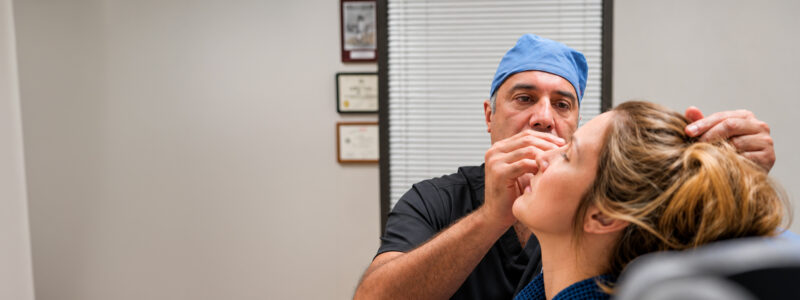
One of the first questions patients ask me about a brow lift is how long they’ll need to recover. They want to know when the swelling will go away, when they can return to work and how soon they’ll look like themselves again.
Those are reasonable questions, but I think it’s important to distinguish between looking presentable and being completely healed. After a brow lift, you may feel comfortable returning to your usual routine while your forehead and scalp are still recovering. Some swelling may remain, your incisions may feel tight and areas of your scalp may still have reduced sensation.
Most of my brow lift patients can expect an initial recovery period of approximately one week, although the extent of surgery matters. Someone having an isolated temporal brow lift may have a different experience from someone undergoing a combined endoscopic and temporal lift, particularly when eyelid surgery or other facial procedures are performed at the same time.
What I want patients to understand is how recovery normally progresses. The first few days are generally about managing swelling and discomfort. The following weeks involve returning to daily activities while the tissues continue healing. The final brow position takes longer to settle.
Looking recovered after a brow lift and being completely healed are two different milestones.
Why Brow Lift Recovery Isn’t the Same for Every Patient
Before I discuss the recovery timeline, I want to explain why two patients can have different experiences even when both have undergone a brow lift.
temporal brow lift focuses primarily on the outer eyebrow. An endoscopic brow lift allows me to work more broadly across the forehead and brow tissues. I often combine these approaches when I want to address both the lateral and more central portions of the brow.
The amount of dissection, incision placement and extent of tissue repositioning can affect postoperative swelling and sensation. If I’m also performing upper blepharoplasty, bruising around the eyes may be more noticeable. A patient undergoing a brow lift as part of comprehensive facial rejuvenation may need additional recovery time because of the other procedures.
Your individual healing response matters too. Some patients bruise more easily than others. Swelling doesn’t resolve at exactly the same rate in every person, and the return of normal sensation can be particularly variable.
INSIGHTS FROM DR. ATHRÉ
A Patient’s Experience During Early Brow Lift Recovery

In this patient journey, I discuss recovery three days after surgery and the patient’s experience with forehead heaviness, swelling and discomfort. Her treatment included a brow lift, upper blepharoplasty, lower eyelid skin treatment and facial fat transfer, so her recovery is not representative of an isolated brow lift. The longer video also includes surgical footage.
THE FIRST FOUR WEEKS
Your Brow Lift Recovery Timeline at a Glance
I find it useful to divide the first month into four stages. These aren’t rigid deadlines. They’re a general guide to what patients commonly experience as swelling decreases and everyday activities become more comfortable.
Days 1–3
Swelling and bruising develop. The forehead may feel tight, heavy or unusually firm. Rest, head elevation and incision protection are priorities.
Days 4–7
Early swelling often begins improving. Bruising may become more visible around the eyes, and many patients start feeling more comfortable with light activities.
Week Two
Much of the visible bruising and swelling may have improved. Patients often return to work and social activities, although the scalp and incisions are still healing.
Weeks Three & Four
Daily routines become easier. Residual swelling, numbness and incision sensitivity may persist, and the brow continues settling into its postoperative position.
What matters is the direction of healing. I expect the overall trend to be toward less swelling, greater comfort and improving activity tolerance. If something is becoming significantly worse rather than gradually improving, I want to know about it.
Days 1–3: Swelling, Tightness and Forehead Heaviness
During the first few days, it’s common for the forehead and scalp to feel different from normal. Patients may describe pressure, tightness, heaviness or tenderness around the incision sites. Some develop headaches, while others have relatively little discomfort.
The swelling may be more noticeable on the second or third day than it was immediately after surgery. That’s something I discuss with patients because the increase can be surprising if they’re expecting every day to look better than the one before.
Bruising can also appear around the upper and lower eyelids, even when the surgery was performed through incisions in the scalp. Fluid and bruising may become more visible in the tissues surrounding the eyes as healing progresses.
In my patient’s July 2025 recovery video, she describes a feeling of heaviness in her forehead three days after surgery. She also explains that her discomfort had been manageable during the early recovery period. That’s one patient’s experience following several procedures, but it illustrates the type of sensations patients sometimes describe.
During these first days, I generally want patients resting with their head elevated, taking their prescribed medications as directed and avoiding activities that increase pressure or strain around the surgical area. Short, gentle walks are usually encouraged when appropriate, but strenuous exercise is not.
Instructions about dressings, cold compresses and washing your hair depend on the particular operation. I don’t want patients putting direct ice, heat or pressure on their forehead without following the instructions provided for their surgery.
Days 4–7: When the Early Swelling Starts to Improve
As the first week progresses, many patients notice that the tightness and swelling are beginning to decrease. Bruising may change color as it fades, and the eyes may start looking more like they did before surgery, although they can still appear puffy.
This is often when patients become more interested in returning to everyday activities. They may feel comfortable walking around the house, doing light tasks or working remotely for limited periods.
It’s also a time when I want patients to continue being careful. Feeling better doesn’t mean the tissues are ready for heavy lifting, vigorous exercise or activities that put pressure on the forehead.
Depending on how the incisions were closed, some patients will have sutures or staples removed around the end of the first week or during the following week. The timing depends on the surgical technique and how the incision is healing.
Some patients experience itching or an unusual pulling sensation as the incision begins healing. These sensations can be part of the normal recovery process, but I still want to examine any area that becomes increasingly painful, red or swollen.
For isolated brow lifting, a return to certain types of work may be reasonable around this stage. I would not promise that every patient will be socially presentable by day seven, particularly when significant bruising is present or other procedures were performed.
Week Two: Looking More Like Yourself Again
By the second week, many patients have experienced substantial improvement in their visible swelling and bruising. The forehead may look smoother, and the relationship between the eyebrow and upper eyelid begins to appear more natural as early swelling resolves.
This is often the point when returning to work or social activities becomes more comfortable. However, I distinguish a desk job from a physically demanding job. Someone who spends the day at a computer has very different physical requirements from someone who regularly lifts heavy objects or performs strenuous manual work.
Patients sometimes ask whether they can wear makeup to cover remaining bruising. That generally becomes an option once the relevant skin and incisions are sufficiently healed, but I want them to follow their specific postoperative instructions rather than place cosmetics over an incision that hasn’t closed.
Another common observation is that the forehead or scalp still doesn’t feel completely normal. There may be numbness, tingling or sensitivity in areas near the incisions and through the tissues that were repositioned.
Those sensations can improve gradually rather than disappearing on a particular day. I pay attention to their location, severity and whether they’re improving over time.
During follow-up visits, I assess incision healing, brow position, swelling and any changes in sensation. This is also an opportunity for patients to ask about returning to specific activities rather than making assumptions based on the calendar.
Weeks Three and Four: Why You May Look Healed but Still Feel Different
By the third and fourth weeks, many patients are comfortable with most ordinary daily activities. The more obvious bruising has usually improved, and the forehead no longer feels as tight as it did during the first several days.
But I want to be careful about calling this the end of recovery.
Some residual swelling may remain around the brow or temples. Incisions can still have redness, firmness or sensitivity. Reduced scalp sensation may persist well beyond the first month, particularly when a more extensive endoscopic dissection was performed.
The eyebrow itself may also still be settling. Tissue swelling and changes in the healing forehead can affect how high or symmetrical the brows appear in early photographs.
Patients sometimes become concerned when one eyebrow seems to settle differently from the other. Some temporary differences can be related to swelling, but I wouldn’t automatically dismiss a significant or persistent asymmetry as normal. That’s something I want to evaluate in person.
Exercise is another area where I make individualized recommendations. Light activity is generally resumed before strenuous exercise, and some patients may need restrictions beyond the first month. I base those decisions on healing, the extent of surgery and whether other procedures were performed.
At one month, I want to see that you’re healing well. I don’t expect every part of the forehead and scalp to have finished healing.
WHAT PATIENTS DON’T ALWAYS EXPECT
Why Your Scalp May Still Feel Numb After the Swelling Is Gone
One of the less visible aspects of brow lift recovery is the return of normal sensation.
During surgery, I work through tissues that contain small sensory nerve branches. Even when those nerves are preserved, the dissection and swelling around them can temporarily affect how the forehead and scalp feel afterward.
Some patients notice reduced sensation near the hairline. Others describe tingling, itching, tightness or an unusual sensitivity when touching their scalp or brushing their hair.
This isn’t necessarily related to how much pain the patient experienced during the first week. Someone can have very little postoperative pain and still notice an area of numbness for several months.
Research on endoscopic forehead lifting supports the fact that sensory recovery often extends beyond the initial visible recovery period. In one large series of endoscopic forehead lifts, the average time for forehead numbness to recover was approximately 2.3 months. That is a study average, not a guarantee for an individual patient.
I want to know if sensation is changing, particularly if a patient develops persistent or increasing pain, marked weakness or another concerning symptom. Ordinary postoperative numbness and a new complication are not the same thing, and they shouldn’t be treated as interchangeable.
When Will My Eyebrows Settle Into Their Final Position?
Patients are often eager to evaluate their result as soon as the dressings come off. I understand that, but the position of the brow during the first few days is not necessarily the position it will maintain after healing.
Initially, swelling can change how the eyebrow appears. The tissues have also been repositioned and secured, and they need time to heal into their new relationship with the surrounding forehead and scalp.
As swelling decreases, the brow may look less elevated than it did immediately after surgery. Some settling is expected, but the amount varies with the technique, fixation method and the patient’s anatomy.
This is one reason I don’t want patients repeatedly pulling, pressing or manipulating their eyebrows to compare positions during early recovery. The tissues need to heal without unnecessary tension.
I also don’t expect the final appearance to be completely established at one month. Brow shape, incision appearance and sensation can continue changing over the following months.
When you’re evaluating the result, I encourage you to consider the overall relationship between the brow and the eyes rather than focusing only on how many millimeters higher the eyebrow appears.
Patients who want to understand what changes anatomically during brow lift surgery can review our brow lift procedure page. Our brow lift before and after gallery also illustrates how different patients may benefit from different amounts of correction, although many of those results involve additional facial procedures.
Taking Care of Your Hairline and Incisions During Recovery
Temporal and endoscopic brow lift incisions are commonly placed near or within the hairline. Their location helps make them less conspicuous, but they still require appropriate postoperative care.
I want patients to understand that the scalp may be sensitive or partially numb during healing. That makes it important to be careful with combs, hair dryers, hot water and anything that could irritate an incision.
The timing of shampooing, the type of cleanser to use and whether an ointment is needed depend on the specific wound-care instructions. I don’t recommend applying new skin products or scar treatments directly to the incisions simply because they’re available over the counter.
Hair coloring, styling treatments and activities that place tension near the hairline may need to be postponed until the incisions are sufficiently healed.
Some patients also experience temporary hair thinning around an incision. That doesn’t happen to everyone, but it is a recognized potential effect of brow lift surgery. I discuss that possibility before surgery and examine any concerns during follow-up.
The goal during the first month is to protect healing tissue. Scar maturation takes considerably longer, and the final appearance of an incision shouldn’t be judged from how it looks during the first few weeks.
When Swelling or Discomfort Needs Medical Attention
Some swelling, bruising, tightness and altered sensation are expected after brow lift surgery. But I don’t want patients to assume that every postoperative symptom is normal simply because they’re recovering from an operation.
Sudden or rapidly increasing swelling, significant bleeding, worsening pain that isn’t controlled with the prescribed treatment, fever, unusual drainage or increasing redness around an incision are reasons to contact the surgical team promptly.
New visual changes, particularly sudden vision loss, or severe eye pain require immediate emergency medical evaluation. Chest pain, severe shortness of breath or other serious symptoms also warrant emergency care.
I’m particularly interested in symptoms that change abruptly or progress rather than gradually improve. The first month should be a period of recovery, not increasing distress.
Every patient receives instructions specific to their procedure. Those instructions, along with direct communication with our office, take priority over any general timeline described in an article.
How Much Time Should You Plan to Take Off Work?
For someone undergoing an isolated brow lift with a relatively sedentary job, approximately one week may be a reasonable initial planning estimate. I still want patients to understand that visible bruising, swelling or fatigue could make them prefer additional time.
If the surgery is more extensive, involves upper eyelid surgery or is combined with other facial rejuvenation procedures, I may recommend planning closer to two weeks or longer depending on what is being performed.
The demands of your job matter. Someone working remotely may be able to return before someone whose work involves heavy lifting, physical exertion or prolonged time on their feet.
I also want patients to separate returning to work from returning to strenuous exercise. Those are two different recovery decisions, and being comfortable at a desk does not mean the surgical tissues are ready for heavy physical activity.
For patients traveling to Houston, I want travel arrangements to accommodate the required postoperative appointments and any necessary follow-up before returning home. Our out-of-town patient resources can help with that planning.
You can also learn more about our broader approach to recovery support on the post-operative healing page. Recovery services are individualized, and they don’t replace the normal healing time required after surgery.
MY FINAL THOUGHT
Give the Brow Time to Heal Before Judging the Result
When I perform a brow lift, I’m trying to restore a more appropriate relationship between the eyebrow and the upper eye. I want that improvement to look natural, and I want the tissues to heal properly around the correction I’ve made.
During the first month, I expect patients to see meaningful progress. Swelling improves, bruising fades and ordinary activities become more comfortable. But there may still be numbness, sensitivity or small changes in brow position as healing continues.
If you’re considering brow lift surgery, I want you to plan for the visible recovery and understand that the deeper healing takes longer.
One month is an important milestone, but it isn’t the finish line. The purpose of follow-up appointments is to make sure the healing is progressing appropriately and to address concerns rather than simply comparing your appearance with a particular day on the calendar.
FREQUENTLY ASKED
Questions About Brow Lift Recovery
These are some of the questions I discuss with patients preparing for brow lift surgery and planning their recovery during the first month.
How long does it take to recover from a brow lift?
The initial recovery period is commonly about one to two weeks, although an isolated brow lift may involve less downtime than a combined facial rejuvenation procedure. Looking presentable is different from being completely healed. In a published study of patient-reported recovery after endoscopic brow lifting, most respondents reported swelling lasting less than two weeks, but other symptoms and recovery experiences varied. I want patients to plan according to their particular operation rather than assume everyone will be recovered on the same day.
When does swelling peak after brow lift surgery?
Swelling commonly becomes more noticeable during the first several days and then gradually improves. Bruising may also appear around the eyelids even when the incisions are in the scalp. The American Society of Plastic Surgeons’ brow lift recovery guidance explains that early swelling and bruising are expected and that healing continues for several weeks. Rapidly increasing swelling, especially when associated with significant pain or other concerning symptoms, should be evaluated rather than assumed to be routine.
Is forehead numbness normal one month after a brow lift?
Temporary numbness or altered sensation can persist beyond the first month, especially after procedures involving dissection through the forehead and scalp. In a study of 650 endoscopic forehead lift procedures, the average reported time for forehead numbness to recover was approximately 2.3 months. That doesn’t mean every patient follows the same timeline. I assess the location and progression of sensory changes during follow-up and want patients to report worsening pain, weakness or other unusual symptoms.
Can I return to work one week after a brow lift?
Many patients with sedentary jobs can consider returning to work after approximately one week, but the type of surgery and the amount of visible swelling matter. In research examining recovery after endoscopic brow lifting, patients who also underwent facelift surgery were more likely to require two weeks or longer before resuming normal activities. I make this recommendation individually, especially for patients undergoing several procedures or performing physically demanding work.
Are headaches common after endoscopic brow lifting?
Some patients experience headaches or forehead discomfort during recovery, and the severity varies. A published study of headache symptoms following endoscopic forehead surgery found that headaches could be substantial and persist during the first month in some women. I don’t want patients to assume all brow lift discomfort will be mild or to ignore a severe or worsening headache. Pain that is not controlled as expected, or is accompanied by other concerning symptoms, needs medical assessment.
When can I exercise after a brow lift?
Gentle walking is generally encouraged early in recovery when appropriate, but strenuous exercise and heavy lifting need to be restricted while the tissues heal. The American Society of Plastic Surgeons’ recovery guide describes a gradual return to physical activity, with the timing of more strenuous exercise depending on surgical clearance. I determine those restrictions based on the procedure performed, the patient’s healing and whether additional facial surgery was involved.
What if my eyebrows look uneven during the first month?
Early swelling and natural preexisting asymmetry can affect how the brows appear during recovery. However, persistent or significant asymmetry deserves evaluation. A systematic review of complications across brow lift techniques identifies asymmetry as a recognized possible complication. I examine brow position as swelling resolves rather than assuming every difference is temporary or judging the final result from an early postoperative photograph.
Will I see my final brow lift result after 30 days?
Usually not completely. Much of the visible swelling may have improved, but the brow position, incisions and scalp sensation can continue changing over the following months. A systematic review and meta-analysis of long-term brow lift outcomes evaluated brow elevation beyond the early healing period and found sustained improvement across the included techniques. Thirty days is a useful recovery milestone, but I don’t consider it a deadline for the final appearance.