
Microneedling is one of those treatments that sounds almost too simple. Very small needles create controlled microchannels in the skin, and your skin responds by beginning a repair process that can improve texture, fine lines, acne scars and overall skin quality.
But I don’t think of microneedling as a generic “glow” treatment. The important questions are what you are trying to improve, how aggressive the treatment needs to be and whether microneedling is actually the right tool for your skin.
Microneedling does not resurface the skin the same way a laser does. Its value comes from creating a controlled injury that encourages the skin to repair and remodel itself.
COLLAGEN INDUCTION THERAPY
What Is Microneedling?
Microneedling, sometimes called collagen induction therapy, uses a device containing very fine needles to create controlled microchannels in the skin.
Those channels are intentional. The goal is not simply to puncture the surface. We are using a controlled mechanical injury to initiate the skin’s natural wound-healing response.
As the skin repairs itself, it begins a remodeling process that includes new collagen formation. That is why microneedling is used to improve problems such as uneven texture, fine lines and certain types of scarring.
The result develops gradually rather than appearing the moment the treatment is finished.
From Microchannels to New Collagen
I think microneedling makes more sense when you can see what is happening underneath the surface. The process can be thought of in three stages.

Controlled Microchannels
Fine needles enter the skin at a controlled depth, creating small channels while leaving the surrounding tissue largely intact.

Healing Response
The controlled injury initiates the skin’s repair response and begins the remodeling process.
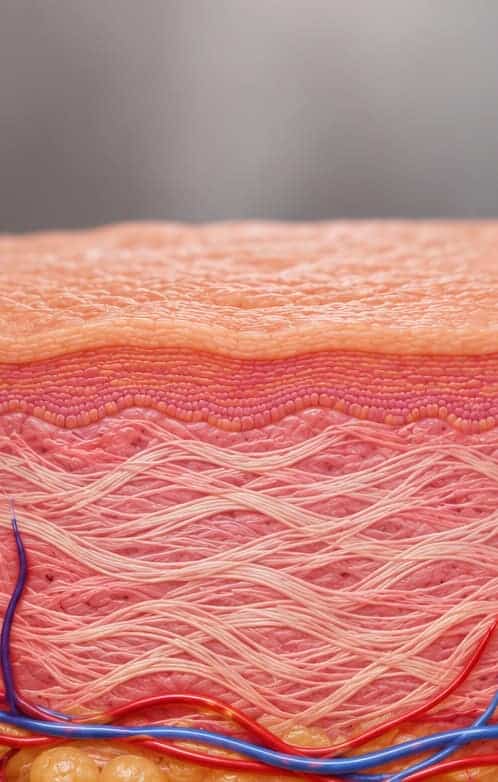
Collagen Remodeling
Over the following weeks and months, collagen remodeling can gradually improve the texture and quality of the treated skin.
This is also why I don’t judge microneedling by what the skin looks like the next morning. Some early improvement may be related to temporary swelling. The remodeling we actually care about takes longer.
As the healing process continues, changes in collagen and skin architecture develop beneath the surface. That gradual response is part of what separates true remodeling from the temporary plumping you may see immediately after treatment.
The treatment happens in the office. The remodeling continues after you leave.
WHAT IT CAN IMPROVE
What Does Microneedling Actually Help?
Microneedling is most useful when the problem is related to skin quality rather than facial structure.
I may consider it for concerns such as fine lines, rough or uneven texture, enlarged-appearing pores, certain acne scars and other superficial scars, photoaging and overall skin quality.
The degree of improvement depends on what we are treating. A patient with relatively mild textural irregularity is very different from someone with deep acne scarring or significant sun damage.
What matters clinically is understanding the distinction between a skin problem and a structural problem.
Microneedling can improve the quality of the skin. It cannot reposition a descended cheek, eliminate a jowl or perform the work of a facelift.
Microneedling for Acne Scars
Acne scarring is one of the reasons patients frequently ask about microneedling. It can be a useful treatment for selected types of atrophic acne scars, but “acne scars” is a much broader diagnosis than it sounds.
Some scars are shallow. Some are narrow and deep. Others are tethered beneath the surface. A treatment that improves one type of scar may do very little for another.
Depth matters too. A superficial textural irregularity and a deep scar are not the same problem simply because both are visible on the surface of the skin.
That is why I don’t like promising that a certain number of microneedling sessions will erase acne scars. I first want to understand the type and depth of the scarring and then decide whether microneedling alone makes sense or whether another approach would be more appropriate.
CHOOSING THE RIGHT TOOL
Microneedling vs. Laser Resurfacing
Patients sometimes ask whether microneedling is basically a milder version of laser resurfacing. I would not describe it that way.
Both treatments intentionally create a controlled injury so that the skin repairs and remodels itself, but they create that injury differently.
Fine needles mechanically create controlled channels in the skin, stimulating a repair and collagen-remodeling response.
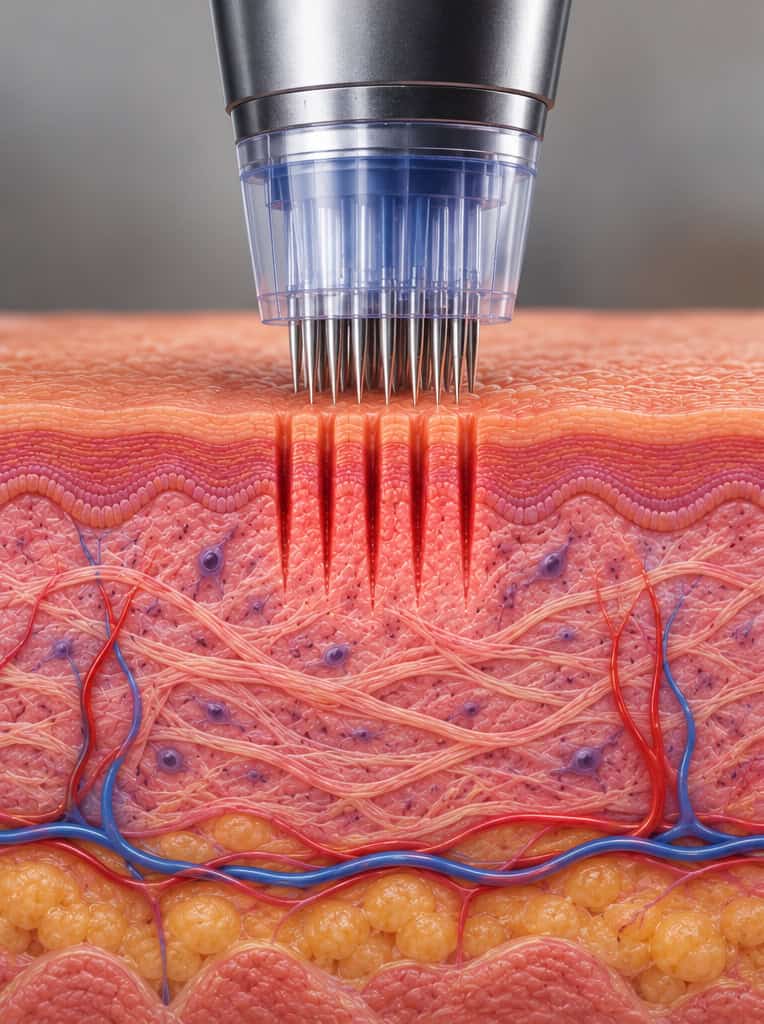
Microneedling
Laser energy creates controlled thermal injury, with the depth and pattern of treatment depending on the laser and settings being used.
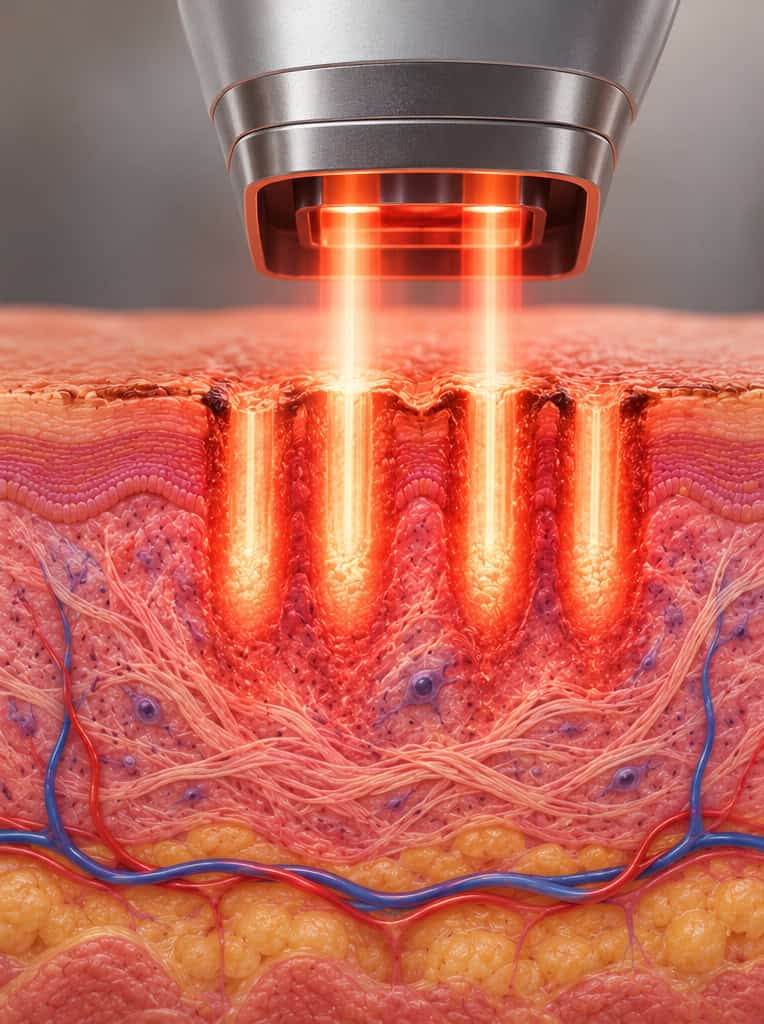
Laser Resurfacing
For relatively mild texture concerns or patients who want a treatment with a different recovery profile, microneedling may make sense. For more significant sun damage, deeper wrinkles or skin that requires more aggressive resurfacing, I may have a different conversation about laser skin resurfacing.
Even within laser resurfacing, there is a major difference between fractional and fully ablative treatment. The more aggressively I treat the skin, the more meaningful the potential improvement may be, but the recovery and risk profile also change.
I don’t choose between microneedling and laser based on which device sounds better. I choose based on the skin problem we are trying to solve and how much treatment that problem requires.
What About Microneedling for Darker Skin Tones?
Skin tone matters whenever I am planning a procedure that intentionally injures the skin.
Microneedling creates a mechanical injury rather than the same type of thermal injury produced by a laser. That can make it a useful option when pigment response is an important consideration, but I would not translate that into “there is no pigment risk.”
Post-inflammatory hyperpigmentation can occur after skin injury, including microneedling. That possibility becomes particularly important in patients whose skin has a tendency to produce persistent pigmentation after inflammation.
Treatment depth, existing pigmentation, active inflammation, healing history and what is applied to the skin around treatment all matter. I still evaluate the individual skin rather than assuming a treatment is automatically appropriate because it is microneedling.
Does Microneedling Hurt?
Before treatment, a topical anesthetic is typically used to make the procedure more comfortable.
I would not call microneedling completely pain-free because people experience treatment differently and some areas of the face are more sensitive than others.
The treatment itself is performed by passing the microneedling device across the selected areas at settings chosen for the skin and the problem being treated.
Depth matters. More is not automatically better. The objective is to create enough controlled injury to produce the response we want without creating unnecessary trauma.
AFTER TREATMENT
What Is Microneedling Recovery Like?
Immediately after microneedling, the skin commonly looks red and may feel warm or sensitive. Mild swelling, dryness or flaking can also occur as the skin recovers.
How noticeable that recovery is depends partly on how aggressively the skin was treated. A superficial treatment and a deeper treatment should not be expected to look identical afterward.
For many patients, the most noticeable redness and sensitivity improve over the first several days. The exact course varies with treatment depth, skin sensitivity and the individual healing response.
This is why I don’t like describing microneedling as having “no downtime.” The recovery is generally much easier than aggressive ablative resurfacing, but your skin has still been intentionally treated and needs time to recover.
When Will I See Microneedling Results?
Your skin may look brighter or temporarily plumper relatively early, but I separate that from the collagen-remodeling effect we are actually trying to create.
Collagen does not remodel overnight. Improvement in texture and scars develops progressively as the skin heals and reorganizes.
Many patients undergo a series of treatments rather than one session, particularly when we are trying to improve a problem such as acne scarring or more established textural change.
There isn’t one treatment schedule that I apply to every face and every problem. The number of sessions and the interval between them depend on what we are treating, how aggressively each session is performed and how the skin responds.
I would rather build a treatment plan around the endpoint we are trying to reach than promise everyone the same number of sessions.
What About PRP, Growth Factors and Serums With Microneedling?
Because microneedling temporarily creates channels through the skin barrier, there is a lot of interest in combining the procedure with platelet-rich plasma, growth-factor products and other topical preparations.
I think this is an area where patients should be careful about assuming that adding more products automatically creates a better treatment.
What is placed onto freshly microneedled skin matters. Products that are perfectly reasonable to apply to intact skin are not necessarily products I want introduced through thousands of newly created channels.
If I combine microneedling with another treatment or topical product, I want a specific reason for doing it rather than adding something simply because it can be added.
Who Is a Good Candidate for Microneedling?
A good candidate is generally someone with a skin-quality concern that microneedling can realistically improve and skin that is healthy enough to undergo controlled injury and healing.
There are also situations where I would delay treatment or choose another approach. Active infection, an inflammatory skin eruption, open wounds and certain medical or healing issues can change whether treatment is appropriate.
The specific concern matters just as much. If what bothers you is primarily loose skin, significant facial descent or deeper structural aging, microneedling may simply be the wrong procedure.
Being able to perform a treatment does not mean it is the treatment you need.
MY APPROACH
How I Think About Microneedling in a Skin Rejuvenation Plan
When someone comes in asking for better skin, I first try to define what “better” actually means.
Are we treating acne scars? Fine lines? Uneven texture? Pigmentation? Significant sun damage? Laxity? Those may sound like variations of the same problem when you look in the mirror, but biologically they are not the same.
Microneedling may be exactly enough for one patient and not nearly enough for another.
Someone else may be better served by a chemical peel, laser resurfacing or a combination approach. The right choice depends on the type and depth of the skin problem, the patient’s skin characteristics and how much recovery makes sense.
That is the part of skin rejuvenation I think gets lost when treatments are marketed primarily by device name.
Don’t start by asking me which machine I like. Start by showing me the skin problem you want to improve.
FREQUENTLY ASKED
Microneedling Questions
These are some of the questions patients commonly ask when deciding whether microneedling is the right treatment for their skin.
What does microneedling actually do to the skin?
It creates controlled mechanical microinjuries that initiate a healing response. Human biopsy research has demonstrated increased newly synthesized collagen after microneedling.
Does microneedling really stimulate collagen?
Yes. Histologic research has found significant increases in collagen types I, III and VII and newly synthesized collagen after treatment.
Does microneedling work for facial rejuvenation?
It can improve selected signs of skin aging. A 2025 systematic review evaluated 21 studies involving 723 facial-rejuvenation patients, while also noting that outcome measures were not standardized.
Can microneedling improve acne scars?
Yes, particularly selected atrophic scars. A systematic review found that all 33 included studies reported improvement in acne-scar appearance. Scar type and depth still matter.
Is microneedling better than a chemical peel for acne scars?
Not universally. A 2026 systematic review and meta-analysis found no clear overall superiority between microneedling and chemical peels for atrophic acne scars.
How many microneedling treatments will I need?
There isn’t one number for everyone. In a recent systematic review, most facial-rejuvenation studies used multiple sessions and treatment schedules varied. I base the series on the problem and your response.
How long does it take to see microneedling results?
Early changes can occur, but collagen remodeling is gradual. Biopsy research has documented histologic changes one and three months after starting treatment.
What is the downtime after microneedling?
Redness, swelling, discomfort, dryness or flaking can occur. A systematic review found that the most common reported side effects were temporary and generally resolved within seven days.
Is microneedling safe for darker skin tones?
It can be used in darker skin, but pigment risk is not zero. Published safety research identifies post-inflammatory hyperpigmentation as a possible complication, so treatment still needs to be individualized.
Can microneedling cause scarring or hyperpigmentation?
It can, although most reported adverse effects are temporary. Persistent complications reported in the literature include post-inflammatory hyperpigmentation, tram-track scarring and granulomatous reactions.
Is microneedling better than laser resurfacing?
Neither is universally better. They create controlled injury differently and can address different degrees of skin damage. I choose between microneedling and laser resurfacing based on the skin problem, treatment goals and acceptable recovery.
Should PRP, growth factors or serums be added to microneedling?
Not automatically. Because microneedling disrupts the skin barrier, what is applied matters. A safety review recommends caution with products not approved for intradermal use.


