Patients often associate brown spots on the face with getting older. We even call them age spots. But the name is somewhat misleading. Most of these spots develop because of accumulated sun exposure, not simply because another birthday has passed.
I see this frequently when evaluating patients for facial rejuvenation. Someone may be bothered by wrinkles, loose skin or changes in facial volume, but there is often another component to the aging process: the skin itself has developed uneven pigmentation, discoloration and other evidence of years of ultraviolet exposure.
That distinction matters because the treatments are different. A facelift can reposition deeper facial tissues, but it does not remove sun spots from the skin. Pigmentation needs to be evaluated and treated separately.
The good news is that we have several ways to address these changes, from daily sun protection and topical skin care to chemical peels and laser treatments.
Before choosing any treatment, though, I want to know what the brown spot actually is. Not every area of pigmentation is an age spot, and not every spot should be treated cosmetically.
UNDERSTANDING PIGMENTATION
What Causes Age Spots on the Face?
Age spots are also called sun spots, liver spots or solar lentigines. They are generally flat areas of increased pigmentation that develop on skin exposed repeatedly to sunlight.
They most commonly appear on the face, hands, shoulders, chest and arms. They may be light brown, tan or darker brown, and they can become more noticeable over time.
To understand why they develop, we need to talk about melanin.
Melanin is the pigment that gives our skin its color. Specialized cells called melanocytes produce it, and ultraviolet radiation stimulates that production as part of the skin’s response to sun exposure.
With years of repeated exposure, the normal regulation and distribution of pigment can change. Some areas develop persistent concentrations of melanin, creating the brown spots we recognize as solar lentigines.
This is not primarily a problem of lipofuscin, as some older explanations of age spots suggest. The characteristic discoloration is associated with changes in melanin production and distribution in chronically sun-exposed skin.
Age is relevant because sun exposure accumulates over time. Someone who has spent decades outdoors has had more opportunities for photodamage than someone with less cumulative exposure.
But I can see pigmentation changes in younger patients, too. People in their twenties and thirties may already have visible signs of sun damage, particularly if they have a history of intense sun exposure, sunburns or tanning bed use.
Research on photoaging and ultraviolet skin damage supports the importance of chronic sun exposure in the development of visible skin aging.
Are All Brown Spots on the Face Age Spots?
No, and this is one of the most important distinctions I want patients to understand.
Several different conditions can cause darker areas of facial skin. They can look similar in photographs or in the bathroom mirror, but they do not necessarily respond to the same treatment.
Solar Lentigines
These are the classic age spots associated with cumulative ultraviolet exposure. They are usually relatively well-defined, flat areas of brown pigmentation.
Freckles
Freckles commonly develop in people who are genetically predisposed to them. They often become darker with sun exposure and may fade when exposure decreases.
Melasma
Melasma often appears as broader, sometimes symmetrical patches of pigmentation on the cheeks, forehead or upper lip. Sunlight, visible light and hormonal influences can contribute to it.
Melasma is not the same condition as an isolated solar lentigo, and aggressive procedures can sometimes make it worse.
Post-Inflammatory Hyperpigmentation
This is pigmentation that remains after inflammation or injury, such as acne, an irritated skin condition or a previous procedure.
It can be especially persistent in patients with darker skin tones. A systematic review of treatment in skin of color discusses both the challenges of this condition and the importance of choosing treatments carefully.
Other Pigmented Lesions
Seborrheic keratoses, actinic keratoses and certain skin cancers can also produce spots or patches that patients mistake for age spots.
This is why I do not want someone applying a bleaching product or scheduling a laser treatment simply because a dark area has appeared on the skin. A new, changing or suspicious lesion needs appropriate medical evaluation first.
PREVENTING SUN DAMAGE
Can You Prevent Age Spots from Developing?
Prevention is where I believe patients have the greatest opportunity to influence their skin over time.
We cannot completely stop the aging process. We can, however, reduce one of the largest contributors to visible skin aging: ultraviolet radiation.
I talk about sunscreen frequently because it is one of the simplest and most useful habits patients can establish.
Both UVA and UVB radiation can damage the skin. UVA penetrates more deeply and contributes to photoaging and pigmentation changes. UVB is a major cause of sunburn. Both are relevant to skin cancer risk.
A sunscreen labeled broad spectrum provides protection against both UVA and UVB radiation.
For daily use, I recommend choosing a broad-spectrum sunscreen with SPF 30 or higher, applying it generously to exposed skin and reapplying according to the product instructions, particularly when outdoors.
When spending prolonged periods outside, reapply approximately every two hours and after swimming or sweating, as directed on the label. A hat, sunglasses, shade and sun-protective clothing add another important layer of protection.
One frequently overlooked area is the hands. Patients may protect their faces but leave the backs of their hands exposed during driving, walking and everyday activities.
And sunscreen is not just a habit for summer vacations. Repeated incidental exposure over many years contributes to cumulative photodamage.
A randomized clinical trial involving 903 adults found that the group assigned to daily sunscreen use had significantly less progression of skin aging over 4.5 years than participants who used sunscreen at their discretion.
If I had to emphasize one habit for protecting the appearance of your skin over time, it would be consistent sun protection. It is much easier to reduce additional photodamage than to reverse everything that has already occurred.
Does Diet Help Prevent Age Spots?
A balanced diet supports general skin health. Vegetables, fruits, adequate protein and good overall nutrition are important.
But I would not tell patients that eating particular orange vegetables or taking a carotene supplement will prevent solar lentigines.
In fact, the sunscreen trial I mentioned also evaluated beta-carotene supplementation and did not find an overall benefit for preventing skin aging.
Nutrition and skin care are not interchangeable. Eating well is worthwhile, but it is not a substitute for protecting your skin from ultraviolet exposure.
INSIGHTS FROM DR. ATHRÉ
Is Your Sunscreen Actually Protecting Your Skin?
I explain the differences between UVA and UVB radiation, what to look for in a sunscreen, how much to apply and why consistent use matters for preventing premature skin aging and sun damage.
TOPICAL PIGMENT CORRECTION
Which Skin Care Ingredients Can Help Fade Age Spots?
Once pigmentation is already present, sunscreen alone may not produce the degree of improvement a patient wants.
There are topical ingredients that can help improve uneven pigmentation. They work through different mechanisms, and the appropriate selection depends on whether we are treating solar lentigines, melasma, post-inflammatory hyperpigmentation or another condition.
I prefer to think about a coordinated skin care regimen rather than assuming that one ingredient will address every skin concern.
Hydroquinone
Hydroquinone is a pigment-reducing medication that decreases melanin production. It has been used for several forms of hyperpigmentation, including selected cases of sun-related discoloration.
There is an important distinction between prescription hydroquinone and products sold without proper authorization.
In the United States, hydroquinone-containing skin-lightening products are not approved for over-the-counter sale. The FDA has warned consumers about illegally marketed products, including the potential for irritation, swelling and persistent abnormal discoloration called ochronosis.
When hydroquinone is appropriate, it should be used with medical guidance. I would not recommend purchasing an unregulated skin-lightening product online or using one indefinitely without supervision.
Azelaic Acid, Kojic Acid and Niacinamide
Other ingredients commonly found in pigment-correcting regimens include azelaic acid, kojic acid and niacinamide.
These ingredients can be useful for certain types of hyperpigmentation, although the amount of improvement varies and the evidence is not equally strong for every type of age spot.
Azelaic acid may be particularly useful when pigment changes occur alongside acne or inflammation. Niacinamide is commonly included in skin care products because of its role in supporting the skin barrier and helping improve uneven tone.
I discuss these ingredients in my video about skin pigmentation concerns, including how different pigment correctors may fit into a skin care regimen.
Retinoids and Vitamin C
Retinoids can improve certain aspects of photodamage by promoting skin turnover and affecting the processes involved in skin aging. Vitamin C is commonly used as a topical antioxidant and may also help with some pigmentation concerns.
These ingredients often require consistent use over weeks or months. They can also cause irritation, so stronger products should be introduced thoughtfully.
A 2025 systematic review of solar lentigine treatments found evidence supporting selected topical treatments, including a prescription combination of mequinol and tretinoin, while noting that the optimal approach is not settled.
The important point is that a product should match the condition. A cream that is effective for one pigment disorder may not produce the same results for a different one.
SKIN RESURFACING
Can Chemical Peels Remove Age Spots?
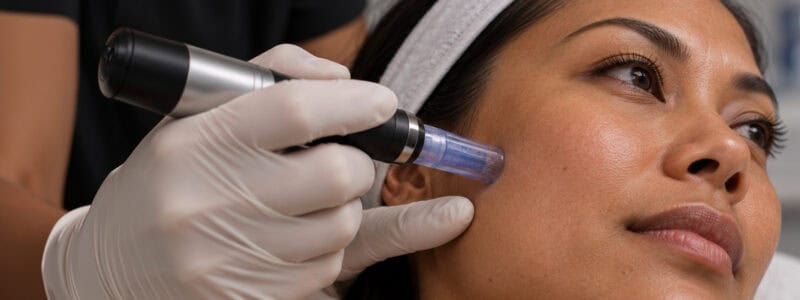
Chemical peels are one of the resurfacing treatments I use to address changes in skin quality, including certain forms of discoloration and sun damage.
A chemical peel uses a carefully selected solution to create a controlled injury in the skin. As the treated layers shed and heal, the appearance of uneven pigmentation, texture and fine lines may improve.
Not every chemical peel is the same.
Superficial peels commonly use ingredients such as glycolic acid or other alpha hydroxy acids. These primarily affect the more superficial layers of skin and may be appropriate for relatively mild concerns.
Medium-depth peels can reach deeper into the skin and may provide a more significant improvement in selected pigmentation and texture problems. They also involve more recovery and greater potential for complications.
One of the peeling agents I have discussed extensively is trichloroacetic acid, usually called TCA.
TCA can be used at different concentrations and treatment depths. Its effects depend on the formulation, application technique, skin characteristics and intended depth of treatment.
That is why I would not describe all chemical peels as a standard percentage of glycolic acid or assume that using a stronger solution automatically produces a better result.
In a systematic review of 41 clinical trials involving 3,234 patients, chemical peels were among the treatments evaluated for solar lentigines. They can provide improvement, although outcomes vary and some laser- and light-based treatments demonstrated greater effectiveness in the studies reviewed.
Peels also carry risks, including irritation, infection, scarring and changes in pigmentation. Treatment depth must be selected carefully, particularly for patients who are prone to post-inflammatory hyperpigmentation.
When a patient has both superficial discoloration and changes in skin texture, a peel may be useful because it can address more than one concern. But I would not select an aggressive peel simply to treat one isolated brown spot.
INSIGHTS FROM DR. ATHRÉ
How TCA Chemical Peels Improve Skin Quality
I explain how TCA chemical peels work, why the depth of treatment matters and how resurfacing may improve skin texture, discoloration and fine lines. The appropriate peel and recovery depend on each patient’s skin and treatment goals.
LIGHT & LASER TREATMENTS
Are Laser Treatments Effective for Sun Spots?
Laser and light-based treatments can be effective for certain forms of sun-related pigmentation, including properly diagnosed solar lentigines.
But I want patients to understand that the phrase “laser treatment” covers several different technologies.
Some devices target pigment more selectively. Others resurface broader areas of skin to address multiple aspects of photodamage.
Targeted Pigment Treatments
For selected sun spots, certain pigment-targeting lasers use wavelengths and pulse durations designed to interact with melanin in the skin.
There are also light-based treatments, such as intense pulsed light, or IPL, that may improve sun-related brown spots and uneven skin tone in appropriately selected patients.
IPL is not technically a laser. It delivers a range of light wavelengths rather than one laser wavelength, and it has its own indications, limitations and risks.
In the published literature, different pigment-targeting lasers and IPL systems have demonstrated improvement in solar lentigines. A 2023 systematic review reported generally favorable results for laser-based approaches, although the studies were heterogeneous and outcomes depended on the treatments evaluated.
CO2 Laser Resurfacing
CO2 laser resurfacing is a different type of treatment. Rather than focusing exclusively on an individual brown spot, it is commonly used to address broader skin-quality concerns such as fine lines, rough texture, photoaging and certain pigment changes.
It can be performed as a full-field ablative treatment or as fractional resurfacing, where microscopic treatment areas are separated by regions of untreated skin.
I explain those differences in greater detail in my article on fully ablative versus fractional CO2 laser resurfacing.
The choice between pigment-directed treatment and more extensive resurfacing depends on the condition we are trying to improve.
For someone with a few isolated sun spots and otherwise good skin quality, extensive resurfacing might be more treatment than the problem requires.
For someone with significant cumulative photodamage, fine lines and texture changes in addition to pigmentation, a broader skin resurfacing plan may be worth discussing.
I am not trying to choose the most powerful laser for every patient. I am trying to match the treatment to the depth, distribution and type of skin damage.
INDIVIDUALIZED TREATMENT
Can Age Spots Be Treated Safely in Darker Skin Tones?
Yes, patients with darker skin tones can be candidates for pigmentation treatments, but treatment selection requires additional attention to safety.
One of the important risks is post-inflammatory hyperpigmentation. This occurs when irritation or injury stimulates additional pigmentation, potentially leaving a darker area after treatment.
Patients with more melanin in their skin may be at greater risk of this response following certain lasers, peels or other procedures.
That does not mean laser treatment only works on very pale skin, nor does it mean every patient with darker skin should avoid these treatments entirely.
It means we need to evaluate the diagnosis, skin type, recent tanning, previous pigmentation reactions and specific device or peel being considered.
In some situations, a topical regimen and sun protection may be a better starting point than a procedure. In others, an appropriately selected device or superficial peel may be reasonable.
A 2024 systematic review of post-inflammatory hyperpigmentation treatments in skin of color found that several interventions can produce improvement, while also documenting cases in which laser treatment worsened pigmentation.
This is one reason I emphasize realistic expectations. Even an effective pigmentation treatment can create new discoloration if the skin reacts poorly.
There is no single setting, laser, peel concentration or treatment schedule that makes sense for every complexion.
WHEN TO SEEK MEDICAL EVALUATION
When Could a Brown Spot Be Something More Serious?
Most true solar lentigines are benign. They are a cosmetic concern rather than something that requires removal for medical reasons.
But not every brown spot is a solar lentigo.
Some skin cancers, including melanoma, can appear as pigmented lesions that resemble harmless sun spots.
There is a particular form of melanoma called lentigo maligna that frequently develops on chronically sun-damaged skin, especially on the face and head. In its early stages, it may resemble an irregularly pigmented patch rather than an obvious raised growth.
A medical review of lentigo maligna describes how these lesions can be mistaken for benign solar lentigines and other pigmented skin conditions.
Changes That Deserve Attention
I encourage patients to follow the American Academy of Dermatology’s ABCDE warning signs of melanoma:
- Asymmetry: One half of the spot looks different from the other.
- Border: The edges are irregular or poorly defined.
- Color: The lesion contains varying shades or unusual colors.
- Diameter: The spot may be larger than approximately 6 millimeters, although melanomas can be smaller.
- Evolving: The spot is changing in size, shape, color or appearance.
A spot that bleeds, becomes painful, develops a new texture, or looks significantly different from other lesions also deserves evaluation.
These warning signs do not mean that every unusual spot is cancer. They mean it should be examined rather than assumed to be harmless.
If a lesion is suspicious, I want the patient evaluated by a dermatologist who can determine whether further examination or a biopsy is necessary.
How Do I Decide Which Treatment Is Appropriate?
When I evaluate someone who wants to improve pigmentation, I start by considering the overall condition of the skin.
Is there one isolated, clearly defined spot? Are there multiple areas of sun damage? Is the pigmentation diffuse, as we might see with melasma? Is the person also concerned about wrinkles, rough texture or changes in skin quality?
I also consider the patient’s skin tone, previous treatments, current skin care products and the amount of recovery they are comfortable with.
For mild discoloration, a thoughtful topical regimen and consistent sun protection may be the most reasonable first step.
For broader concerns involving uneven pigmentation and texture, a chemical peel may be appropriate.
For selected sun spots or more significant photodamage, a light-based or laser treatment may provide additional options.
Sometimes the right decision is to refer a suspicious lesion for dermatologic evaluation before any cosmetic treatment is considered.
Whatever treatment we choose, I want patients to understand that improvement does not make their skin immune to future sun damage. Additional spots can develop with continued exposure.
The best long-term plan combines an accurate diagnosis, an appropriate treatment and consistent protection against the sunlight that contributed to the pigmentation in the first place.
If you are interested in improving sun-damaged skin, you can schedule a consultation to discuss which of our skin resurfacing treatments may be suitable for your concerns.
FREQUENTLY ASKED
Questions About Age Spots and Sun Damage
These are some of the questions patients ask about brown spots, sunscreen, pigment-correcting creams and professional treatments.
Are age spots caused by aging or sun exposure?
Age spots, also called solar lentigines, are primarily associated with accumulated ultraviolet exposure. They become more common with age because sun damage accumulates over many years, but younger patients can develop them too. A systematic review of solar lentigines identifies chronic ultraviolet exposure as the underlying cause. The pigmentation results from changes involving melanin, not excess lipofuscin.
Can sunscreen make existing age spots disappear?
Sunscreen helps prevent additional ultraviolet damage and can help limit the worsening of pigmentation, but it may not completely remove established age spots. A 52-week study of daily broad-spectrum sunscreen use documented improvement in several visible signs of photoaging, including pigmentation. More persistent spots may require topical treatment or a procedure. Consistent sunscreen use remains important regardless of the treatment chosen.
Is hydroquinone available over the counter?
Hydroquinone-containing skin-lightening products are not approved for over-the-counter sale in the United States. The FDA has warned about illegally marketed products and possible complications, including persistent abnormal pigmentation. Prescription pigment-reducing treatment may be appropriate under medical supervision. A 2025 treatment review discusses the evidence for prescription topical therapies used for solar lentigines.
Do chemical peels work for age spots?
Certain chemical peels may improve superficial pigmentation and sun damage, particularly when uneven skin texture is also present. Results depend on the peeling agent, treatment depth and the patient’s skin characteristics. A systematic review of 41 clinical trials found that chemical peels can improve solar lentigines, although outcomes vary and some laser-based treatments demonstrated greater effectiveness. Peels also carry risks of irritation and pigment changes.
Are laser treatments effective for brown spots?
Selected pigment-targeting lasers and intense pulsed light can improve properly diagnosed solar lentigines. However, the choice of technology matters, and not every brown patch is a solar lentigo. A systematic review of lentigine treatments found favorable outcomes for laser-based approaches while noting differences in response and adverse effects across treatment types. Broader CO2 resurfacing may be more appropriate when pigmentation occurs alongside wrinkles and other skin-quality changes.
Can people with darker skin tones have laser or chemical peel treatments?
Yes, but treatments must be individualized. Patients with darker skin may have a higher risk of post-inflammatory hyperpigmentation after certain procedures. A 2024 systematic review focused on skin of color found that several therapies can improve pigmentation, but laser treatment sometimes caused worsening. A patient’s skin type, diagnosis, previous reactions and the selected device or peeling agent all influence treatment safety.
Is melasma the same thing as an age spot?
No. Solar lentigines are usually more defined spots associated with cumulative sun exposure, while melasma often presents as broader patches influenced by sunlight, visible light and hormones. These conditions may require different treatments. A 2026 review of chemical peels for pigmentary disorders discusses how treatments and precautions differ among melasma, solar lentigines and post-inflammatory hyperpigmentation. An accurate diagnosis helps prevent inappropriate treatment.
Can an age spot actually be skin cancer?
A true solar lentigo is benign, but some skin cancers can resemble a harmless age spot. Lentigo maligna, a form of melanoma in situ, can appear as a slowly changing brown patch on sun-damaged skin. A medical review of lentigo maligna describes how it can resemble benign pigmented lesions. Have any new, changing, irregular, bleeding or otherwise suspicious spot evaluated by a dermatologist before cosmetic treatment.
Can age spots return after treatment?
Yes. Treatment may lighten or remove existing spots, but it does not eliminate the skin’s susceptibility to future sun damage. New pigmentation can develop, and some treated spots may recur. Consistent sun protection remains an important part of maintaining the improvement. A randomized trial of daily sunscreen use demonstrated reduced progression of skin photoaging over several years, supporting sun protection as an important long-term preventive habit.