One of the things patients ask me for most often is a sharp, sculpted neckline. They bring in photographs of a beautifully defined jawline and tell me, “That’s what I want.” I understand the appeal. But the question I have to answer is whether their anatomy can actually support that result.
You can have a technically successful neck lift, with smoother skin and a significant improvement in the neck, and still not have the sharp angle you were hoping for. That doesn’t automatically mean the surgery was done incorrectly. It may mean the operation addressed the loose tissues without fully correcting the deeper cause of the fullness. There may also be anatomical limitations that surgery cannot completely overcome.
When I evaluate someone for a neck lift, I don’t start by deciding how tightly I can pull the neck. I want to understand what needs to change and how much improvement I can realistically create.
A smoother neck is not necessarily a more sculpted neck. That’s an important conversation to have before surgery.
THE RESULT YOU ARE ASKING FOR
Why Tightening the Neck May Not Give You the Jawline You Want
Patients sometimes do something very natural when they look in the mirror. They place their hands near their ears and pull the tissues of the neck backward. The loose skin improves, and sometimes the jawline looks better. But when someone has a particularly heavy neck, pulling backward may smooth the skin without substantially changing the fullness beneath the chin.
This is the problem with assuming that every neck can be treated by tightening the tissues from the sides. In a patient whose main issue is loose skin, that correction may accomplish what we need. In someone with substantial fullness deeper in the neck, the same approach may leave them disappointed because the contour still looks rounded.
That is why I don’t think the name of the procedure tells you everything you need to know about the result. Two surgeons may both describe an operation as a neck lift while addressing different anatomical problems.
INSIGHTS FROM DR. ATHRÉ
What Creates a Sharp, Sculpted Neck?

A sharply defined neckline depends on more than tight skin. The anatomy beneath the chin influences the final contour, which is why some patients can achieve more jawline definition than others.
WHY RESULTS VARY
Two Patients Can Have Similar Neck Surgery and Very Different Results
Imagine two patients who both come to me because they dislike the appearance of their neck. The first patient has developed loose skin with aging. When I examine her from the side, she already has reasonably favorable structure beneath the chin. The main problem is that the tissue covering that structure has become lax.
The second patient has a neck that has always been relatively full. Even when she was younger, she never had a particularly sharp angle beneath her chin. Pulling the skin backward makes it smoother, but it does not substantially change that fullness.
These patients may describe exactly the same goal. They want a better jawline. But they are not starting with the same anatomy, and I would not necessarily recommend the same operation.
For the first patient, correcting the laxity may reveal much of the definition she already had. For the second, I need to determine what is producing the fullness and whether addressing deeper structures would provide a meaningful benefit. There may also be limits to what I can change safely.
This is why I am careful when someone brings me a photograph of another patient’s result. I can use that photograph to understand what they hope to achieve, but I cannot promise to reproduce somebody else’s anatomy.
LOOKING BENEATH THE SURFACE
Sometimes the Fullness Isn’t Coming From Loose Skin
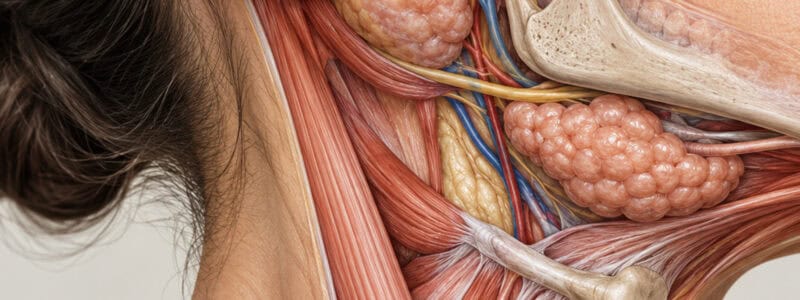
When a patient has a heavy neck, I sometimes need to go beneath the platysma muscle rather than relying on tightening it from the sides. Once I have access to the deeper neck, I can evaluate the structures responsible for the fullness. That may change the surgical plan considerably.
For example, fat beneath the platysma is not the same as the superficial fat that can be treated with ordinary neck liposuction. Removing superficial fat may improve the neck, but it will not correct every deeper cause of fullness.
Prominent submandibular glands can also affect the contour. These glands sit beneath the lower jaw and, in some patients, contribute to a rounded appearance despite relatively little excess superficial fat. I discuss that problem in greater detail in my article on why skin tightening alone may leave a bulky neck.
The important point is that if we haven’t identified what is causing the fullness, we cannot assume tightening the neck will correct it. I also don’t automatically perform deep neck surgery on every patient. Any additional correction has to offer a worthwhile benefit relative to its risks.
KNOWING THE LIMITS
What If Your Natural Neck Anatomy Limits the Result?
Another important consideration is the position of the hyoid bone. This small bone in the upper neck helps establish the angle beneath the chin. In someone with a lower or more forward hyoid, even extensive neck surgery may not produce the same profile as someone whose hyoid is naturally higher and farther back.
I explain the anatomy and my surgical approach in much greater detail in Full Neck, No Jawline? It Might Be Your Anatomy. Not Fat. That article explores how hyoid position affects neck contour and what surgery may accomplish around it.
What I want you to understand here is more practical. Some anatomical limits can be recognized during the consultation. I would rather explain those limitations before surgery than have a patient discover afterward that the result could never have matched the photograph they brought to me.
A good surgical plan is not based on how sharp I can promise to make your neck. It’s based on how much improvement I can reasonably achieve in your anatomy.
CHOOSING THE OPERATION
When a Neck Lift Alone May Not Be Enough
There is another situation I see in consultation. A patient comes to me asking for a neck lift, but when I examine her, part of the problem is actually coming from the lower face. Jowling can interrupt the line of the jaw, so treating the neck without addressing significant tissue descent above it may leave the jawline less defined than the patient hoped.
That does not mean every patient who asks for a neck lift needs a deep plane facelift. Some patients have very little midface aging and can benefit from more focused surgery. Others need a more comprehensive approach because the changes extend beyond the neck.
My 4D Facelift™ is one approach I use for patients who need more complete facial rejuvenation, but the extent of surgery is always based on the individual examination. I am not trying to add procedures to a surgical plan. I am trying to avoid leaving the very problem the patient came to have corrected.
MEASURING IMPROVEMENT
Can a Neck Lift Be Successful Without Creating a Razor-Sharp Jawline?
Absolutely. But we have to agree on what success looks like before surgery. If a patient begins with considerable laxity, removing that excess and restoring a smoother neckline can be a substantial improvement. She may look more refreshed and be very happy with the change.
That does not mean the same operation would satisfy someone whose primary goal is to make a naturally thick neck appear dramatically narrower. I think this is where patient expectations become especially important. I want to know what bothers you when you look in the mirror and whether the shape of your neck in profile is your main concern.
The surgical plan has to address the problem you actually want corrected. There are situations where I may advise a patient that the improvement they are hoping for is unlikely to justify the extent of surgery required. I would rather have that conversation than offer an operation that cannot meet their expectations.
SEE THE RESULTS
What I Want You to Notice in These Neck Lift Photographs
When you look at neck lift before and after photographs, I want you to look beyond whether the patient appears younger. Start with the profile. Notice the shape beneath the chin before surgery and how that shape has changed afterward. Look at how the neck meets the underside of the jaw, and whether the improvement looks natural for that person’s face.
The following photographs come from our neck lift before and after gallery. These patients underwent deep neck lifts or other face-and-neck procedures. Their starting anatomy was different, and some underwent additional facial rejuvenation. The images illustrate individual results rather than what every patient should expect.
BEFORE & AFTER
Neck Lift Results


BEFORE YOU CHOOSE SURGERY
The Conversation I Want to Have During Your Consultation
When you come to my office, I want to see the neck that bothers you, not just a photograph of the neck you want. I examine you from the side because that is where the relationship between the chin and neck is often easiest to evaluate. I also assess how much of the jawline concern comes from changes in the lower face.
Then I want to discuss the actual improvement we might achieve. Can I remove the hanging skin that bothers you? Is there deeper fullness that warrants a different approach? Could your natural anatomy limit how sharp the final angle can become?
Those questions help me determine the surgical plan. They also help you decide whether the potential improvement is worth undergoing surgery. Sometimes I can show you patients whose starting anatomy is similar to yours. I think that is more useful than showing only the most dramatic result in my gallery.
And if I don’t believe surgery can give you the change you want, I need to tell you that before you make the decision to proceed.
I don’t want you choosing an operation because you like the name. I want you to understand what I can change in your neck and what I cannot.
For more information about the surgery itself, visit our neck lift procedure page. Patients traveling to Houston can also review our out-of-town patient resources when planning their consultation and recovery.
MY FINAL THOUGHT
The Right Neck Lift Starts With Understanding Your Anatomy
When someone asks me for a sculpted neck, I know what they are hoping to achieve. But I can’t begin with a promise about how sharp that neckline will be. I have to begin with the examination and understand which parts of the neck are responsible for its current shape.
If tightening the neck will provide the improvement you’re looking for, I don’t need to make the operation more extensive. If I believe deeper correction is necessary, I’ll explain what it may accomplish and why I would recommend it. When your natural structure places limits on the result, I want you to understand those limits before making a decision.
My goal is not to give every patient the same neck. It’s to give each patient the best result I can reasonably achieve for the anatomy they have.
FREQUENTLY ASKED
Questions About Neck Lift Results and Expectations
These are some of the questions I discuss with patients when evaluating what neck lift surgery can realistically accomplish.
Why can a neck lift improve loose skin but leave the jawline looking full?
Because loose skin may not be the only reason your neck looks full. If the fullness is coming from deeper structures, tightening the superficial tissues may produce a smoother neck without creating the sharp angle you expected. A published review of difficult neck anatomy explains why patients with heavier necks may require a different surgical approach. I want to identify the source of the fullness before deciding what operation makes sense.
Does a less defined jawline mean my neck lift was unsuccessful?
Not necessarily. I would first look at your anatomy before surgery and what the operation was intended to correct. If the main problem was loose skin and that has improved substantially, the surgery may have achieved its intended goal. A review of patients with challenging neck anatomy explains why some anatomical features can limit the final contour despite meaningful surgical improvement. This is why I want to discuss expectations before operating.
Why doesn’t neck liposuction always create a sharp jawline?
Neck liposuction primarily removes fat from the superficial tissue layer. But not all neck fullness is located there. Some fat sits beneath the platysma muscle, where conventional liposuction does not address it. A cadaveric study identifying separate fat compartments in the neck demonstrates why the location of fat matters. I need to determine where the fullness originates before recommending liposuction or a more involved operation.
Can my natural anatomy prevent me from getting a sharply defined neckline?
Yes. Some patients naturally have a lower hyoid bone or skeletal structure that limits the angle beneath the chin. Even a comprehensive neck lift cannot guarantee the same result in every patient. The medical literature on difficult neck anatomy identifies hyoid position as one factor that can make neck contouring more challenging. I’ve explained this in greater detail in my article on how hyoid position affects neck contour.
When is a facelift necessary along with a neck lift?
If significant jowling is contributing to the loss of jawline definition, treating only the neck may leave part of the problem uncorrected. In those patients, I may recommend addressing the lower face as well. A published review of isolated neck rejuvenation explains why a combined face and neck lift may be more appropriate when there is substantial lower facial tissue descent. I make that decision during the examination rather than automatically recommending a facelift.
Can revision neck surgery improve fullness that remains after a previous neck lift?
Sometimes, but I first need to understand why the fullness remains. It may be related to the original anatomy, incomplete correction of a deeper problem, or changes that occurred after surgery. I also need to know whether the patient has finished healing. A 2026 systematic review of revision neck lift surgery found that persistent fullness beneath the chin was one reason patients sought additional surgery. The available evidence is limited, and revision surgery carries risks. I would not recommend another operation without a clear reason to believe it could provide meaningful improvement.
How can I know before surgery whether the jawline I want is realistic?
I start by examining your neck from the side and evaluating the structures responsible for its current shape. I also want to understand what you expect to change. Sometimes I can show you patients whose starting anatomy is similar to yours, which is more useful than comparing your neck with an unrelated photograph. Research on preoperative assessment of challenging neck anatomy emphasizes recognizing surgical limitations and explaining them to patients. I cannot guarantee an exact postoperative angle, but I can help you understand what improvement is reasonable before you decide to proceed.