Vivian came to me at 67 after having facial surgery years earlier. She had undergone a facelift and had cheek and chin implants, but over time she felt that her face no longer looked like her.
What bothered her was not simply aging. She felt that her face looked harder than she wanted it to look. Her chin felt too prominent. She could see and feel changes in her neck. Most importantly, she wanted to look more natural again.
Revision facial surgery is rarely a matter of repeating the first surgery. I have to understand what was done before, how the tissues have healed, what anatomy is underneath the previous result and what the patient is actually trying to change now.
With Vivian, my goal was not to create a different face. It was to remove some of what had been added, address the aging that had occurred since her first surgery and bring her own facial structure back into focus.
She Knew What She Did Not Like. She Did Not Pretend to Know the Solution.
One of the things Vivian said during this process captures an important part of the surgeon-patient relationship:
I think that is a much more useful starting point than arriving with a list of procedures.
A patient knows her own face. She knows what bothers her when she looks in the mirror and what no longer feels right. My job is different. I have to translate those concerns into anatomy and then determine which changes are reasonable.
When I evaluated Vivian, I saw several things working together. She had changes from aging, changes from her previous facelift, scar tissue from prior surgery, cheek and chin implants, and fullness beneath the jaw that was not simply loose skin.
That meant her revision needed to be planned as a facial reconstruction problem rather than a menu of cosmetic procedures.
Why We Removed the Cheek and Chin Implants First
Vivian had naturally strong facial structure, particularly through her cheekbones. In my view, the implants were contributing to the harder appearance that bothered her.
That does not mean I believe facial implants are inherently wrong. There are patients with significant skeletal deficiency for whom an implant may be useful. The question is whether an implant is helping a particular face.
In Vivian’s case, I wanted to see her underlying anatomy again.
We therefore staged the surgery. I first removed her cheek and chin implants. Approximately two weeks later, after I could evaluate her face without that added projection, we proceeded with the larger revision.
Staging also gave Vivian an opportunity to experience surgery with local anesthesia and oral sedation before deciding whether she was comfortable using that approach for the longer procedure.
She tolerated the implant removal well and ultimately chose the same anesthesia approach for her revision facelift and neck surgery. That was Vivian’s experience and her decision. Anesthesia planning should be individualized to the patient, the procedure and the surgeon’s assessment.
I did not want to design Vivian’s new face around implants that I already intended to remove. I wanted to see her anatomy first.
The Revision Was About More Than a Facelift
Once the implants were removed, the rest of the plan became clearer.
Vivian underwent a revision deep plane facelift and deep neck lift, along with facial fat transfer and a lip lift.
The goal of the facelift was to reposition descended facial tissues and improve the lower face and jawline without creating an excessively tight appearance.
The neck required a separate analysis. A neck can look full because of skin, superficial fat, muscle, deeper fat and other structures beneath the platysma. That is why I do not think of every neck as a skin-tightening problem.
Vivian was relatively thin and angular, but she had visible fullness in the submandibular region. In her particular anatomy, I felt that carefully reducing the prominence of the submandibular glands would improve the transition between the jaw and neck.
I want to be precise about that because this is an area where surgeons have different philosophies. I do not believe every neck lift requires gland reduction. Some surgeons appropriately choose not to perform it. In Vivian, the glands were part of what both she and I were seeing, so I chose to address them as part of her deep neck surgery.
INSIGHTS FROM DR. ATHRÉ
Follow Vivian Through Her Revision Facelift Recovery
Vivian allowed us to follow her while she was actually recovering, including the swelling, uncertainty and gradual return to feeling like herself. That makes her story much more useful than showing only a polished final photograph.
Revision Recovery Is Part Physical and Part Emotional
Revision patients often arrive with a different perspective from someone having facial surgery for the first time.
They know what recovery looks like. They may also carry fear from the first surgery, particularly if the result was not what they expected.
Vivian talked about this openly.
During the first week she was bruised and swollen. She understood why she looked that way, but understanding swelling intellectually is different from seeing an unfamiliar face in the mirror.
At one early visit she told me that she could see herself, but she did not completely “see myself” yet.
That is an important part of facelift recovery that is difficult to communicate with a single before and after photograph.
BEFORE SURGERY
Vivian Before Her Revision Facelift
These photographs show Vivian before the larger revision facial rejuvenation surgery, after the cheek and chin implants had been removed.
This is the face I was planning around. I was looking at the cheek, lower face, jawline and neck together rather than trying to isolate one feature and tighten it.
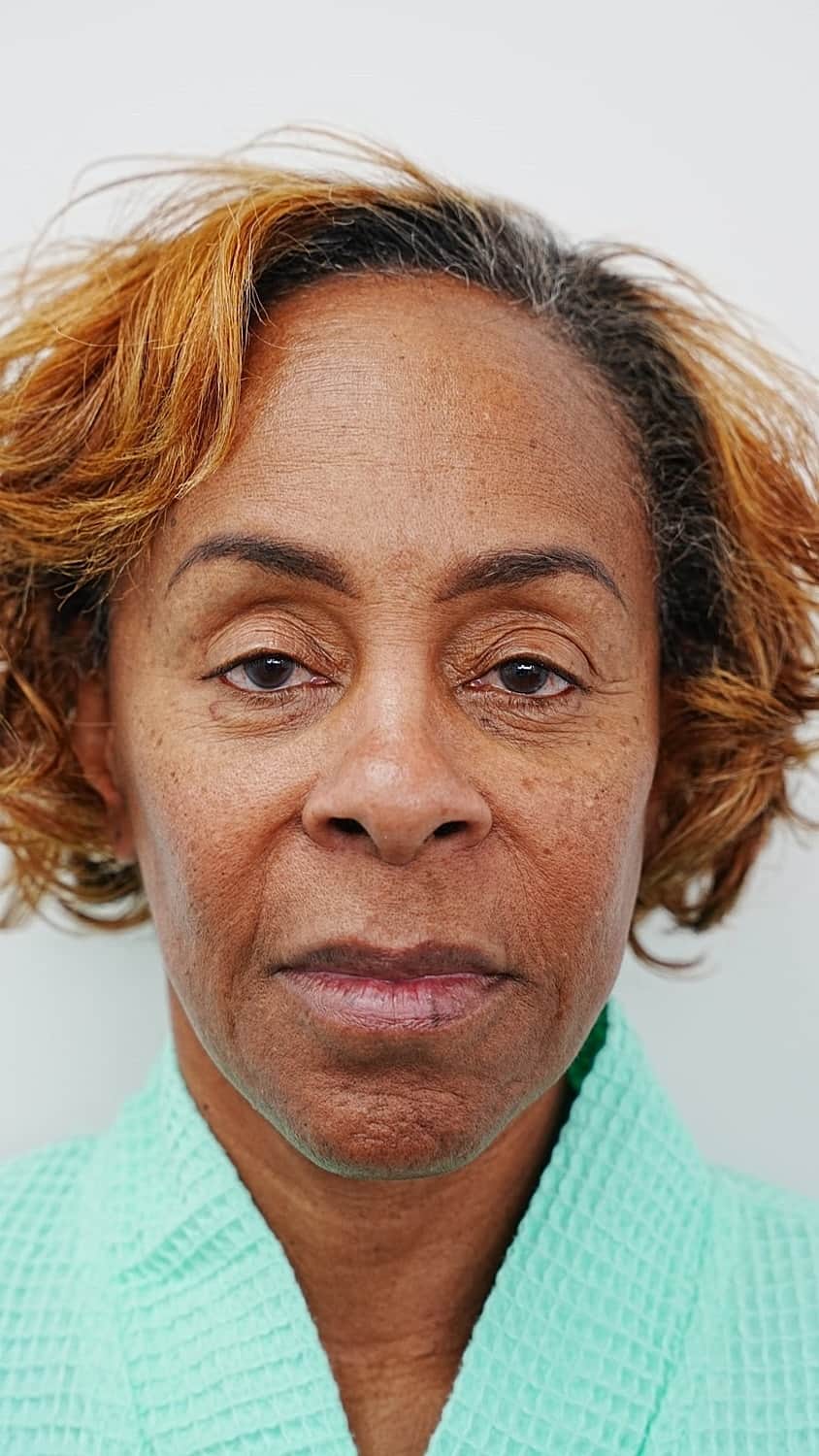
Front View
Before revision surgery, showing Vivian’s facial contours after removal of her previous cheek and chin implants.
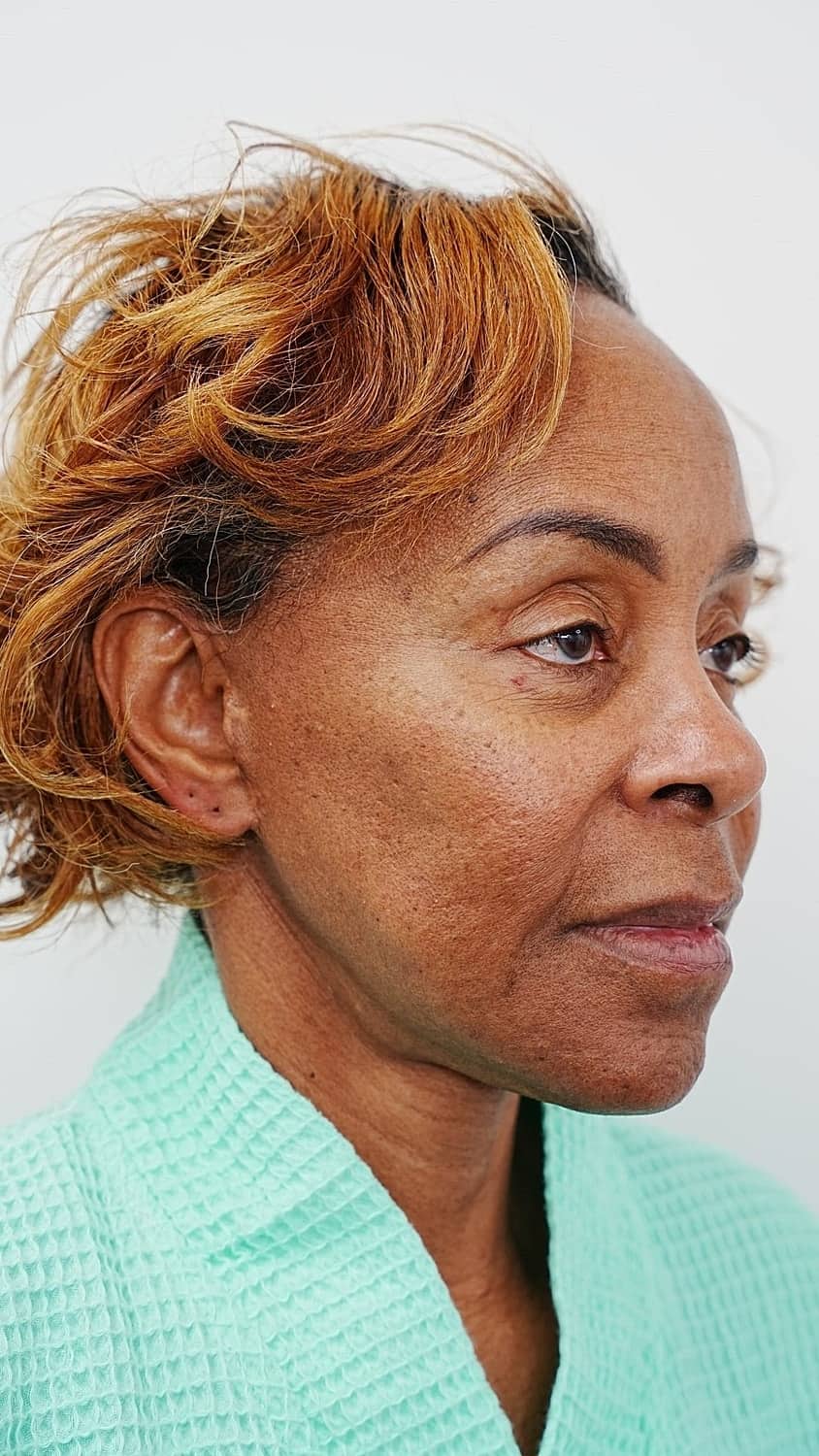
Oblique View
This angle shows her natural cheek structure along with laxity through the lower face and jawline.
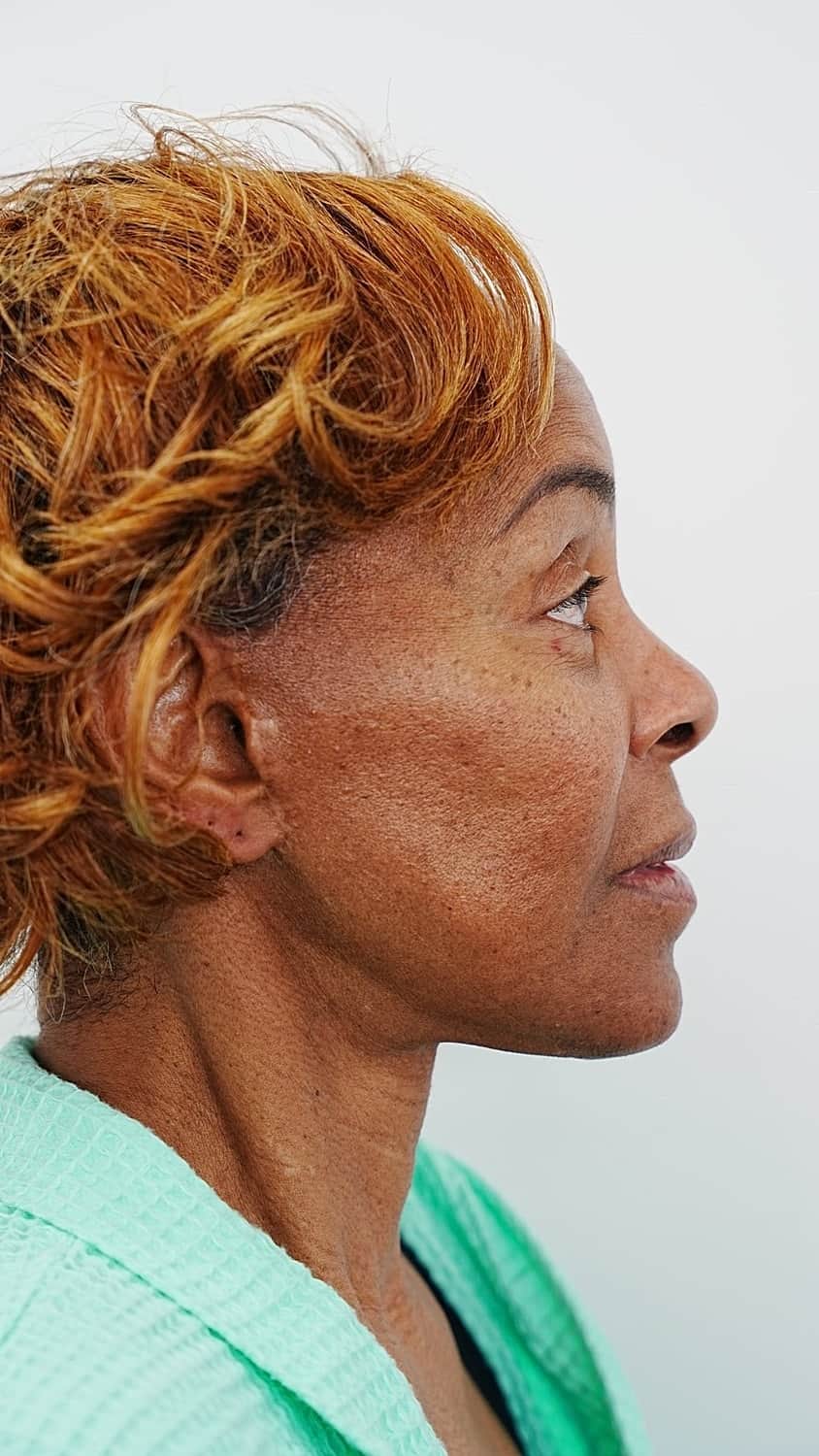
Profile View
The profile shows the relationship between the lower face, jawline and neck that I wanted to improve.
One thing I particularly liked once the implants were gone was being able to see Vivian’s own cheek structure. She already had naturally angular cheekbones. I did not need to manufacture them.
The challenge was to rejuvenate the surrounding tissues while allowing those features to remain hers.
7 DAYS
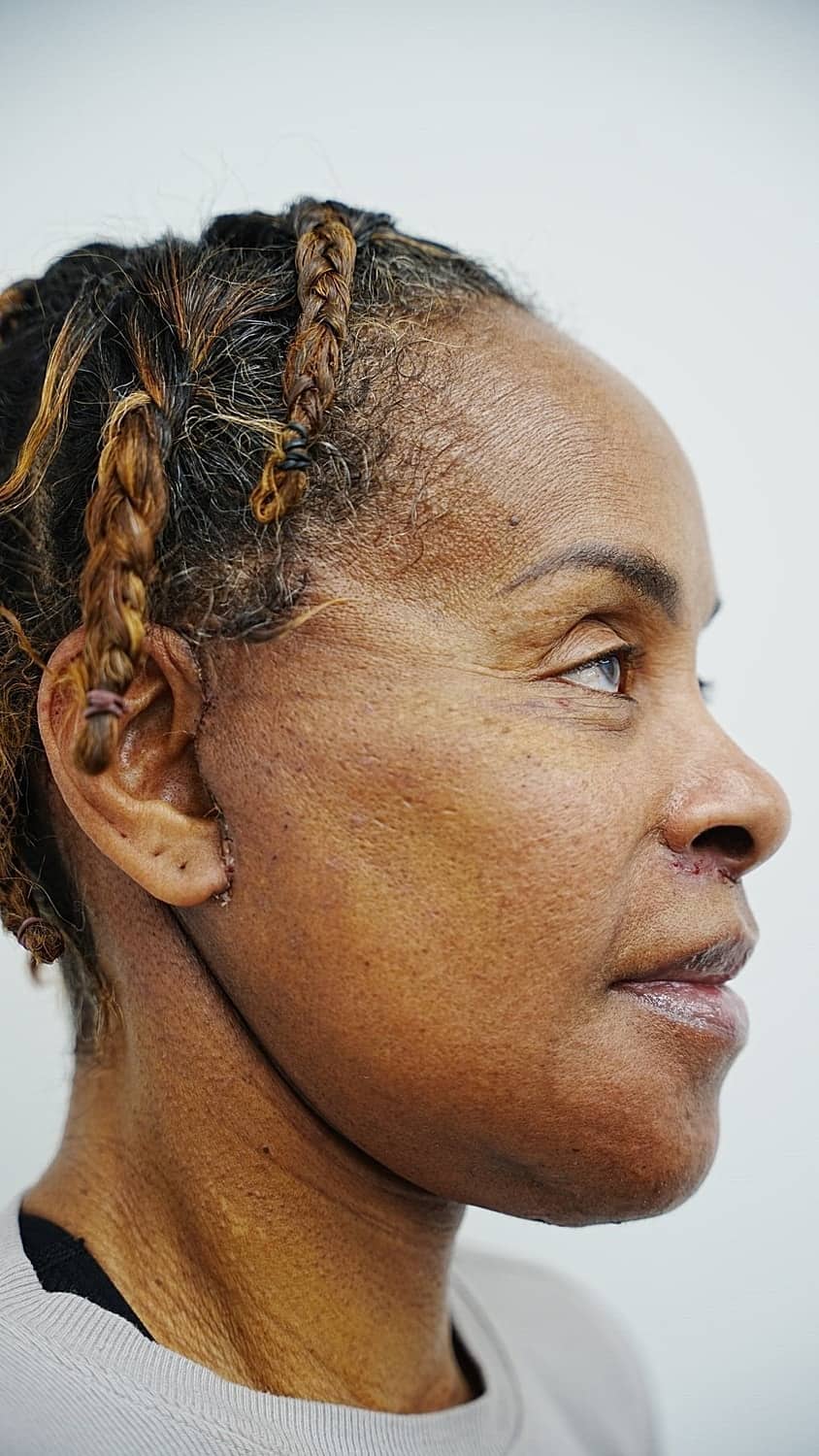
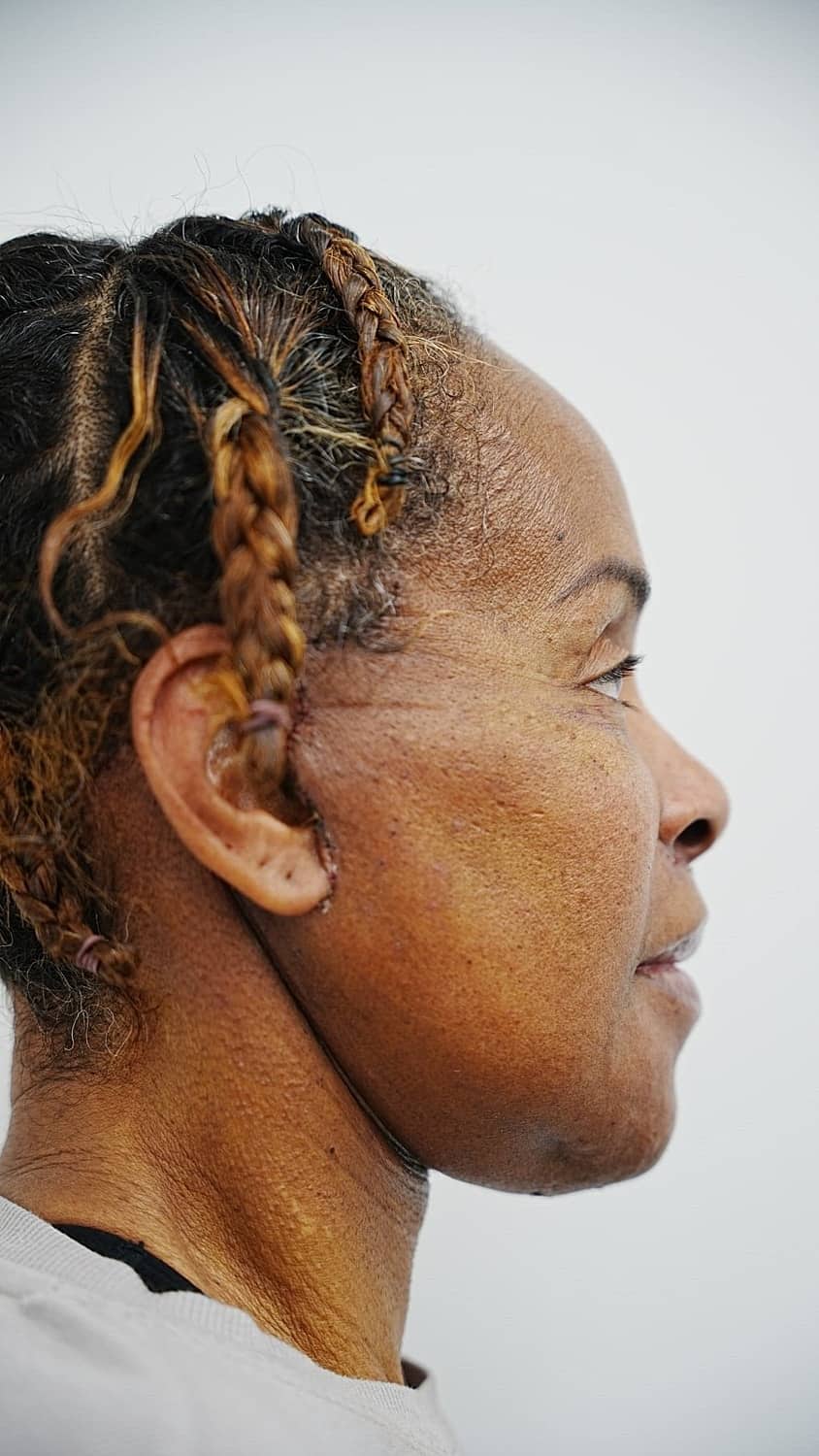
What Vivian Looked Like One Week After Surgery
By approximately one week, Vivian was already walking, going to the store and living more normally. She was not describing significant pain.
But she was still swollen.
More importantly, she was very candid about the emotional side of looking in the mirror during this stage. She could see herself in there, but she did not completely feel like herself yet.
That is one reason I wanted to show these photographs.
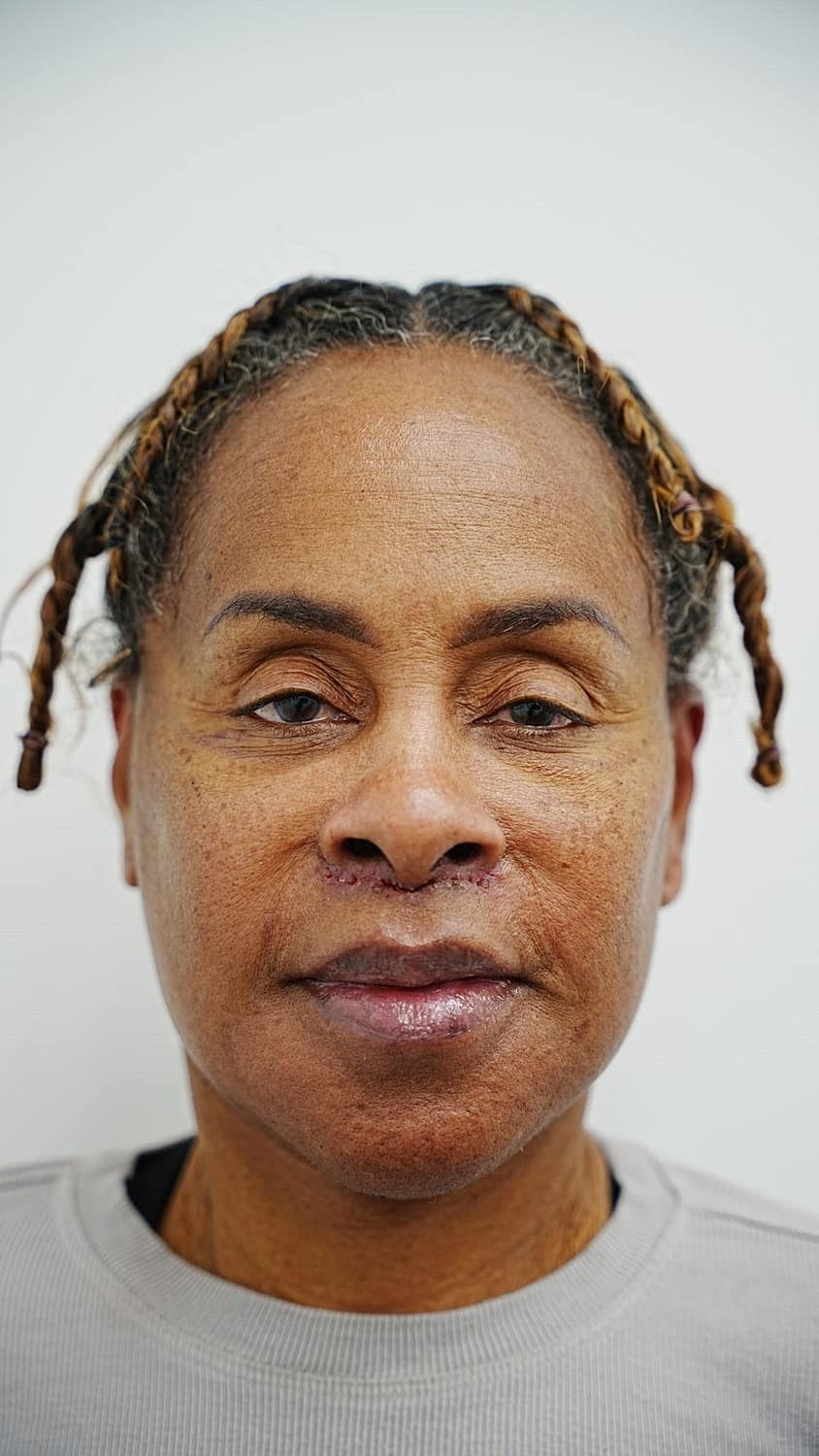
7 Days · Front
Bruising and swelling are still visible. This is an early recovery photograph, not a finished result.
7 Days · Oblique
The cheek and jawline are beginning to take shape, but substantial postoperative swelling remains.
7 Days · Profile
Early neck and jawline definition can be seen even though the deeper tissues are still swollen and healing.
Vivian had undergone facial surgery before, so she had something to compare this experience with. But this was a larger revision involving scarred tissues and deeper neck work.
She understood intellectually that recovery would take time while still having the very normal fear that the swelling might last too long.
She described the advice she would give herself very simply: don’t freak out.
Revision Facelift Surgery Is Also About the Details You Do Not See in a Before and After
Jawline improvement gets attention because it is easy to see in photographs. Some of the decisions I spend the most time thinking about are much smaller.
Incision placement is one example.
Vivian had already undergone facial surgery. She specifically noticed changes around her sideburn and hairline from the earlier procedure. When I planned her revision, I was thinking about where the incisions would sit, how they would relate to the tragus and ear, what would happen to the sideburn and whether she would eventually be comfortable wearing her hair pulled back or short.
Those decisions are not separate from the facelift. They are part of it.
Revision surgery means I am working with anatomy that has already been altered. There may be scar tissue, previous incisions, changes in the hairline and tissue planes that no longer look exactly the way they did before the first surgery.
ONE MONTH
Back at Work, But Still Healing
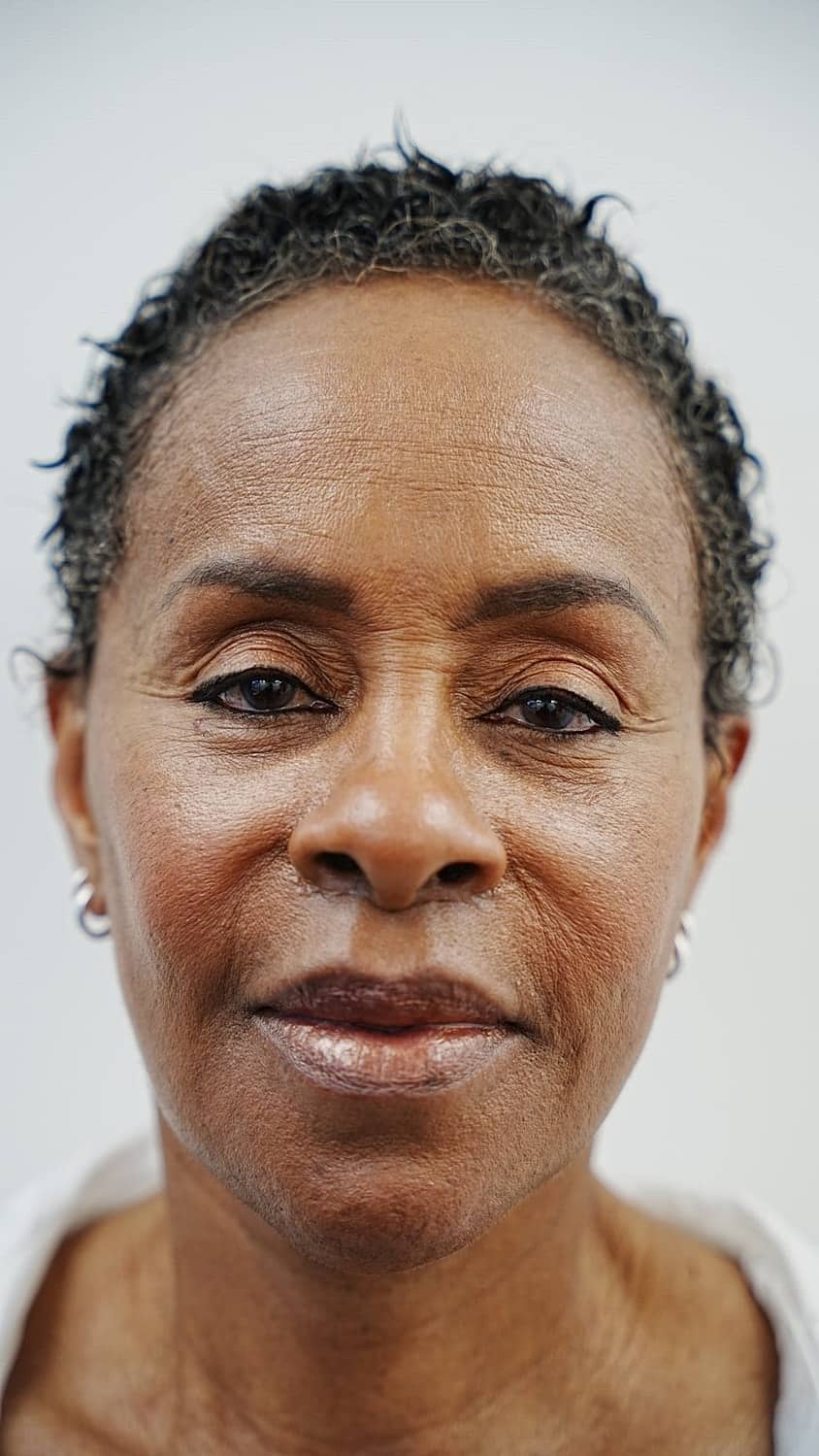
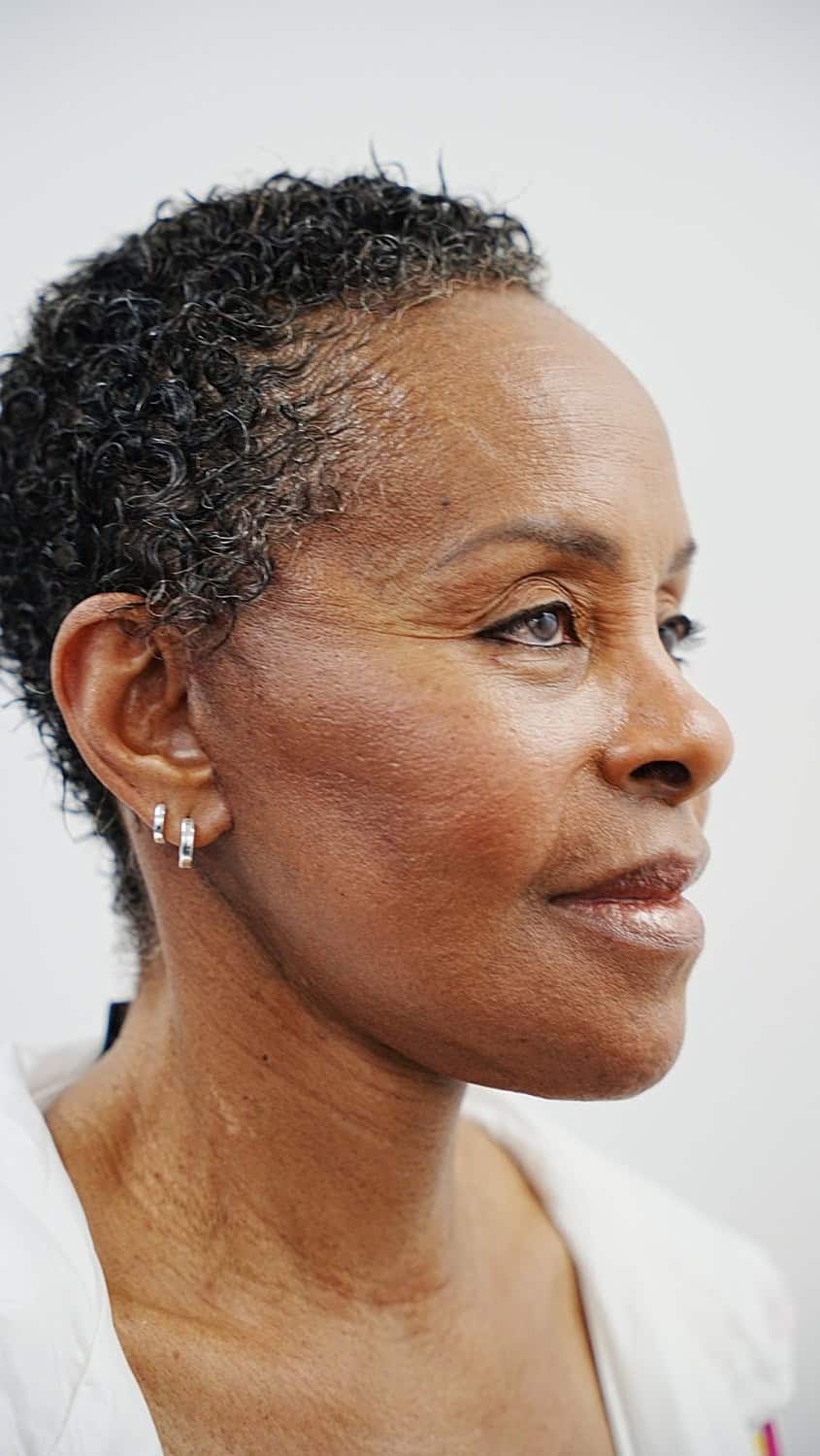
By about one month, Vivian was back at work and felt good physically and emotionally.
That did not mean she felt completely normal.
She still noticed tightness. Her facial movements and smile did not yet feel “normal normal,” as she put it. From my side of the examination, her facial nerves and muscles were working, but the tissues were still recovering from a significant revision.
That is another important distinction. Returning to work is not the same thing as completing recovery.
1 Month · Front
The face is substantially less swollen, although deeper healing and softening are still continuing.
1 Month · Oblique
Her natural cheek structure is becoming clearer without recreating the projection of her previous cheek implants.
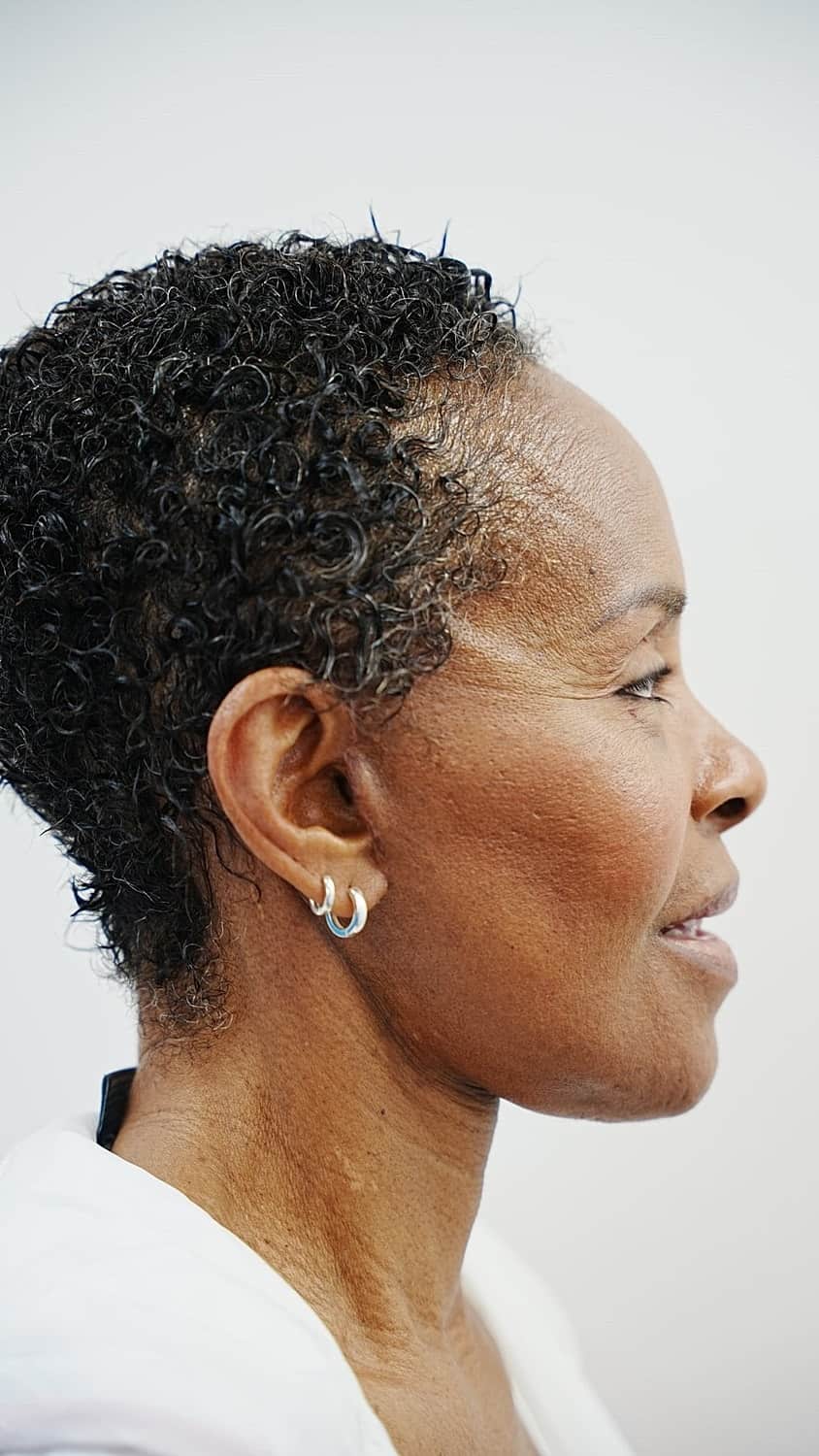
1 Month · Profile
The jawline and neck are more defined, but one month is still an early point in revision facelift healing.
At this point, I could begin to see the relationships we had planned more clearly.
Her cheekbones were visible without the projection of the old cheek implants. Her chin looked softer. The neck was becoming more defined. Her upper lip had the small amount of tooth show she had wanted.
But one month was still not the final result. There was residual deep swelling and stiffness, and I expected the face to continue softening.
One month can look dramatically different from one week and still be early. The face continues to become softer and more familiar as deeper swelling and stiffness resolve.
What Does a Natural Revision Facelift Mean?
For Vivian, natural did not mean doing less surgery.
She had a substantial revision.
Natural meant that the surgery was designed around the features she already had rather than imposing a new set of proportions on her face.
Her naturally strong cheekbones did not need to be replaced with another implant. Her chin did not need more projection. Her neck needed to be evaluated below the surface rather than assuming every contour problem came from skin.
Fat transfer could then be used selectively where softness or volume was useful rather than attempting to build the face around volume alone.
The lip lift was another small part of that larger relationship. Vivian wanted a little more upper tooth show. The objective was not to create a dramatically different lip. It was to improve the relationship between the upper lip, teeth and surrounding face.
This is the same philosophy behind my 4D Facelift™ approach. I am not trying to make every patient converge toward the same face. The surgical plan changes because the anatomy changes.
Vivian’s Case Is Also a Good Example of Why I Keep Reassessing My Own Surgery
I do not think becoming more experienced should mean becoming more rigid.
There are things I do differently today than I did years ago. There will probably be things I do differently years from now than I do today.
Patients teach me. Anatomy teaches me. Following patients through recovery teaches me. Seeing what works and what could have been better changes how I approach the next face.
That is particularly true in revision surgery because I am looking at the long-term consequences of decisions made years earlier, sometimes by another surgeon and sometimes by me in other situations.
The objective is not to defend a technique. It is to keep improving the way I think about the face.
If I’ve done the work well, you should see the patient before you see me.
What I Want Patients Considering Revision Surgery to Take From Vivian’s Story
Vivian’s case is not a template for what another patient should have done.
That is the point.
Another patient with facial implants may be better served by leaving them in place. Another neck may not require deep structural work. Another patient may not need fat transfer or a lip lift. The previous facelift may have created an entirely different set of anatomical challenges.
Revision surgery begins with figuring out what is actually there.
It also requires patience after surgery. Vivian looked very different at one week than she did at one month, and at one month she was still healing. She could be back at work and happy with the direction of the result while simultaneously telling me, “I’m not Vivian yet,” when describing the way her face moved and felt.
Both things can be true.
That is why I wanted to show her story as a progression rather than reduce it to two photographs.
If you want to understand more about how I evaluate the face and why I individualize these decisions, you can read more about my background and approach on my Dr. Raghu Athré page.
FREQUENTLY ASKED
Revision Facelift Questions
These are some of the questions I hear from patients who have already undergone facial surgery and are considering a revision.
What is a revision facelift?
A revision facelift is facial rejuvenation performed after a previous facelift or related facial surgery. The challenge is that the surgeon may be working with scar tissue, altered tissue planes, previous incisions and changes created by the first surgery. Published literature on secondary and revision facelift surgery describes these anatomical and technical considerations. The plan therefore has to be based on what I find in the individual face rather than simply repeating the first procedure.
Is revision facelift recovery longer than a first facelift?
It can be. Previous surgery creates scar tissue and changes the tissues I am operating through. The extent of the revision also matters. I tell patients to expect individual variation rather than promise a particular recovery date. Medical literature discussing secondary facelift and revision rhytidectomy similarly emphasizes the additional challenges created by prior surgery.
Can cheek or chin implants be removed during facial rejuvenation?
Yes, but whether they should be removed is an individual decision. Facial implants can be useful when skeletal projection is deficient, and removal is not automatically part of revision surgery. Literature on facial implants and implant-related revision describes both their role and potential reasons for secondary surgery. In Vivian’s case, I felt her natural cheek and chin anatomy would produce a softer result without the existing implants.
Why would a surgeon stage implant removal and facelift surgery?
Staging can sometimes allow the surgeon to reassess facial shape after an implant or another previous alteration has been removed. It is not necessary for every patient. For Vivian, removing the cheek and chin implants first allowed me to evaluate her natural skeletal contours before completing the larger revision plan.
Can a revision facelift still look natural?
That is the objective. Natural does not necessarily mean performing less surgery. It means respecting the patient’s underlying anatomy and avoiding unnecessary distortion. Modern facelift literature describes techniques that reposition deeper facial tissues rather than relying solely on skin tension, including deep plane facelift approaches. The appropriate technique still depends on the individual patient.
Why might the neck still look full after a previous facelift?
Because neck contour is influenced by more than skin. Superficial fat, platysma, deeper fat, the digastric muscles, submandibular glands and skeletal anatomy can all contribute to the contour beneath the jaw. Anatomical literature on the deep structures of the neck helps explain why two patients with similar skin laxity can require very different surgical plans.
Does every deep neck lift require submandibular gland reduction?
No. I do not consider gland reduction a routine requirement for every deep neck lift. The glands are important anatomical structures, and surgery in this area carries specific considerations and risks. Published surgical literature describes submandibular gland reduction in neck rejuvenation, but surgeons differ in when or whether they perform it. In Vivian, visible gland prominence was part of the contour we were trying to improve, so I chose to address it.
When will I look like myself after a revision facelift?
There is no single day when every patient suddenly feels normal. Bruising and obvious swelling improve first, while deeper swelling, stiffness and altered sensation can take considerably longer to settle. Research describing postoperative edema and recovery after facial surgery supports the fact that healing continues beyond the early social recovery period. Vivian was back at work around one month but still noticed tightness and changes in the way her expressions felt.
Why does incision and hairline planning matter in a revision facelift?
Previous facelift incisions can alter the sideburn, temporal hairline and tissue around the ear. In revision surgery I have to account for those existing changes when planning new incisions. Surgical literature discussing facelift incision placement and hairline preservation reflects the importance of these details. For Vivian, preserving the sideburn and creating incisions that allowed her to wear her hair up or short were part of the surgical plan, not an afterthought.