How long does swelling last after a facelift? Most of the visible swelling improves during the first two to three weeks, but subtle swelling and firmness can continue to resolve for several months. Understanding the difference between looking socially presentable and being fully healed is an important part of planning facelift recovery.
When patients ask me about recovery, swelling is often their biggest concern. They want to know when their cheeks will stop looking puffy, when their jawline will become more defined and whether the fullness they see in the mirror is normal.
I want to explain why swelling occurs, when it tends to peak, how it changes over time and what you can do to support healing. I will also show you actual postoperative photographs documenting one patient’s recovery from the first day through nine months.
An early postoperative photograph shows the healing process. It does not show the final facelift result.
When Does Swelling Go Down After a Facelift?
Swelling usually increases during the first several days after surgery, often becoming most noticeable around Days 2 through 4. It then begins to improve as the initial inflammatory response settles.
By approximately two to three weeks, many patients have experienced a substantial reduction in visible swelling. Their face looks more recognizable, bruising has largely faded and they may feel comfortable returning to social activities.
But the deeper tissues are still healing. Residual fullness around the cheeks, jawline and neck can persist for several months. Some patients also notice areas of firmness or temporary changes in sensation long after the obvious swelling has disappeared.
Why Does Your Face Swell After Facelift Surgery?
Swelling is part of the body’s normal response to surgery. During a facelift, I reposition facial tissues that have descended with age. That process creates controlled surgical trauma, even when the operation is performed carefully.
The body responds by increasing blood flow and initiating inflammation in the treated tissues. Small blood vessels temporarily become more permeable, allowing fluid to accumulate between tissue layers.
At the same time, surgery temporarily affects some of the normal pathways that drain tissue fluid, including lymphatic drainage. Fluid can accumulate faster than it is removed.
This accumulation is called postoperative edema.
Edema can temporarily make the cheeks appear rounder, soften the definition of the jawline and create fullness beneath the chin. Those changes can partially obscure the improvements created during surgery.
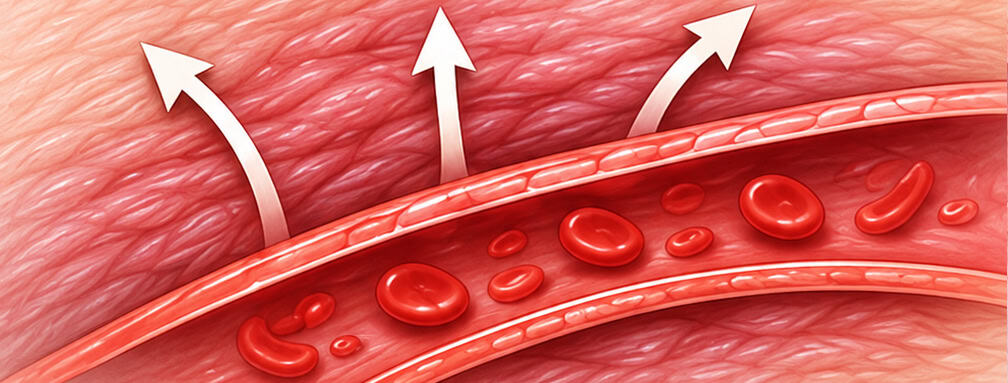
Increased Blood Flow
Surgery triggers inflammation and increased circulation in the treated tissues.
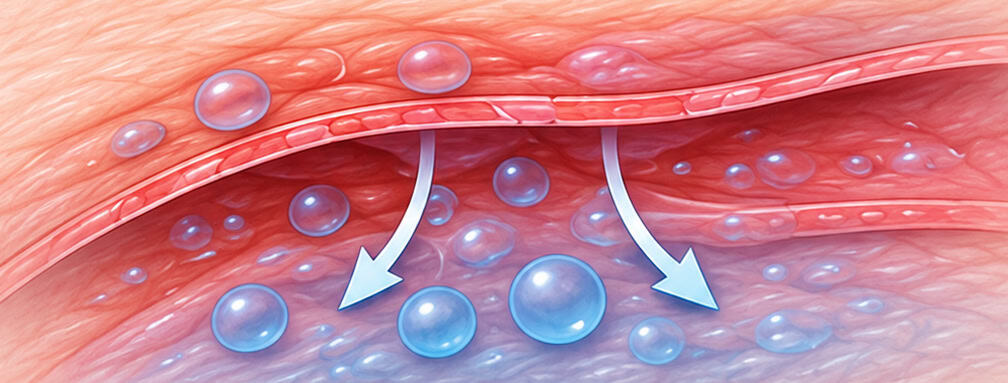
Increased Vessel Permeability
Small blood vessels allow more fluid to move into the surrounding tissues.
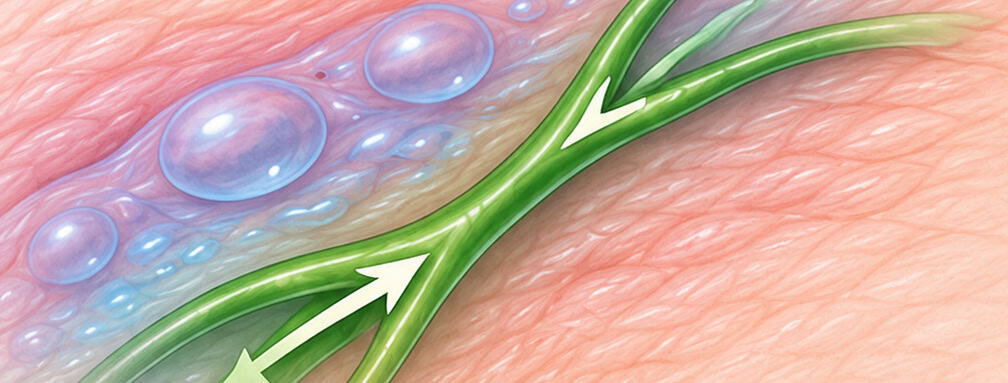
Fluid Accumulation
Temporarily reduced lymphatic drainage allows fluid to accumulate, creating postoperative edema.
Bruising is different. Bruising occurs when blood escapes from small vessels into surrounding tissues. Its color changes as the blood products break down. A patient may still have yellow bruising even while the underlying swelling is improving.
Facelift Swelling Day by Day
Facelift swelling does not improve at a constant rate. The face may actually look more swollen on the third day than it did immediately after surgery, followed by noticeable improvement during the next week. As the early swelling resolves, the changes become more gradual.
The timeline below describes what I commonly see during recovery. It is a general guide rather than a fixed schedule, especially when a facelift is combined with neck surgery, eyelid surgery or facial fat transfer.
Day 1: Early swelling. The face may feel tight, full or unusually firm. Bruising can begin appearing around the operated areas. Depending on the procedure, postoperative dressings or drains may still be present.
Days 2–4: Swelling often peaks. The cheeks may look fuller than they did immediately after surgery. The jawline can temporarily appear less defined, and bruising may become more visible. This early increase can be expected, but sudden or painful expansion is not something to ignore.
Days 5–7: Swelling begins to settle. Many patients start noticing improvement. Bruising may change from purple to yellow or green. The face is still swollen, but some of the underlying contours become easier to see.
Days 8–10: More recognizable facial contours. Some patients are comfortable going out socially or returning to limited work activities with clearance. The lower face may still appear round or square because of residual edema.
Days 10–14: Significant visible improvement. Many patients look considerably more like themselves. Swelling remains, particularly in deeper tissues, even if it is not immediately obvious to other people.
Weeks 3–6: Continued refinement. The changes become more gradual. Mild fluctuations can occur, including puffiness after sleeping or increased activity. The overall trend should continue toward improvement.
Months 2–3: Residual swelling. Deeper tissue firmness and fullness continue to soften. Patients may notice changes in photographs taken several weeks apart even when they cannot see a daily difference.
Months 6–9 and beyond: Mature healing. Facial contours are generally much closer to their long-term appearance. Scars, sensation and subtle tissue changes may continue evolving.
Swelling does not disappear all at once. The face gradually reveals more of its final shape as the tissues heal.
REAL PATIENT RECOVERY
What Facelift Swelling Actually Looks Like
I want to show you the recovery of Tina, who was 52 when she underwent comprehensive facial rejuvenation.
Her procedures included a deep plane facelift, deep neck lift with gland excision, upper and lower eyelid surgery, facial fat transfer, an upper and lower lip lift and a full-face stem cell treatment.
Tina underwent several procedures during the same operation, so her early swelling and redness reflect more than the facelift itself. Her photographs are useful for seeing how facial swelling changes over time, but every patient heals differently.
We have six photographs documenting her appearance before surgery, on postoperative Days 1, 5, 8 and 14, and at nine months.
FACELIFT RECOVERY TIMELINE
Facelift Swelling: Before Surgery to Nine Months
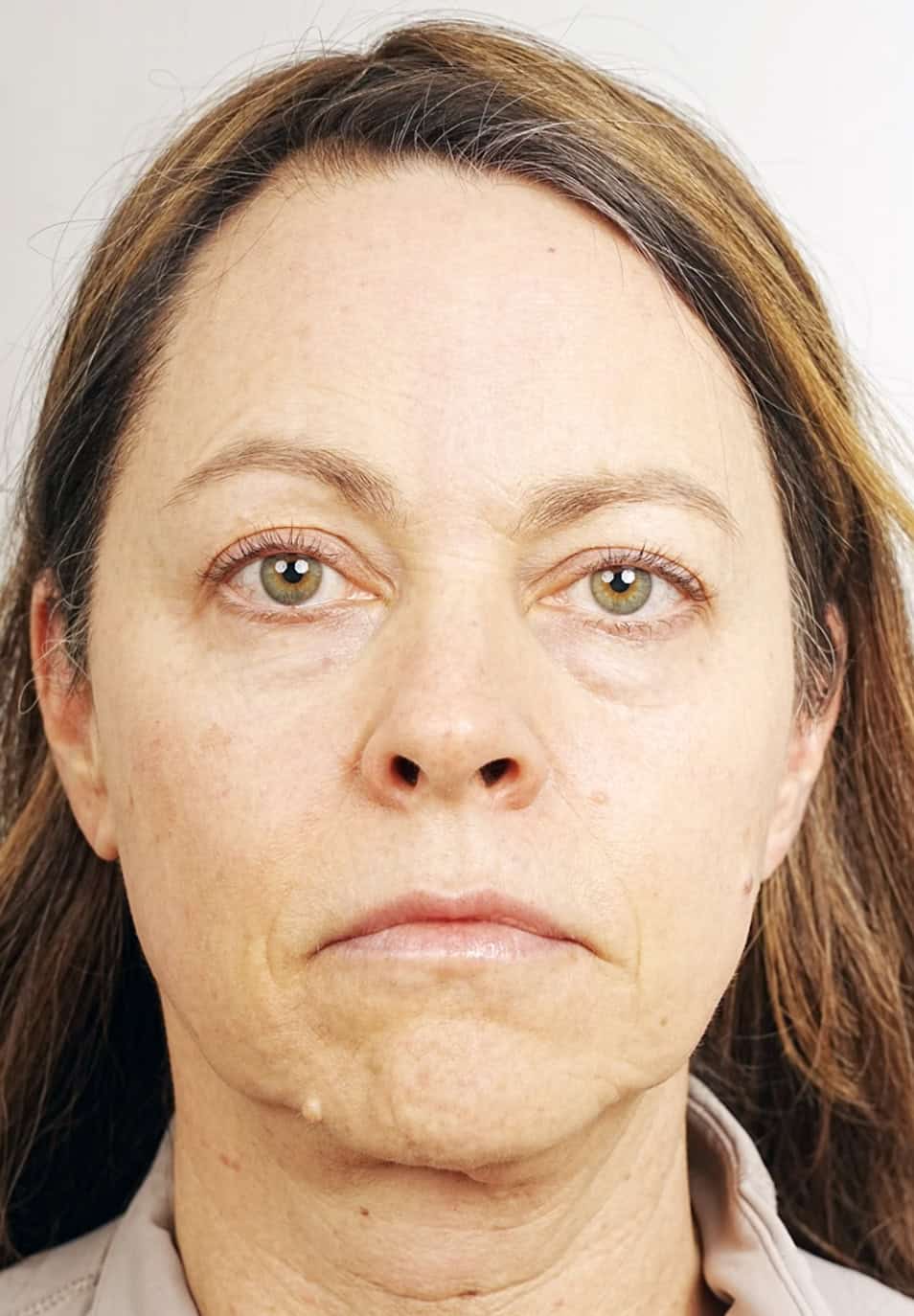
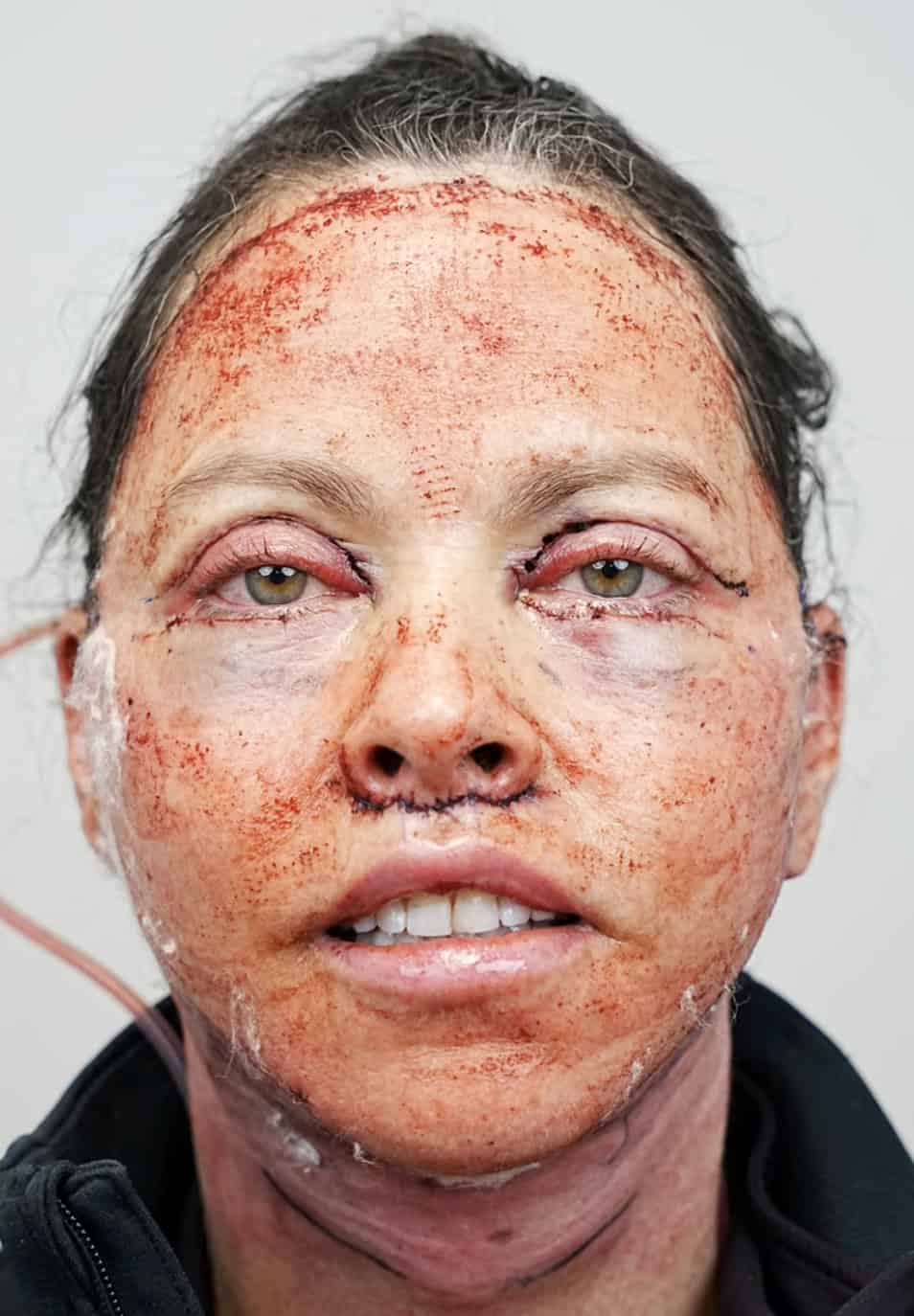
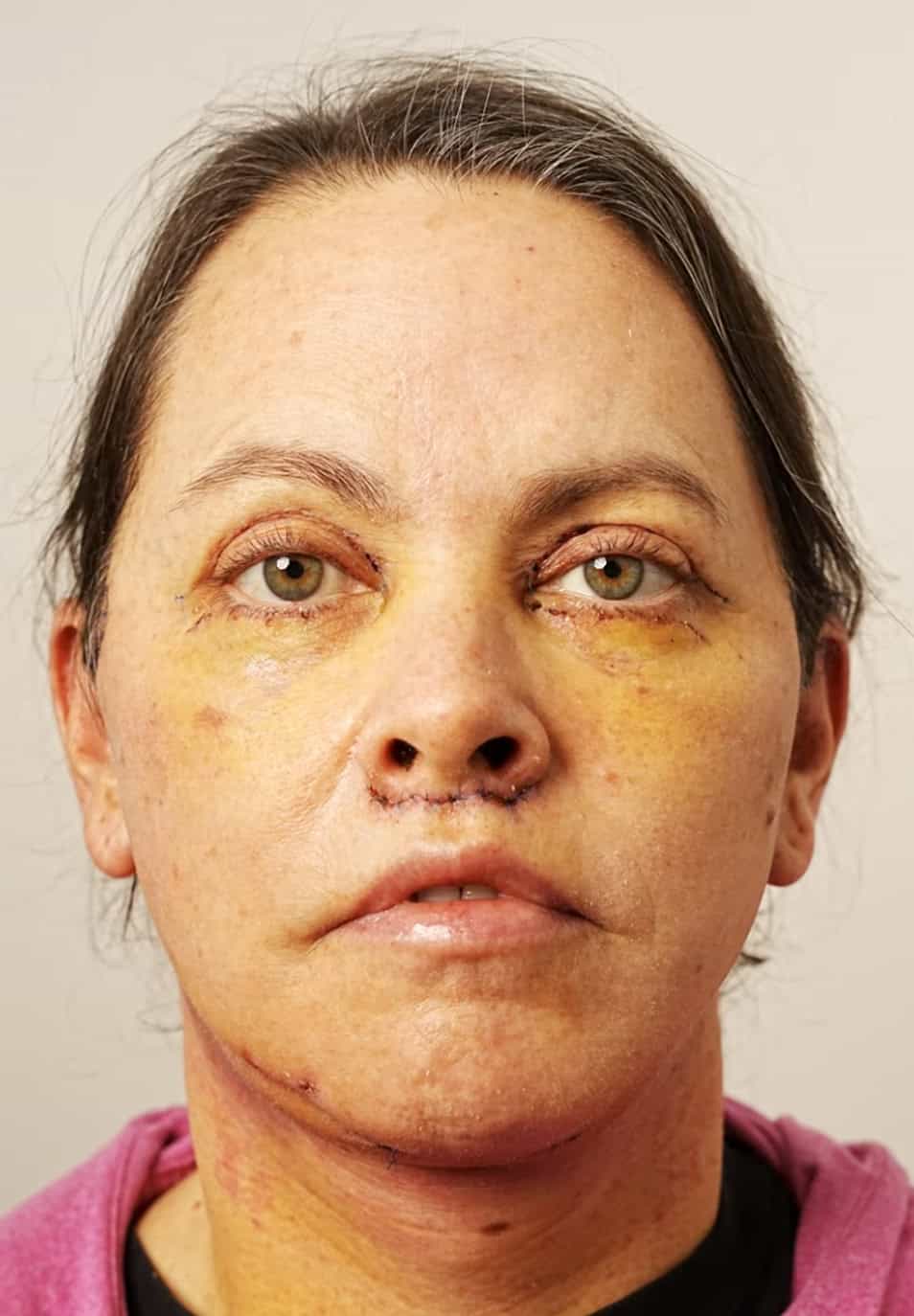
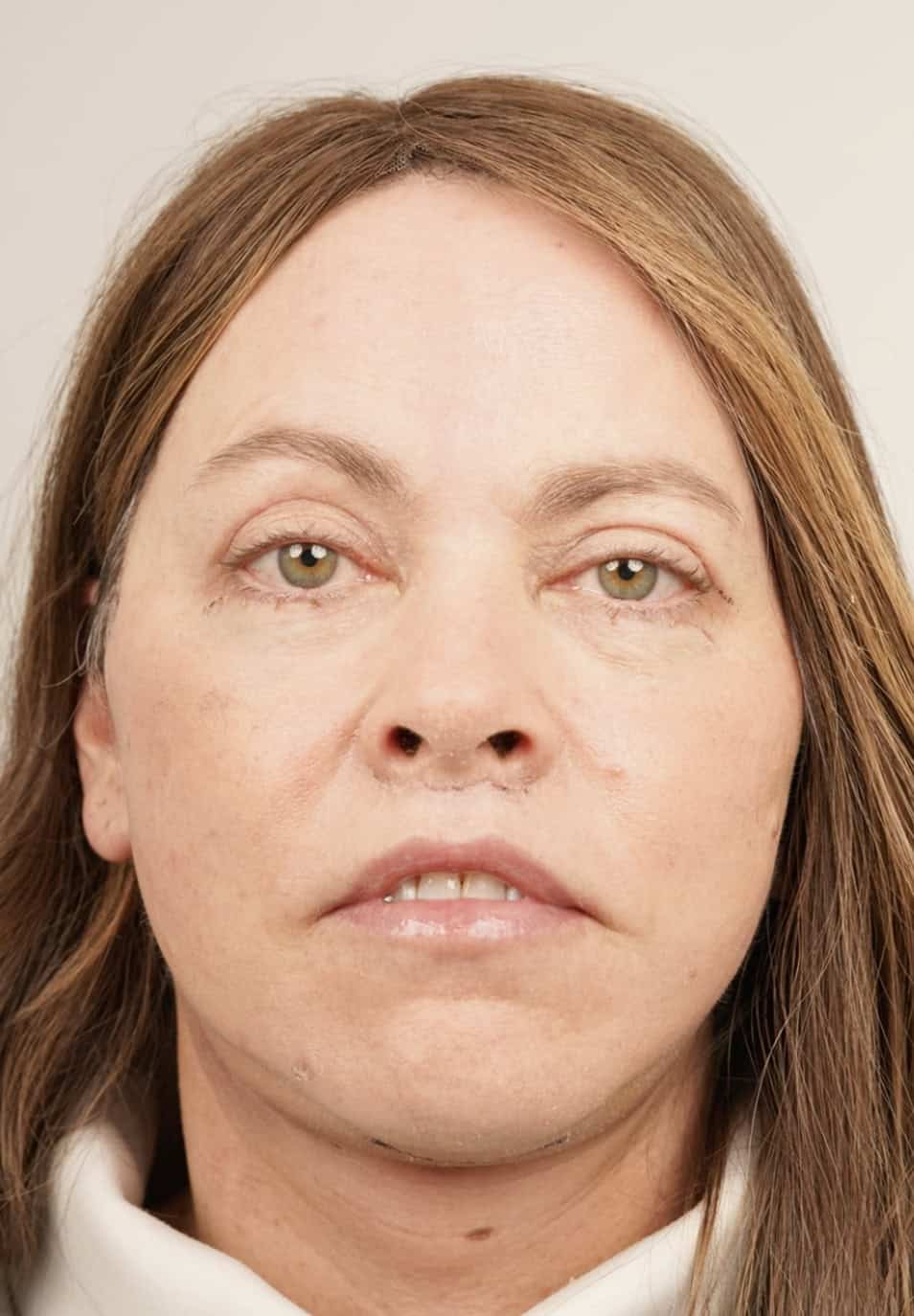
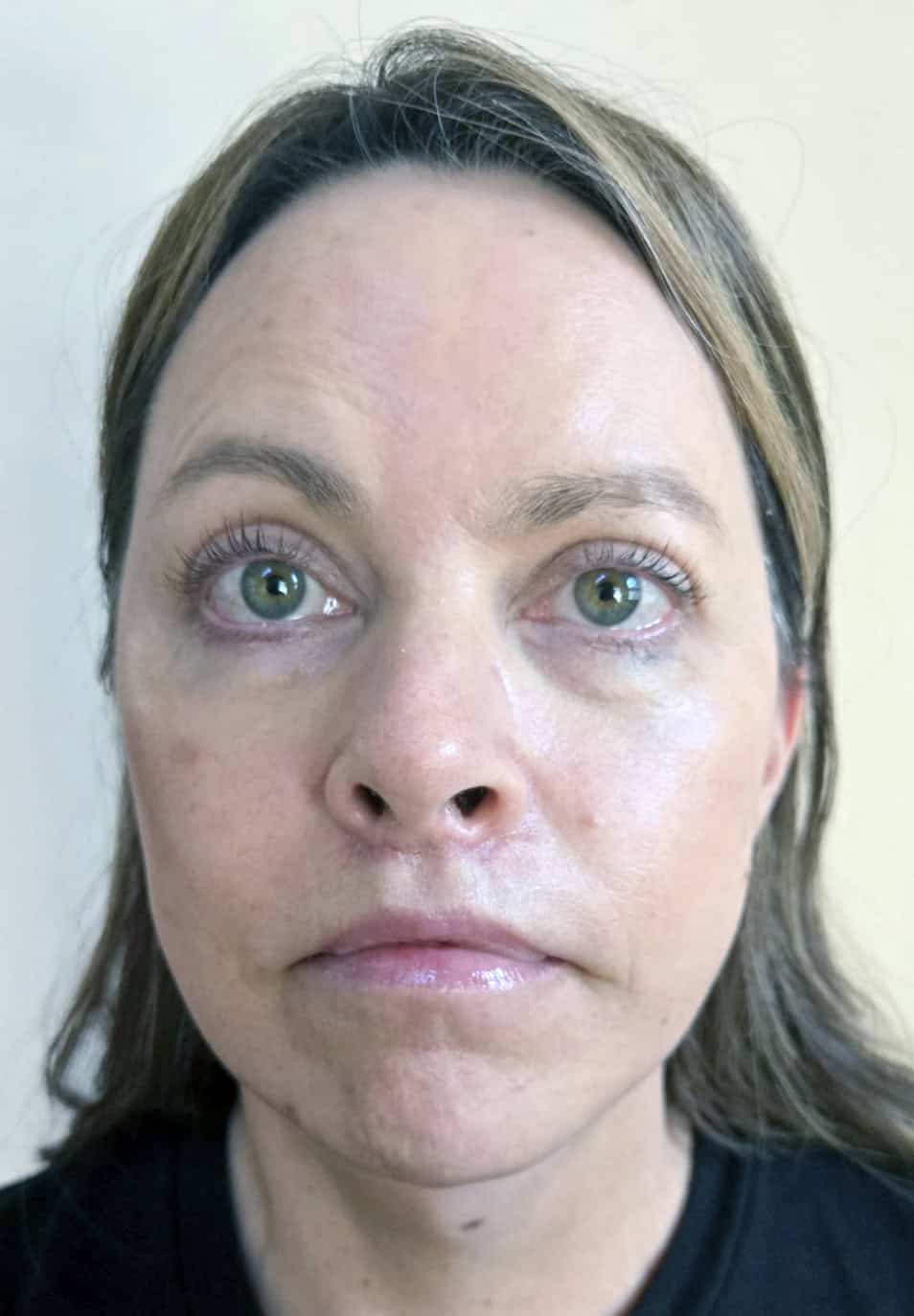

What Tina’s Photographs Tell Us About Swelling
On Day 1, Tina had noticeable swelling and bruising around the eyes. By Day 5, the bruising was changing color and some swelling was beginning to resolve, but her face remained fuller than it would eventually become.
By Day 8, Tina was wearing makeup, going out and participating in many normal activities. She returned home to Florida at that point and resumed work shortly afterward.
Her face still looked somewhat round because of residual swelling. At two weeks, that fullness was decreasing and more of the underlying jawline and neck definition was becoming apparent.
At nine months, we could see the mature relationship between her cheeks, jawline and neck without the early postoperative swelling obscuring the contours.
For the complete surgical planning and personal details of her experience, read Tina’s full facial rejuvenation journey.
Why Can Swelling Last for Months After a Facelift?
Visible swelling is only one part of the healing process. Deeper tissues also need time to recover after repositioning, and the body continues remodeling those tissues long after bruising has disappeared.
Along the jawline: Residual edema can temporarily soften the definition of the lower face. Areas of firmness may remain as the tissues heal.
Beneath the chin: After a neck lift, deeper swelling can persist even when the surface appearance has improved considerably.
Through the cheeks: Swelling may temporarily make the face look wider or rounder. In patients who also undergo facial fat transfer, early fullness can reflect both edema and transferred volume.
In the morning: Some patients notice temporary puffiness after sleeping. Mild fluctuations may occur during recovery, but sudden or progressively worsening swelling needs assessment.
What Determines How Much Swelling You Have?
Two patients undergoing similar procedures may have very different amounts of swelling.
The extent of the surgery matters. A facelift combined with a deep neck lift, eyelid surgery, lip procedures and fat transfer involves more treated areas than an isolated facelift.
Individual tissue response, medical history, medications and postoperative activity can also affect recovery.
Patients sometimes ask whether a deep plane facelift necessarily causes more swelling than another facelift technique. I would not make that assumption based on the name of the procedure alone.
My 4D Facelift™ approach considers the relationship between deeper facial support, volume, skin and neck contour. The operation is selected for the anatomy being corrected, not simply because someone promises a shorter recovery.
What Helps Swelling Go Down After a Facelift?
There is no treatment that makes postoperative swelling disappear overnight. My priority is to support healing and avoid activities that increase the risk of bleeding or unnecessary inflammation.
Head elevation: Follow your surgeon’s sleeping and positioning instructions. Elevation is commonly recommended during early recovery to help limit dependent swelling.
Activity: Light walking may be encouraged, but strenuous exercise, heavy lifting and activities that significantly increase blood pressure should wait until you are cleared.
Medications: Follow your prescribed instructions. Do not independently start medications or supplements marketed for swelling reduction.
Nicotine: Avoid nicotine according to your surgeon’s instructions because it can impair circulation and wound healing.
Massage: Do not begin facial massage, lymphatic drainage treatments, ice or heat applications without specific clearance. Recently operated tissues should not be manipulated based on general advice found online.
Most importantly, allow adequate time. The body must complete the inflammatory and tissue-remodeling phases of healing.
When Should You Worry About Swelling After a Facelift?
Normal swelling generally follows an expected course. It develops during the first several days and then gradually improves.
Sudden, painful or rapidly increasing swelling is different. One complication I watch carefully for is a hematoma, a collection of blood beneath the operated tissues. It may cause rapidly increasing swelling, pressure, pain or pronounced asymmetry and can require urgent treatment.
Infection may cause worsening redness, warmth, tenderness, fever or concerning drainage.Contact your surgical team immediately for sudden enlargement, significant new asymmetry, severe or worsening pain, new bleeding, fever or spreading redness. Rapid neck swelling or difficulty breathing requires emergency medical attention.
When Will You Look Normal After a Facelift?
Many patients feel comfortable returning to social activities after approximately two to three weeks, but that does not mean their swelling has completely resolved. Some patients require more time, particularly after combined procedures.
If you are planning surgery around an important event, I recommend allowing more time than the earliest possible return-to-work estimate.
For a closer look at early healing, read what the first week after a facelift looks like and our postoperative healing information.
If you are traveling to Houston for surgery, our out-of-town patient resources explain how to plan for follow-up visits and travel clearance.
What the Final Facelift Result Looks Like
Recovery photographs help explain the swelling process. Before and after photographs serve a different purpose: they allow us to evaluate the facial contours after the tissues have had time to heal.
These are six before and after views of Tina, the same patient shown in the swelling timeline above. From the front, notice the relationship between the eyes, cheeks and lower face. In the oblique views, look at the transition through the cheeks and jawline. In profile, the changes beneath the chin and through the neck become easier to appreciate.
Because Tina underwent multiple facial rejuvenation procedures, these results represent the combined treatment rather than the facelift alone.
BEFORE & AFTER
Tina’s Facial Rejuvenation Results


THE LONG-TERM PERSPECTIVE
Swelling Resolves in Stages
When I perform a facelift, I am thinking about the relationship between the cheeks, jawline and neck after the tissues have healed, not simply how those areas look during the first postoperative week.
Early swelling can temporarily obscure the definition we have created. As fluid resolves and deeper tissues settle, the facial contours become more apparent.
Tina’s recovery illustrates that process. She was returning to normal activities while her face was still swollen. Over the following weeks and months, the contours continued to refine.
My goal is not to make every patient look completely healed on the same postoperative day. It is to perform the appropriate surgery, support safe healing and allow the tissues enough time to reveal the intended result.
A facelift is performed in a day. The swelling resolves in stages. The final result emerges through healing.
Questions About Swelling After a Facelift
These questions address expected swelling, individual recovery patterns and changes that deserve medical attention. Where published evidence is limited, I distinguish clinical expectations from established research.
When does swelling peak after a facelift?
Swelling commonly becomes most noticeable during the first several days, often around Days 2 through 4. This is a clinical recovery estimate rather than a universally established peak. A systematic review of facelift studies provides broader evidence on postoperative complications but does not establish one peak-swelling day for every patient.
How long does most facelift swelling last?
Much of the visible swelling often improves within two to three weeks, while deeper fullness can persist for months. Published studies use different procedures and recovery measures, so there is no single evidence-based day when swelling completely disappears. The broader facelift complications literature should not be mistaken for a precise swelling timetable.
Is swelling normal two weeks after a facelift?
Yes. Residual swelling is common at two weeks, particularly through the cheeks, jawline and neck. The important consideration is whether recovery is progressing as expected. Tina’s photographs illustrate how someone can resume normal activities while deeper swelling continues to resolve.
Why does my face look wider or rounder after a facelift?
Postoperative fluid can temporarily increase fullness through the cheeks and lower face, obscuring jawline definition. If facial fat transfer was also performed, some early fullness reflects the added volume as well as swelling. The mature contour should not be judged during the first few weeks.
Why is one side more swollen after my facelift?
Mild differences between sides can occur during healing. Rapidly increasing one-sided swelling, especially with pain or pressure, requires immediate evaluation for a possible hematoma. A meta-analysis of deep plane facelift studies reported hematoma as a recognized postoperative complication.
Can swelling increase after it has started improving?
Mild fluctuations may occur, but sudden or substantial worsening is not something to dismiss. Research on hematoma prevention after facelift surgery identifies factors such as elevated blood pressure and anticoagulant use that can increase bleeding risk. Contact your surgeon promptly if swelling increases significantly.
Does a deep plane facelift cause more swelling than a SMAS facelift?
There is insufficient consistent comparative evidence to promise a shorter swelling timeline based solely on the facelift technique. The extent of surgery, accompanying procedures and individual healing response matter. A systematic comparison of deep and SMAS facelift approaches provides broader technique and safety context rather than proving one method produces less swelling.
Does combining a facelift with eyelid surgery or fat transfer increase swelling?
Additional procedures can create swelling in the areas treated. Fat transfer may add cheek fullness, while eyelid surgery can produce swelling and bruising around the eyes. This is why Tina’s recovery photographs represent comprehensive facial rejuvenation rather than an isolated facelift.
Does high blood pressure affect facelift swelling?
High blood pressure is particularly important because it can increase the risk of postoperative bleeding and hematoma, which may present as sudden swelling. A study of 1,089 facelift patients found an association between postoperative hypertension and hematoma, while an earlier study of 1,078 facelifts identified systolic blood pressure among significant hematoma risk factors.
Can lymphatic drainage massage make facelift swelling go away faster?
There is not enough high-quality facelift-specific evidence to promise that lymphatic massage meaningfully shortens recovery. I would not recommend manipulating newly operated tissues without clearance. The timing and technique must be appropriate for the operation performed.
When should swelling after a facelift be considered an emergency?
Rapid swelling, pronounced asymmetry, severe pain or significant bleeding requires immediate surgical assessment. Rapid neck swelling or breathing difficulty requires emergency care. Both a systematic review of facelift complications and a meta-analysis of hematoma outcomes identify hematoma as an important postoperative complication.
When will I see my final facelift result?
Much of the visible improvement appears during the first several weeks, but deeper swelling and firmness may continue changing for months. Tina’s photographs at two weeks and nine months illustrate the difference between early social recovery and a mature facial contour. The precise timeline remains individual.