
When I perform a facelift on someone who has never had facial surgery, I am working with anatomy that has not previously been surgically rearranged. When I perform a revision facelift, that is no longer true. Someone has already elevated the skin, manipulated the deeper tissues, placed sutures and created scars beneath the surface. My job is to understand what that first operation changed before I decide how to approach the second.
This is one of the reasons I find revision facial surgery particularly demanding. I cannot assume the tissue planes will separate the way they normally do, that the SMAS will have its usual thickness or that the previous incisions are in positions I would have chosen myself.
Sometimes a patient had an excellent first facelift and simply continued to age. Others come to me with an appearance they never liked, a neck that was not fully corrected, or features that look overly tight or unnatural. Those situations require different solutions, but they share one important characteristic: I am operating on a face that has already been changed by surgery.
For a broader discussion of the reasons patients consider another procedure, I’ve covered that in when and why a facelift revision may be necessary. Here, I want to explain what actually makes that second operation different.
A revision facelift is not simply another facelift. It’s surgery performed on anatomy that has already been operated on, healed and changed.
BENEATH THE SKIN
The Tissue Planes Are Not the Same the Second Time
During a primary facelift, I use recognizable anatomical layers to guide my dissection. The skin, subcutaneous fat, superficial musculoaponeurotic system (SMAS), retaining ligaments and deeper structures all have relationships that help me determine where I can safely work.
After surgery, the body’s healing response changes those relationships. Scar tissue forms between structures that may previously have moved independently. A plane that would normally separate cleanly may now be adherent. Some areas may be firm and difficult to mobilize, while others may contain relatively thin or delicate tissue.
The SMAS is particularly important. It’s one of the deeper support layers involved in modern facelift surgery, and previous elevation, excision, folding or suturing can change its thickness and mobility. During a revision, I may discover that the tissue available for repositioning is not what I expected from the external appearance.
A patient may look as though they have enough tissue for a substantial correction, but the underlying anatomy can tell a different story. I have to work with the tissue that remains, not the tissue I would expect to find in someone who has never undergone surgery.
This is why I don’t approach revision surgery with a predetermined amount of dissection. The tissues themselves help determine what can be done safely and what degree of correction is realistic.
Scar Tissue Changes How I Can Move the Face
Most patients think of scars as something visible along the hairline or around the ear. But the scars that influence a revision facelift most significantly are often the ones you cannot see.
When an area has been dissected and subsequently healed, internal scar tissue can bind tissue layers together. That makes surgical separation more demanding. It can also change the way the skin and deeper tissues move when I attempt to reposition them.
I pay particular attention to whether the tissues can be moved without placing excessive tension on the skin. A facelift shouldn’t depend on pulling the surface tighter to compensate for deeper structures that haven’t been adequately mobilized.
Sometimes releasing scarred attachments gives me the freedom to restore a more natural contour. In other situations, attempting to release every adhesion would create unnecessary risk. Those are judgments I have to make based on the actual tissue quality, not simply on what I planned before surgery.
The location of the previous dissection also matters. If another surgeon worked primarily in the superficial tissues, I may encounter a different pattern of scarring than I would after a deeper operation. Neither situation can be evaluated adequately by looking at the skin alone.
WHAT WAS DONE BEFORE?
The Name of Your First Facelift Doesn’t Tell Me Everything
Patients sometimes arrive with the name of the operation they were told they received. They may say they had a deep plane facelift, a SMAS lift or a mini facelift.
That information is useful, but it isn’t the same as knowing exactly what occurred during the operation.
I want to know where the surgeon entered the tissue planes, whether the retaining ligaments were released, how the SMAS was manipulated, which structures were anchored and whether additional procedures were performed in the neck.
I have encountered revision cases in which the surgical findings did not appear consistent with the technique the patient believed had been performed. I discuss one such experience in my article on why I perform deep plane facelifts.
That doesn’t mean every unexpected finding proves that the original operation was incorrectly described. There are variations in technique, differences in terminology and changes that occur during healing. What matters is determining the anatomy I am actually working with.
If the original operative report is available, I want to review it. Preoperative and postoperative photographs can also help me understand what changed after the first surgery and which concerns remain.
Why Facial Nerve Anatomy Requires Particular Attention
The facial nerve controls the muscles responsible for facial expression. Its branches have relationships to the deeper facial tissues that are essential to understand during facelift dissection.
In an unoperated face, I rely on established anatomical landmarks to guide the operation. In revision surgery, scarring and changes to the tissue layers can make some of those landmarks less distinct. Previous sutures, tissue repositioning or dissection may also alter the structures I encounter.
That is especially important when I’m considering deep plane dissection or additional work in the neck. The ability to perform a deeper operation does not mean every revision patient should receive the same extent of dissection.
I have to consider where the facial nerve branches are likely to be, how the previous operation may have changed the tissues around them and whether the planned correction justifies working in a particular area.
Temporary weakness, sensory changes and, less commonly, permanent nerve injury are among the risks that need to be discussed. A revision operation deserves an individualized risk assessment rather than assuming the risks are identical to those of a first facelift.
TISSUE SAFETY
Previous Surgery Can Change the Skin’s Blood Supply
Whenever I elevate skin during surgery, I have to consider its blood supply. The skin depends on a network of vessels that deliver oxygen and nutrients needed for healing.
Earlier surgery can change that vascular network. The effect is not identical in every patient, and previously operated skin is not automatically deprived of an adequate blood supply. But the history of surgical elevation, scars, tissue thickness and the patient’s general health all affect my planning.
This is another reason I think carefully about the extent of skin elevation and the amount of tension placed on the tissues. More dissection is not automatically better, particularly when the skin has already been elevated during a previous operation.
Smoking, nicotine exposure, medical conditions and prior healing difficulties add to the considerations. I also want to know whether the patient has had previous resurfacing procedures or other treatments that may have affected the skin.
My goal is not to perform the greatest amount of dissection possible. It is to perform the dissection necessary to achieve the correction while respecting the tissues that must heal afterward.
Old Incisions Can Limit the Choices I Have
One of the first things I examine in a revision patient is the location of the previous incisions. I look carefully around the ears, into the temporal hairline and behind the ears where facelift and neck lift incisions commonly extend.
Sometimes the original incisions are well placed, and I can work through them again. In other patients, scars are too far forward, hairlines have been shifted, or the ear has been distorted by tension from the previous operation.
An attached or pulled-down earlobe, sometimes called a pixie ear deformity, is one example. It can develop when the skin around the ear is placed under excessive tension. Correcting it may involve more than simply removing a visible scar.
The sideburns and posterior hairline matter just as much. If an earlier facelift changed their position, repeating the same incision design may make the distortion worse.
My approach is to consider the old incision, the remaining skin mobility, the direction of the lift and the position of the hairline together. I want the improvement to look natural not only through the jawline and cheeks, but also in the areas where a facelift can reveal itself through poorly positioned scars.
BELOW THE JAWLINE
Revision Neck Surgery May Be a Different Operation Entirely
Not every concern that remains after a facelift is caused by inadequate facial lifting. I may see a patient whose cheeks have been improved but whose neck still appears full or poorly defined.
That can involve superficial fat, the platysma muscle, deeper fat, the digastric muscles or the submandibular glands. In some cases, the problem is residual tissue that was not addressed. In others, excessive fat removal or scar contraction has created an unnatural contour.
A cobra neck deformity is one example of how removing too much tissue beneath the chin can leave an abnormal hollowed appearance. Correcting that problem may require volume restoration or a different approach to the remaining neck tissues, not simply pulling the skin tighter.
When I plan a revision involving the neck, I examine the face and neck as related but distinct anatomical regions. I also consider what the first surgeon may have done to the platysma and underlying structures.
I’ve written separately about why some neck lifts fail to create a defined jawline and the deeper anatomy of neck aging. Those distinctions become even more important when the neck has already undergone surgery.
A REAL REVISION PATIENT
Vivian’s Surgery Shows Why Revision Planning Cannot Be Standardized
Vivian is a particularly useful example because her revision required more than simply lifting her face again.
She had previously undergone facial surgery and had cheek and chin implants. Over time, she felt that the implants made her facial contours appear too firm and disproportionate to her natural features.
When I evaluated her, I needed to consider the position of the existing implants, how they affected the surrounding tissues, what her face would look like without them and which areas would benefit from surgical repositioning or volume restoration.
We staged the surgery. I removed the implants first and allowed the tissues to begin settling before proceeding with her revision deep plane facelift, deep neck lift and additional facial procedures about two weeks later. That staged approach was specific to her anatomy and treatment needs; implant removal does not always need to be separated from other procedures.
In Vivian’s case, the neck also required particular attention. I evaluated deeper neck fullness, including the submandibular glands, rather than assuming that another facelift would automatically correct her neck contour.
This is an important distinction. A patient may want everything corrected in one operation, but the safest or most useful plan sometimes requires separating procedures.
Her full surgical journey is documented in Vivian’s revision facelift story, including her early recovery visits.
REVISION FACELIFT RECOVERY
Vivian at Four Months: Why Revision Facelifts Heal Differently

Four months after her revision deep plane facelift and deep neck lift, Vivian describes the differences she noticed compared with her first surgery. We discuss residual tightness, gradual softening, implant removal and why previously operated tissues may take longer to settle. Her healing experience is individual and does not establish a recovery timeline for every patient.
Why I Sometimes Need to Restore Volume Instead of Lifting More
A revision patient may have a tight lower face but still appear hollow through the cheeks or temples. That is one reason I don’t automatically assume another lift, by itself, will create a better result.
Facial volume changes with age, and earlier surgery may have removed, repositioned or altered some of the tissue contributing to facial shape. The challenge is distinguishing between tissues that have descended and areas where volume is genuinely missing.
In selected patients, facial fat transfer can help address those volume deficits. It does not replace the need to reposition descended tissues, but it can be part of a broader approach when lifting alone would leave the face looking depleted.
I may also encounter a patient whose previous surgery created excessive tension in a particular direction. Releasing and redistributing that tension can be just as important as adding volume.
My objective is not to make every revision patient look fuller. I want to restore balanced facial contours without creating an overfilled appearance or making the face look as though it has been pulled tightly in one direction.
What a Revision Can Improve and What It Cannot Undo
There is often a meaningful opportunity to improve facial contour after a previous facelift. Depending on the findings, I may be able to address residual jowling, recurrent tissue descent, an incompletely treated neck, abnormal skin tension or visible incision problems.
But a revision operation does not erase the first surgery. It cannot return every tissue layer to its original condition, restore all removed tissue or guarantee complete correction of every scar or irregularity.
Sometimes the patient has enough healthy tissue and mobility to allow a substantial improvement. In another case, the skin is thin, the deeper tissues have been heavily manipulated or an important structure has been changed in a way that limits what I can safely accomplish.
These limits are part of the consultation. I would rather explain an expected improvement carefully than promise that I can make a previously operated face behave exactly like one that has never undergone surgery.
Revision surgery is not about making the first operation disappear. It is about understanding what remains, what can be improved and how to make those changes safely.
HEALING AFTER A SECOND OPERATION
Why Revision Facelift Recovery May Be Less Predictable
Recovery after any facelift involves swelling, bruising, changes in sensation and a period during which the tissues gradually settle.
With revision surgery, I am also accounting for areas that have already healed from previous dissection. Internal scarring, the extent of the new operation and any additional procedures can affect how the tissues respond.
Some revision patients recover relatively smoothly. Others experience prolonged firmness, residual swelling or a slower return of normal tissue softness. I don’t want patients to interpret every week of tightness as evidence that something has gone wrong, but I also don’t want to dismiss symptoms without examining them.
Vivian described this difference at her four-month visit. She was pleased with the improvement she could see, but she was still noticing changes in how her face felt and how the tissues moved.
We discussed how her results could continue settling over the following months. That was an individualized conversation about her surgery, not a universal recovery timeline for all revision patients.
Patients considering another operation should also understand what the first week after a facelift can look like, since early postoperative changes can appear more dramatic than the eventual result.
Increasing pain, rapidly enlarging swelling, fever, wound changes or new facial weakness should be reported promptly to the surgical team rather than attributed to ordinary recovery.
THE COMPLETE PATIENT JOURNEY
Vivian’s Earlier Revision Facelift Recovery

Vivian’s earlier patient video documents her revision journey, including implant removal, early postoperative swelling and the surgical decisions involved in her revision deep plane facelift and neck lift. It provides context for the four-month update above.
A REAL RECOVERY
Vivian’s Recovery in Photographs
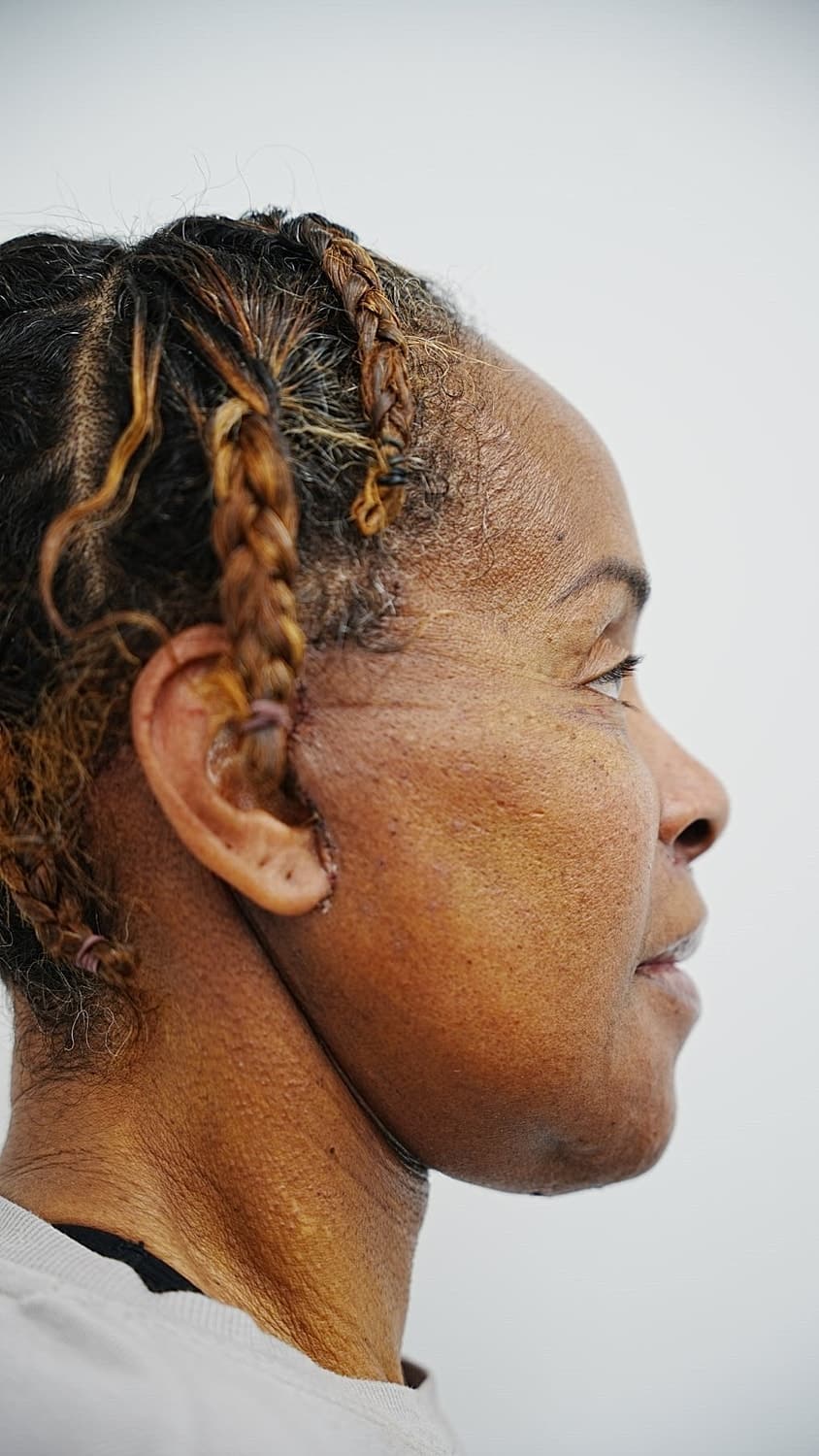
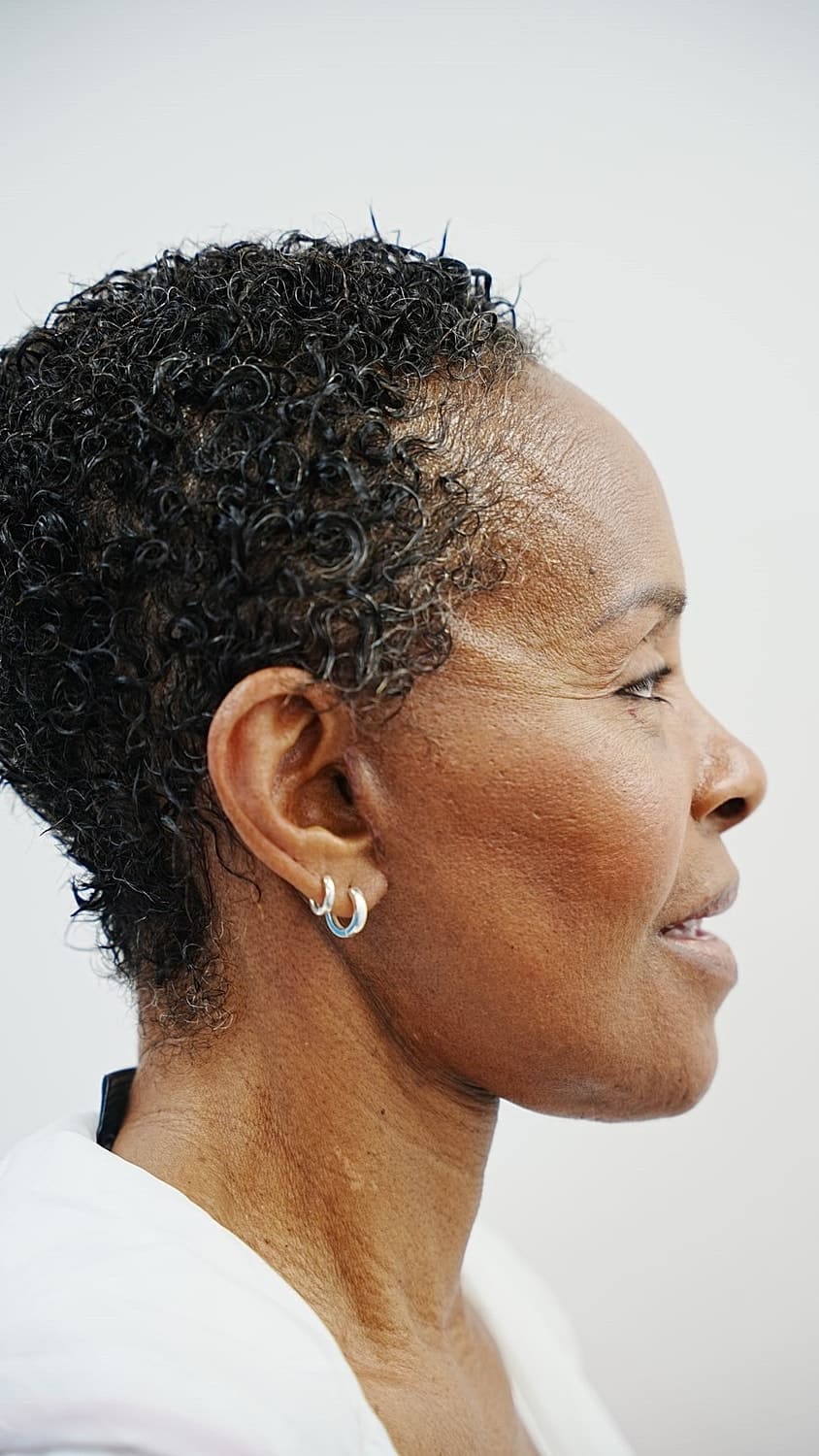
I think it’s important for patients to see more than a polished final result. Vivian allowed us to document her appearance before surgery and at different points in her recovery.
The photographs below show her preoperative appearance, followed by six-day and one-month postoperative photographs. They’re useful because revision surgery involves healing that cannot be judged from a single early photograph.
Her treatment included implant removal, revision deep plane facelift, deep neck lift and additional facial rejuvenation procedures. The changes shown are the result of that combined plan, not the facelift alone.
VIVIAN’S RECOVERY
Before Surgery, Six Days and One Month

PREPARING FOR A REVISION
What I Need to Know Before Planning Your Second Facelift
The most useful starting point is a clear history of the first operation. I want to know when it was performed, what procedures were included, whether there were complications and how the result changed over time.
Whenever possible, I would like to review the original operative report and photographs taken before and after the first surgery. These can help explain where the previous surgeon worked and how the patient’s facial anatomy responded.
I also need a complete history of facial fillers, thread lifts, implants, energy-based treatments and other procedures performed since that operation. Those details may affect tissue quality or surgical planning even when the treatments were not considered major surgery.
Finally, I want to understand what the patient actually wishes were different. A person may dislike the appearance of a previous facelift without being able to identify whether the concern is skin tension, volume, neck contour, scarring or another issue.
That is part of my job: to separate the visible concern from the underlying anatomical explanation and determine whether another operation can reasonably improve it.
MY FINAL THOUGHT
The Most Important Revision Decision Happens Before Surgery
I don’t believe a revision facelift should begin with the assumption that we simply need to repeat the original operation more aggressively.
I want to understand the first surgery, identify the tissue changes it produced, evaluate what remains anatomically available and determine which aspects of the patient’s appearance can be improved safely.
Sometimes that leads to another deep plane facelift. Sometimes it requires a different approach to the SMAS, additional neck work, correction of an old scar, restoration of volume or a staged treatment plan.
The more complicated the anatomy, the more important it becomes to choose the operation for the actual problem rather than the name of the technique.
If you’re considering another facelift, I want you to understand both the opportunities and the limits. A well-planned revision can provide meaningful improvement, but it deserves a level of anatomical assessment and surgical judgment that reflects everything your face has already been through.
FREQUENTLY ASKED
Questions About Revision Facelift Surgery
A second facelift presents different anatomical considerations from the first. These are some of the questions I discuss when evaluating a patient who has previously undergone facial lifting surgery.
Why is scar tissue more challenging during a second facelift?
Scar tissue can bind anatomical layers together, reducing their normal mobility and making dissection less predictable. A systematic review of 737 secondary facelift patients identified fibrosis and altered tissue planes as recurring surgical challenges. I need to determine where those changes have occurred before deciding how the tissues can be safely mobilized.
Can the operative report from my first facelift help plan the revision?
Yes. It may describe the dissection planes, SMAS technique, fixation methods and additional neck procedures used. A review of revision facelift and neck lift surgery emphasizes detailed preoperative evaluation and the challenges created by prior procedures. Those records are valuable, but I still examine the current anatomy because healing and aging can change the tissues.
Does revision facelift surgery carry a greater risk of facial nerve injury?
Previous surgery may make familiar anatomical landmarks less distinct, which requires particular care during dissection. A review of revision facelift challenges discusses changes to facial nerve landmarks. However, increased technical complexity doesn’t establish that every revision patient has a higher complication risk. The risk depends on the prior operation, anatomy and planned technique.
Is the skin’s blood supply permanently damaged after a facelift?
Not necessarily. Facial skin can maintain adequate circulation after previous surgery, but the vascular anatomy may change. A study comparing skin after primary and revision facelifts found microscopic differences involving nerves and blood vessels. The findings cannot predict an individual patient’s healing, but they reinforce why I carefully evaluate tissue quality and surgical history.
Can old facelift scars and an altered hairline be corrected?
Some can be improved, depending on their position and the amount of mobile tissue remaining. A clinical discussion of problems encountered during secondary facelifts describes adapting incisions to address existing scars and hairline distortion. I evaluate those details before deciding whether to reuse or modify the original incision.
Does every revision facelift require another deep plane facelift?
No. The best approach depends on the remaining SMAS, scar tissue, prior dissection and the correction required. A clinical series on secondary facelift problems describes modifying the surgical plan according to the tissues and deformities encountered. I don’t repeat a technique simply because it was used previously or because it has become popular.
What if my previous facelift left my face hollow or overly tight?
The correction depends on whether the problem involves abnormal tissue tension, volume loss or both. A 20-year clinical experience with secondary facelifts describes releasing abnormal SMAS tension, restoring volume with fat grafting and carefully redraping the skin. I determine which of those changes is actually needed before recommending further lifting.
Can a previous thread lift make revision facial surgery harder?
It can. Some patients develop fibrosis and tissue adhesions after thread lifting. A 2025 study of facelifts following thread lifts described scarred anatomical planes and reduced SMAS mobility in the patients examined. That doesn’t happen to everyone, but I want to know about any previous threads before planning surgical dissection.
Can a revision correct an unnatural or hollowed neck contour?
Sometimes. I first determine whether the contour problem comes from scar contraction, excessive fat removal, platysma position or deeper anatomy. A review of revision rhytidectomy techniques identifies cobra neck deformity among the challenging problems surgeons may encounter. Simply tightening the neck again may not address its cause.
Should I expect a revision facelift to take longer to heal?
Some patients experience prolonged swelling or firmness, but there is no single recovery timeline for revision surgery. A systematic review of secondary facelifts reported altered tissues and complications that can affect healing, without establishing that every revision takes longer to recover from. I base expectations on the extent of surgery, tissue quality, additional procedures and individual healing.


