When patients ask me about a facelift, they want to know what the result will look like. But very quickly, the conversation turns to something else: How long will I be swollen? When can I go back to work? And what can we do to make recovery easier?
I think those are important questions. For years, much of the conversation in plastic surgery has focused on refining the operation itself. We should absolutely keep getting better at surgery. But the patient’s experience does not end when I place the last stitch.
Today, I think about recovery as a coordinated process. It starts with preparation before surgery, continues with the way I perform the operation, and extends through postoperative visits, wound care and, when appropriate, technologies such as ELIXIR MD™, IV therapy and hyperbaric oxygen therapy.
My goal is not to promise that every patient will heal in a certain number of days. It is to make each part of the recovery process as thoughtful as the surgery itself.
START WITH THE EXPECTATIONS
What Does Faster Surgical Recovery Actually Mean?
There are two different milestones patients sometimes confuse. The first is being comfortable enough to return to everyday life. The second is being fully healed.
After a facelift, some of my patients can wear makeup, see friends and return to less physically demanding work around the second week. In my practice, I often discuss roughly 9 to 14 days as a useful planning range for this early social recovery, depending on the operation and the patient. Other patients need more time.
That does not mean the deeper tissues have finished healing. Swelling, firmness, altered sensation and scar maturation can continue for months. The pattern is also different after eyelid surgery, rhinoplasty or a combined facial rejuvenation.
I want to help patients get through the early visible signs of surgery without confusing that progress with the end of the healing process.
BEFORE THE OPERATION
Recovery Begins Before Surgery
One of the most useful things I can do for recovery happens before the patient enters the operating room. I review medical conditions, prescriptions, over-the-counter medications and supplements that may affect bleeding, anesthesia or healing. I also want to understand nutrition, hydration, tobacco use and whether there is anything that needs to be addressed before proceeding.
Patients sometimes assume that taking more vitamins is automatically helpful. It is not that simple. Some supplements can create problems around surgery, and an additional vitamin is not a substitute for adequate nutrition or correcting a genuine deficiency. That is why I ask patients to follow their individualized surgery preparation instructions rather than adding products on their own.
The extent of surgery matters, too. A limited eyelid procedure is different from a 4D Facelift™ combined with a neck lift, fat transfer and resurfacing. Those patients may need very different postoperative plans.
What Happens in the Operating Room Matters Just as Much
No postoperative device can undo unnecessary surgical trauma. Careful dissection, attention to bleeding, tissue handling, closure and the choice of procedures all influence the starting point for recovery.
I also consider anesthesia as part of that plan. For selected patients, I offer surgery under local anesthesia with appropriate sedation. In my experience, some patients find that recovery easier. But local anesthesia is not right for everybody, and I do not believe patients should be pushed into a particular anesthetic simply because they want less downtime.
Depending on the operation, I may use drains or other techniques to manage postoperative fluid and bleeding. These decisions are made for surgical reasons. They are not replaced by light therapy, an infusion or an oxygen chamber.
Why I Changed the Way I Think About Facelift Healing
I explain the small but important decisions that shape recovery: preparation, anesthesia, surgical technique, postoperative visits, ELIXIR MD™, IV therapy and hyperbaric oxygen. My point is that the whole plan matters more than any individual component.
LIGHT-BASED RECOVERY SUPPORT
Where ELIXIR MD™ Fits Into Surgical Recovery
One of the technologies I have incorporated into recovery care is ELIXIR MD™, an LED photobiomodulation device. Photobiomodulation uses selected wavelengths of light to influence biological processes in tissue without removing or resurfacing the skin.
The device has different settings for different purposes. In my videos, I discuss a blue-light protocol used before surgery with the aim of reducing bacteria on the skin surface, and a postoperative Cellular Repair protocol that I use when addressing swelling, bruising and tissue recovery. Those are intended treatment goals; they should not be confused with proof that the device prevents surgical infection or guarantees faster healing.
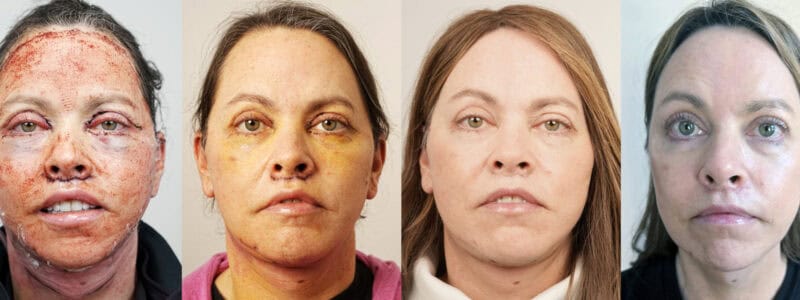
What has interested me clinically is how patients look and feel over the first several days. In one early comparison I shared on video, I showed two patients who underwent similar facial rejuvenation procedures, one with the ELIXIR MD™ protocol and one without it. The patient who received the treatment appeared to have less visible postoperative recovery remaining at the later photographic checkpoints.
That is an observation from my practice, not a randomized clinical trial. A 2026 systematic review of photobiomodulation after facial aesthetic surgery reported promising findings for pain, swelling, bruising and wound healing, but the evidence was still limited. The review included six studies, with very little direct facelift-specific evidence. We need to be careful about treating results from one device or procedure as proof for every other one.
The device is only one part of the experience. The extra opportunities to examine a patient and answer questions during recovery matter, too.
When patients return for light treatments, I may also see them more frequently than I otherwise would. That gives us an opportunity to check healing, address a concern early and help patients understand which changes are expected. I consider that increased contact a meaningful part of the protocol.
What ELIXIR MD™ Is Designed to Do
I explain photobiomodulation, the preoperative and postoperative light protocols, and the improvements I have observed in my own patients. I have also disclosed in another video that I have served as a key opinion leader for ELIXIR MD™; that relationship is worth knowing when considering my experience with the device.
HYDRATION & NUTRITIONAL SUPPORT
Can IV Therapy Help After Facial Surgery?
Surgery is physically demanding. Patients may eat less, drink less, sleep differently and feel fatigued during the first few days. Hydration and adequate nutrition matter, and occasionally a patient has a specific reason to receive fluid or nutritional support intravenously.
At Athré Facial Plastics, IV therapy can be considered as part of a postoperative plan. In my recovery video, I discuss infusions that have included saline, B vitamins, magnesium and glutathione. The formulation and whether to use an infusion should depend on the patient’s health and clinical needs; it is not a single recipe that every surgical patient must receive.
It is also important to distinguish two different claims. IV fluid can be useful when a patient needs fluid replacement or cannot maintain adequate hydration by mouth. That does not automatically mean an otherwise healthy, well-hydrated patient will recover faster from a facelift because vitamins are delivered through a vein.
A 2026 review of micronutrients in perioperative care found that correcting deficiencies can matter for recovery, while routine high-dose supplementation is not justified by current evidence. Intravenous vitamins also carry risks, including needle-site complications and adverse effects from excessive doses.
For me, the sensible question is whether IV therapy addresses a need in the patient in front of me. It should complement appropriate eating, drinking and medical care, not become a replacement for them.
OXYGEN & TISSUE HEALING
What About Hyperbaric Oxygen Therapy?
Hyperbaric oxygen therapy, or HBOT, involves breathing oxygen in a chamber at increased atmospheric pressure. Under those conditions, more oxygen dissolves into the blood plasma and can reach tissues where oxygen availability is important to healing.
Hyperbaric oxygen has established medical uses, including selected problem wounds and compromised grafts or flaps. Using it routinely after an uncomplicated cosmetic facelift is a separate question, and the evidence is still developing.
A 2023 case-control study involving 20 facelift patients compared patients who received HBOT with those who did not. The investigators reported a shorter average wound-healing period in the treated group, but the study was small and nonrandomized. A subsequent systematic review of HBOT in aesthetic surgery also described promising results while emphasizing the need for better controlled trials.
This is why I view HBOT as a potential adjunct rather than a universal requirement. The patient must be appropriately screened, the treatment needs medical supervision, and the decision should consider the procedure and the stage of recovery.
HBOT is not risk-free. Ear or sinus pressure injuries, temporary visual changes and rare oxygen-related complications can occur. Safe chamber operation matters as much as the decision to use the treatment. The FDA has issued specific safety guidance for hyperbaric oxygen devices.
A REAL RECOVERY EXPERIENCE
What Paul’s Recovery Shows, and What It Cannot Prove
Paul gives me a useful example because he was photographed and interviewed just five days after upper and lower eyelid surgery with fat transfer. He traveled to Houston for his operation, which meant that being ready to return home mattered to him.
Paul described his recovery as relatively comfortable and said he had not needed much pain medication. At his five-day visit, I observed limited visible bruising and swelling. His care included surgery under local anesthesia and an expanded postoperative protocol that incorporated hyperbaric oxygen alongside other recovery measures.
It is tempting to look at an early result and assign all of the improvement to one technology. I do not think that is the right way to interpret this case. Paul had a particular operation, an individualized anesthetic plan, postoperative follow-up and multiple supportive treatments. We cannot isolate the effect of hyperbaric oxygen, IV therapy or ELIXIR MD™ from a single patient’s experience.
What the case does show is how the different parts of a recovery plan can be coordinated around the patient, especially someone traveling for surgery. Patients considering travel can also review our out-of-town patient information.
Paul, Five Days After Eyelid Surgery
Paul describes his experience five days after upper and lower blepharoplasty with fat transfer. This is one patient’s recovery with several elements of care, not a controlled demonstration of any single treatment’s effectiveness.
THE PART YOU CAN CONTROL
The Basic Recovery Instructions Still Matter Most
Even when we use advanced therapies, I still want patients focused on the fundamentals. Follow the written instructions for the particular surgery. Take medications only as directed. Keep postoperative appointments. Eat adequately, drink fluids as advised, rest and begin gentle movement when cleared to do so.
Patients often feel better before the deeper tissues are ready for strenuous activity. That is an important distinction. Feeling comfortable enough to answer emails or take a short walk is not the same thing as being ready to lift weights, exercise intensely or disregard restrictions.
And I want patients to call the office about an unexpected change rather than wait for the next light treatment or HBOT appointment. Increasing pain, rapidly expanding swelling, significant bleeding, fever or new breathing difficulties warrant prompt medical guidance. Unusual symptoms should never be dismissed as a normal part of recovery without evaluation.
Our postoperative healing information explains how these services fit into the broader care program. But the instructions given to you after your own operation take priority over any general article.
Does Every Patient Need All Three Recovery Treatments?
No. There is no reason to assume that every patient needs ELIXIR MD™, IV therapy and hyperbaric oxygen in the same combination or on the same schedule.
Light therapy may be useful as part of early postoperative visits. An infusion may make sense for a patient with a particular hydration or nutritional need. Hyperbaric oxygen may be considered for selected patients after a discussion of the potential benefit, uncertainty and risks. None of these interventions changes the need for sound surgery, appropriate patient selection and careful follow-up.
When I think about better recovery, I am not thinking about adding every possible treatment. I am thinking about choosing the right combination of care for the patient and the operation.
That is the conversation I want to have before surgery: not just what result we are trying to create, but how we are going to take care of you while you get there.
FREQUENTLY ASKED
Questions About Recovering After Facial Surgery
These are some of the questions patients ask about supportive therapies, early downtime and what the research actually tells us.
Can ELIXIR MD™ help with swelling and bruising after a facelift?
Photobiomodulation has shown promising effects on early swelling, bruising and discomfort in some facial-surgery studies. However, a 2026 systematic review found relatively few qualifying studies and very limited facelift-specific data. The treatment may be a useful adjunct, but it does not guarantee a specific recovery speed.
Does ELIXIR MD™ cut facelift recovery time in half?
That is not an outcome we can promise for an individual patient. I have observed improvements in early recovery in my practice, but observations and small comparisons are not the same as controlled proof for a specific device. The published photobiomodulation evidence in facial aesthetic surgery remains preliminary.
Does hyperbaric oxygen therapy help facelift wounds heal?
There is encouraging early evidence. A 20-patient facelift study reported a shorter average wound-healing period among patients receiving HBOT. But the study was small and nonrandomized, so larger trials are needed before we can make confident claims about routine use after uncomplicated cosmetic surgery.
Is hyperbaric oxygen required after a facelift?
No. HBOT is a recognized treatment for certain medical problems, including compromised grafts and flaps, but it is not a universal requirement after elective facelifts. The Undersea and Hyperbaric Medical Society’s indications distinguish selected problem tissues from normal, uncomplicated healing. Whether HBOT is appropriate should be individualized.
Will IV vitamin therapy make me heal faster after surgery?
That has not been established for otherwise healthy facelift patients. IV fluids can be appropriate for dehydration, and targeted nutritional treatment can help when a deficiency is present. But a 2026 perioperative micronutrient review did not support routine high-dose supplementation for every surgical patient.
Can these treatments replace routine postoperative care?
No. Follow-up examinations, proper wound care, nutrition, hydration, activity restrictions and attention to unexpected symptoms remain essential. Even where a supportive therapy has promising evidence, it does not replace a patient’s personalized surgical instructions or prompt evaluation of a possible complication.
If I look normal after ten days, am I fully healed?
Not necessarily. Being ready to wear makeup, socialize or return to less strenuous work is an early recovery milestone. Deeper tissue healing and scar maturation can continue for months. Your own recovery depends on the procedures performed, your health and how your body heals.