Once you decide to have rhinoplasty, there is a strange transition that happens. For months, sometimes years, you have been thinking about your nose. You finally make the decision, schedule surgery and get excited. Then the date starts getting closer.
That is when the questions usually begin. What medications do I stop? What should I buy? What should I eat after surgery? What happens if I get nervous? What am I supposed to do the morning of surgery?
I don’t want you figuring those things out the night before your rhinoplasty. In my practice, preparation starts several weeks before surgery so we have time to review your health, answer questions and deal with anything unexpected without creating unnecessary urgency.
The goal of preparing for rhinoplasty is simple: by the time surgery morning arrives, there should be very little left for you to figure out.
START EARLY
Why I Start Preparing for Rhinoplasty About Three Weeks Before Surgery
I normally like to do the preoperative assessment about three to three and a half weeks before surgery. There is a practical reason for doing it that early. The pre-op gives me an opportunity to reconfirm the information we discussed during your consultation and make sure nothing important has changed.
If something unexpected comes up, we still have time.
Maybe your blood pressure is higher than expected. Maybe there is something in your medical history that needs clarification. Maybe I want your primary care physician to evaluate something before we proceed. I would much rather discover that several weeks before surgery than turn it into an emergency two days beforehand.
INSIGHTS FROM DR. ATHRÉ
How I Prepare My Patients for Rhinoplasty
In this video I walk through my rhinoplasty preparation process from the preoperative appointment through the weeks leading up to surgery, what I ask my patients to have ready at home and the emotional roller coaster that can happen as surgery gets closer.
Your Surgeon’s Instructions Come First
I want to make one point very clear before giving you my timeline. Every surgeon has a detailed protocol for preparing patients for surgery. Part of that protocol comes from medical evidence. Part of it comes from the way that surgeon operates, the anesthesia being used and what has consistently worked well in that practice.
What follows is how I prepare my rhinoplasty patients. It is not a substitute for the instructions from the surgeon who is actually taking care of you.
If something you read here is different from what your surgeon told you, call your surgeon and follow your surgeon’s instructions.
ABOUT TWO WEEKS BEFORE
This Is When Most of the Preparation Happens
In my protocol, the two-week point is where many of the important changes begin. This is when I review medications, vitamins and supplements with my patients and tell them specifically what I want stopped before surgery. I also ask patients to stop alcohol during this period.
Do not simply take somebody else’s medication list from the internet and assume it applies to you. Even common medications can have different implications depending on your health, the surgery being performed and your surgeon’s protocol.
I want to know what you actually take, including over-the-counter medications and supplements, so I can give you instructions based on that information.
Preparing for surgery is not the time to make medication decisions on your own. Review the complete list with your surgical team.
Get Your Rhinoplasty Recovery Supplies Before You Need Them
I also want my patients to have the simple things they will need after surgery already sitting at home.
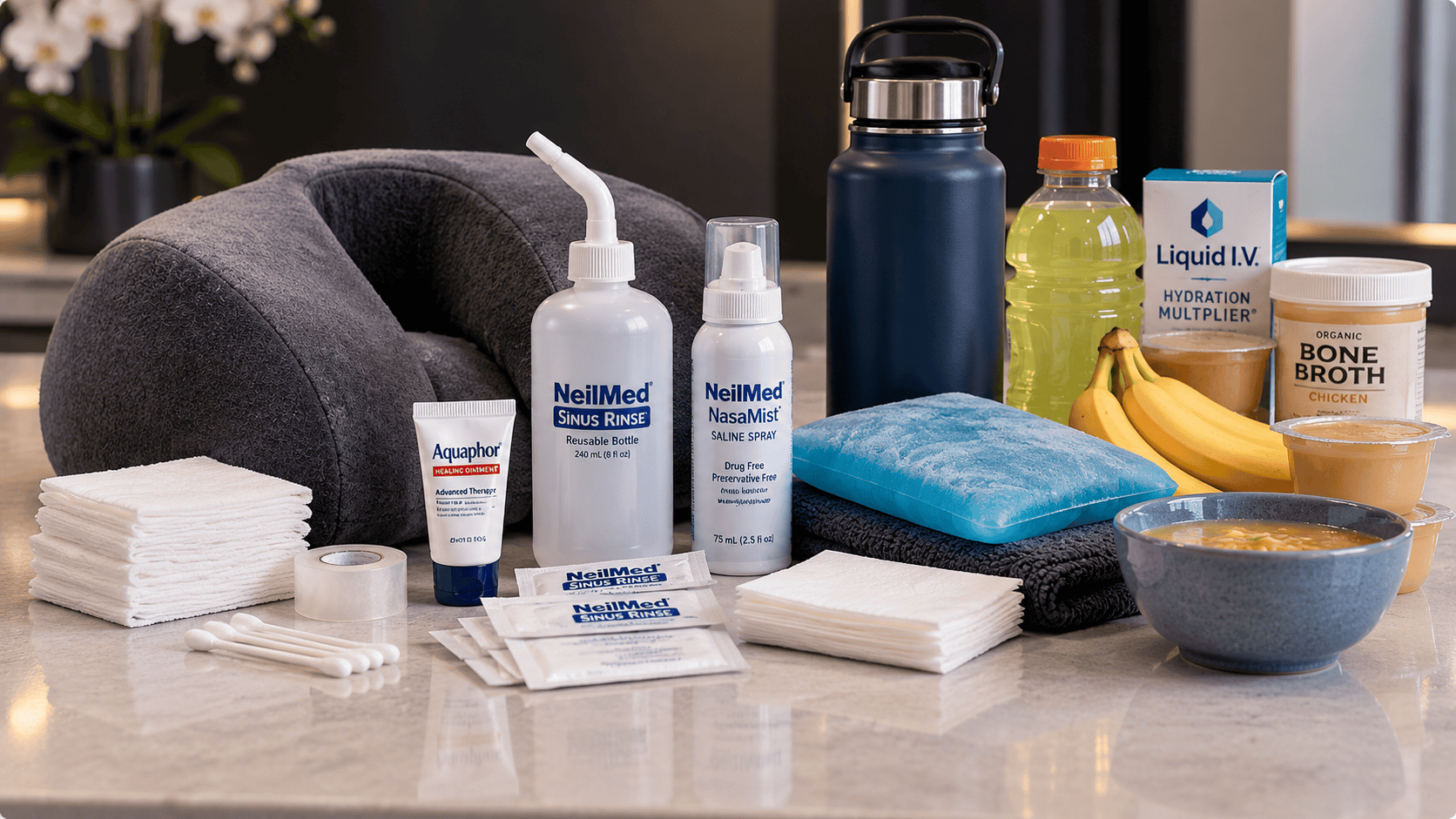
In the video, I go through the supplies I commonly recommend in my practice. Depending on the patient and the instructions I give them, that can include things such as gauze pads, nasal saline products and other postoperative nasal-care supplies. I also suggest having easy foods and drinks available so you are not worrying about a grocery trip immediately after surgery.
Buy the Boring Stuff Before Surgery
Gauze, nasal-care supplies, drinks and easy foods are not exciting parts of rhinoplasty, but having them ready means you can come home and concentrate on recovery instead of sending somebody to the store.
The exact list can vary because postoperative care varies. What matters is the timing.
Fill the prescriptions your surgical team wants filled. Buy the supplies they recommend. Put everything somewhere easy to reach. Make sure the person helping you knows where it is.
Do it while you feel completely normal, not when you have just come home from surgery.
As Rhinoplasty Gets Closer, Your Job Should Get Simpler
By the last couple of days before surgery, I do not want preparation to feel chaotic.
Your prescriptions and supplies should already be handled. You should know where you are going, when you need to arrive and who is taking you home. You should understand the eating and drinking instructions given to you by your surgical team and know what medications, if any, you have been told to take.
This is also the time to pay attention to your health. If you become sick, develop a new medical issue or something changes that you think might matter for anesthesia or surgery, tell your surgical team.
Feeling Nervous Before Rhinoplasty Is Normal
There is another part of rhinoplasty preparation that does not fit into a shopping list: your head.
When you first come in for a rhinoplasty consultation, there can be a tremendous amount of excitement. You are talking about something you may have wanted for years. We are discussing your goals and looking at your nose. Surgery still feels theoretical.
Then the date gets closer.
The excitement can suddenly coexist with anxiety. Your stomach gets tight. You start thinking about anesthesia. You wonder what you will look like. You can even start questioning a decision that you felt completely comfortable with a few weeks earlier.
I think patients should know that can happen before it happens.
I am a surgeon. If I am the patient having surgery, I can get anxious too. That is a normal human response to giving up control and putting yourself in somebody else’s hands.
Your emotions may go up and down as surgery approaches. The important thing is for your brain to understand that the roller coaster can be part of the process.
PATIENT JOURNEY
Nervous Before Rhinoplasty? Hear It From a Patient and Her Mom
This patient had wanted rhinoplasty for a long time, but wanting surgery did not mean she felt no anxiety before it. In this patient journey, she and her mother talk about the consultation, their nervousness before surgery and what the experience was like from their perspective.
Being Nervous Does Not Necessarily Mean You Are Unsure
I like this patient’s story because she said something I hear all the time before surgery: she was nervous and excited at the same time.
She had wanted rhinoplasty for a long time. Her mother had researched surgeons extensively. By the time surgery arrived, they had already made the decision.
What made them comfortable was not pretending that surgery was no big deal. Her mother later told me that the first consultation mattered because I took the time to explain the process and answer their questions.
That is what I want preparation to accomplish.
I cannot promise that you will feel absolutely no anxiety when you walk into surgery. I can make sure that you understand why we are doing the surgery, what the plan is and what to expect when you wake up.
This particular patient also described an easier early recovery than she had expected. That was her experience. It should not be interpreted as a promise that another patient will have the same amount of discomfort or return to normal activities on exactly the same timeline.
By Surgery Morning, the Decisions Should Already Be Made
The morning of surgery should not be the first time you are thinking about your recovery, your medications or what happens afterward.
You should arrive having followed the specific eating, drinking and medication instructions your surgical team gave you. You should have your transportation arranged and your recovery environment ready at home.
There may still be butterflies. That is okay.
At that point, your job is no longer to plan the surgery. My job is to take care of you.
Good preparation does not make surgery feel completely ordinary. It removes the unnecessary uncertainty surrounding it.
PATIENT RESULTS
Her Rhinoplasty Was About Balance, Not Simply Making the Nose Smaller
The patient in the journey above is also a good example of why rhinoplasty planning has to be individualized.
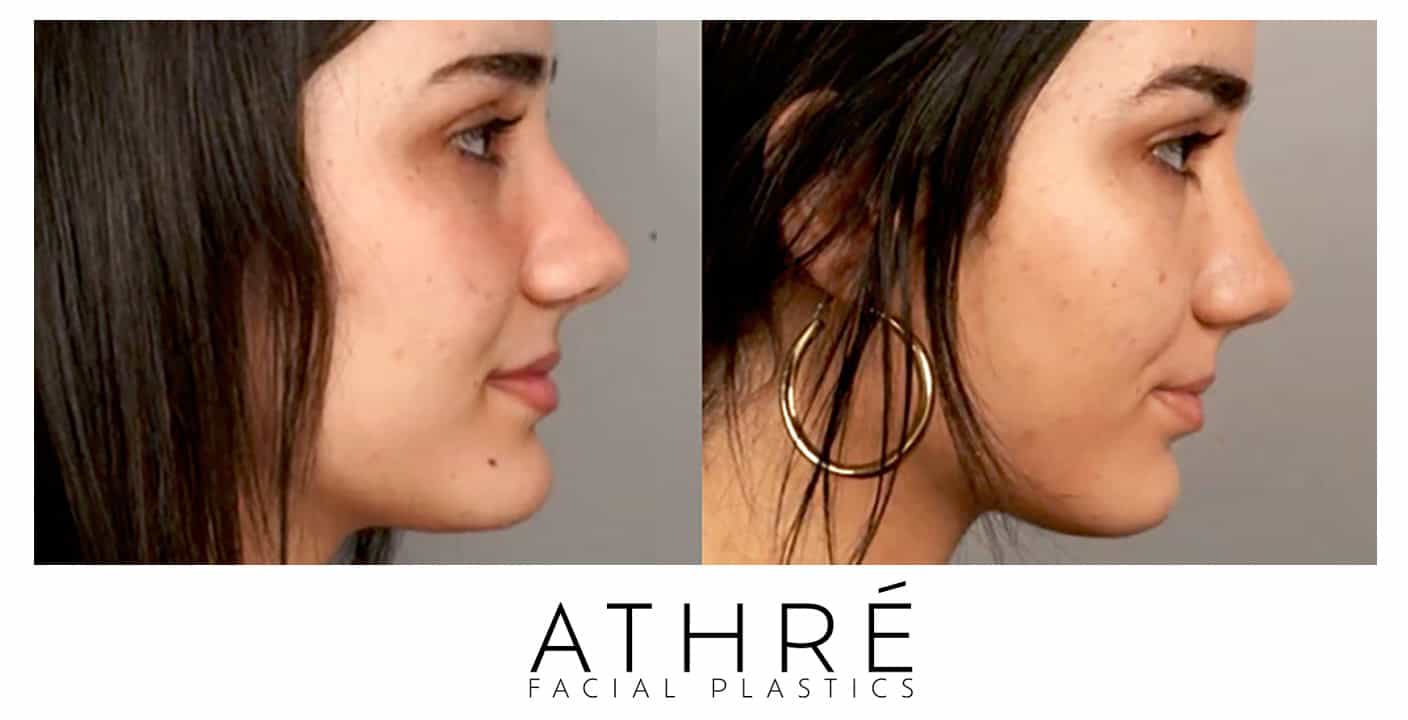
From the profile, she already had a nice nasal shape. Her primary concerns were more apparent from the front. The nose appeared wider relative to the rest of her face, and the tip had less definition than she wanted.
The goal was therefore not to dramatically change every part of her nose. It was to improve the areas that were out of balance while preserving the features that already worked well with her face.
BEFORE & AFTER
Rhinoplasty Results


Rhinoplasty Preparation Starts Before the Night Before Surgery
I think the best surgical experiences tend to feel almost boring by the time the patient arrives for surgery.
We have already talked about the plan. We have reviewed your health. You know what I want you to do with your medications and supplements. Your prescriptions and recovery supplies are ready. You understand what the first part of recovery may look like.
And if you are nervous, you know that you are not the first rhinoplasty patient to feel that way.
Preparation cannot eliminate every uncertainty that comes with surgery. What it can do is keep preventable questions and last-minute problems from competing for your attention when you should be focused on taking care of yourself.
Plan early. Ask the questions while there is time to answer them. Then let the surgical team take care of the surgery.
FREQUENTLY ASKED
Common Questions About Preparing for Rhinoplasty
These are some of the questions patients commonly ask as their rhinoplasty date gets closer.
How far in advance should I prepare for rhinoplasty?
Preparation should begin well before surgery day. A thorough preoperative rhinoplasty evaluation includes medical and nasal history, examination, surgical goals and an assessment of whether you are an appropriate candidate. In my practice, I usually perform the formal pre-op about three to three and a half weeks before surgery.
What should I stop taking before rhinoplasty?
Follow the medication and supplement list given by your own surgeon rather than stopping medications on your own. Evidence surrounding some medications continues to evolve. For example, a recent systematic review of NSAIDs in rhinoplasty did not find increased postoperative bleeding, which is one reason a surgeon-specific protocol matters more than a generic internet list.
What should I buy before rhinoplasty surgery?
Buy the postoperative supplies specifically recommended by your surgical team and have prescriptions filled before surgery. Rhinoplasty guidelines emphasize educating patients about postoperative expectations and discomfort management before the procedure rather than waiting until recovery begins.
Is it normal to feel anxious before rhinoplasty?
Yes. The perioperative period can be anxiety-provoking, even when you are confident in your decision. Research has found that preoperative rhinoplasty education can reduce anxiety, which is one reason I want patients to understand the process before surgery day.
What happens at a rhinoplasty pre-op appointment?
The details vary by practice, but the purpose is to make sure the surgical plan and your health are ready for surgery. Published guidance on rhinoplasty preoperative assessment emphasizes medical history, nasal analysis, patient concerns and surgical candidacy.
Should I stop smoking before rhinoplasty?
Smoking or vaping should be discussed openly with your surgeon before surgery. Facial-surgery literature identifies cigarette and e-cigarette use as risk factors that should be evaluated before surgery. Your surgeon should tell you what cessation protocol they want you to follow.
What should I expect after rhinoplasty?
Your exact recovery depends on your surgery and your surgeon’s protocol. Clinical rhinoplasty guidelines recommend that patients receive preoperative counseling about recovery, nasal breathing, possible complications and the potential need for future surgery so those expectations are established before the procedure.
How important are realistic expectations before rhinoplasty?
Very important. Rhinoplasty guidelines recommend discussing a patient’s motivations and expectations before surgery, and research on psychological readiness and rhinoplasty satisfaction supports careful expectation-setting as part of patient selection and preparation.