One of the most common questions I hear during a rhinoplasty consultation is some version of this: Can you show me what I am going to look like?
With 3D imaging, I can show you how certain changes may affect your nose, profile and overall facial balance. We can look at your face from different angles and use the images to discuss changes before we ever enter the operating room.
But there is something important I want every patient to understand.
The image on the screen is a simulation. It is not a promise of exactly what your nose will look like after surgery.
For me, that does not make imaging less useful. It gets to the reason I use it. The value is not in pretending that a computer can perfectly predict surgery. The value is in giving you and me a visual language for discussing what you want, what I see anatomically and what may realistically be possible.
THE CONSULTATION
What Is 3D Imaging for Rhinoplasty?
3D facial imaging uses photographs captured from multiple angles to create a three-dimensional representation of your face. Instead of evaluating your nose as an isolated feature, I can use those images to study how it relates to the rest of your facial anatomy.
At Athré Facial Plastics, I use the VECTRA 3D system as part of my rhinoplasty consultation and imaging process. The software allows me to create a simulation of potential changes to your nose and discuss those changes with you in the context of your entire face.
For example, we may explore what happens if I reduce a dorsal hump, alter tip projection, change tip rotation or modify the relationship between different parts of the nose.
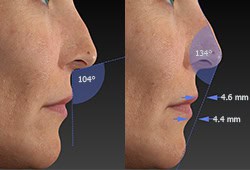
Understand Your Measurements
See angles and proportions that help explain your starting anatomy and surgical plan.
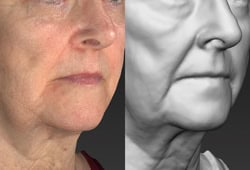
Focus on Shape and Contour
Removing color makes facial contours and areas of asymmetry easier to see and discuss.
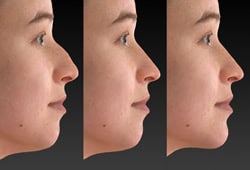
Compare Different Approaches
Compare how rhinoplasty alone or combined procedures may affect your overall facial balance.
That ability to manipulate the image is also where patients can misunderstand the technology. I am not pressing a button that calculates your future nose. I am creating a visual representation of a surgical idea.
Why I Use Imaging During a Rhinoplasty Consultation
Before I start changing anything on an image, I want to understand what you see.
You may tell me your nose feels too large. You may dislike a bump on your profile. You may feel that your tip droops, your nose projects too far from your face or that something about your profile looks out of balance even if you cannot put your finger on exactly what it is.
Those descriptions matter, but words such as smaller, natural, refined and less prominent can mean very different things to different people.
Imaging gives us another way to communicate.
I can make a change and ask what you think. Sometimes a patient immediately says, “Yes, that is what I mean.” Other times the reaction is the opposite. That is valuable information too.
The purpose is not for me to design a nose on a computer and tell you that you should like it. The purpose is for us to use the image to better understand what you are trying to accomplish.
FACIAL BALANCE
Your Nose Does Not Exist by Itself
This is one of the reasons I find imaging particularly useful in rhinoplasty. The nose cannot be evaluated in isolation.
A nose that looks prominent from the side may be related to the bridge, tip projection, chin position or a combination of those features. A change that looks attractive from the profile still has to make sense with the rest of the face.
My examination therefore does not begin and end with the nose.
I look at facial proportions, skeletal relationships, skin thickness, projection and the relationship between the nose, chin, lips, cheeks and surrounding structures. Then imaging gives me a way to show you what I am seeing.
For example, someone may come to me convinced that the only issue is a large nose. When we look at the entire profile, an underprojected chin may also be contributing to that perception. Showing the patient what happens when chin projection changes can make that relationship immediately understandable.
That does not mean every rhinoplasty patient needs chin augmentation. It means the nose needs to be planned as part of a face.
I do not want to create a nose that looks good by itself. I want it to belong to the face around it.
SEE HOW I USE IT
Watch Me Use 3D Imaging for Rhinoplasty
In this demonstration, I walk through the 3D imaging process and show how I use a patient’s images to explore possible rhinoplasty changes before surgery.
Is the 3D Image a Prediction of Your Rhinoplasty Result?
No. I think this is the most important thing to understand about computerized rhinoplasty imaging. A simulation can be very useful, but surgery takes place in living tissue, not pixels.
Skin thickness matters. Cartilage strength matters. Bone structure matters. Scar formation matters. Swelling changes over time. Your existing anatomy determines what can safely be changed, and healing introduces variables that no imaging system can reproduce perfectly in advance.
There is also a fundamental difference between manipulating an image and performing surgery. Moving a point on a screen may take a second. Surgically creating that change may require altering cartilage, bone, soft tissue or several structures together while preserving support and function.
This is also why I perform my own imaging. The person manipulating the image should understand the operation required to create the change being shown.
What Can 3D Imaging Show Before Rhinoplasty?
Depending on your anatomy and the changes we are considering, imaging can help us explore questions such as:
- How might reducing a dorsal hump affect the profile?
- What happens to facial balance if nasal projection changes?
- How could changing tip rotation alter the appearance of the nose?
- Would a smaller nose actually create the balance you are looking for?
- Is chin projection contributing to what you perceive as a prominent nose?
- Does the proposed change still look appropriate when we consider the rest of your face?
- Are the changes you are asking for compatible with your anatomy?
The answers are not simply aesthetic. In rhinoplasty, I also have to consider structural support and nasal function. The most dramatic change I can create on a computer is not necessarily the change I would recommend surgically.
BEFORE & AFTER
Rhinoplasty Results
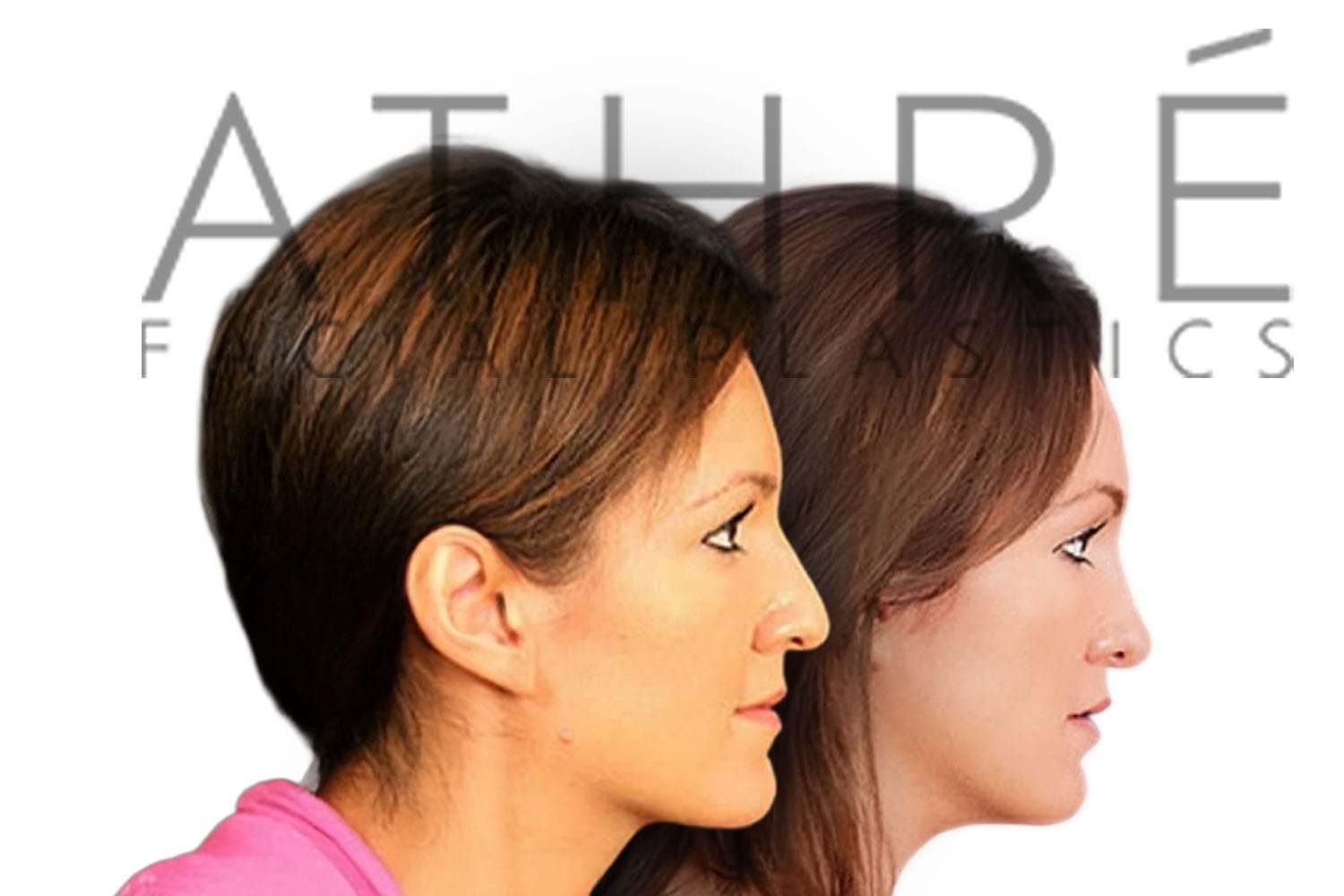
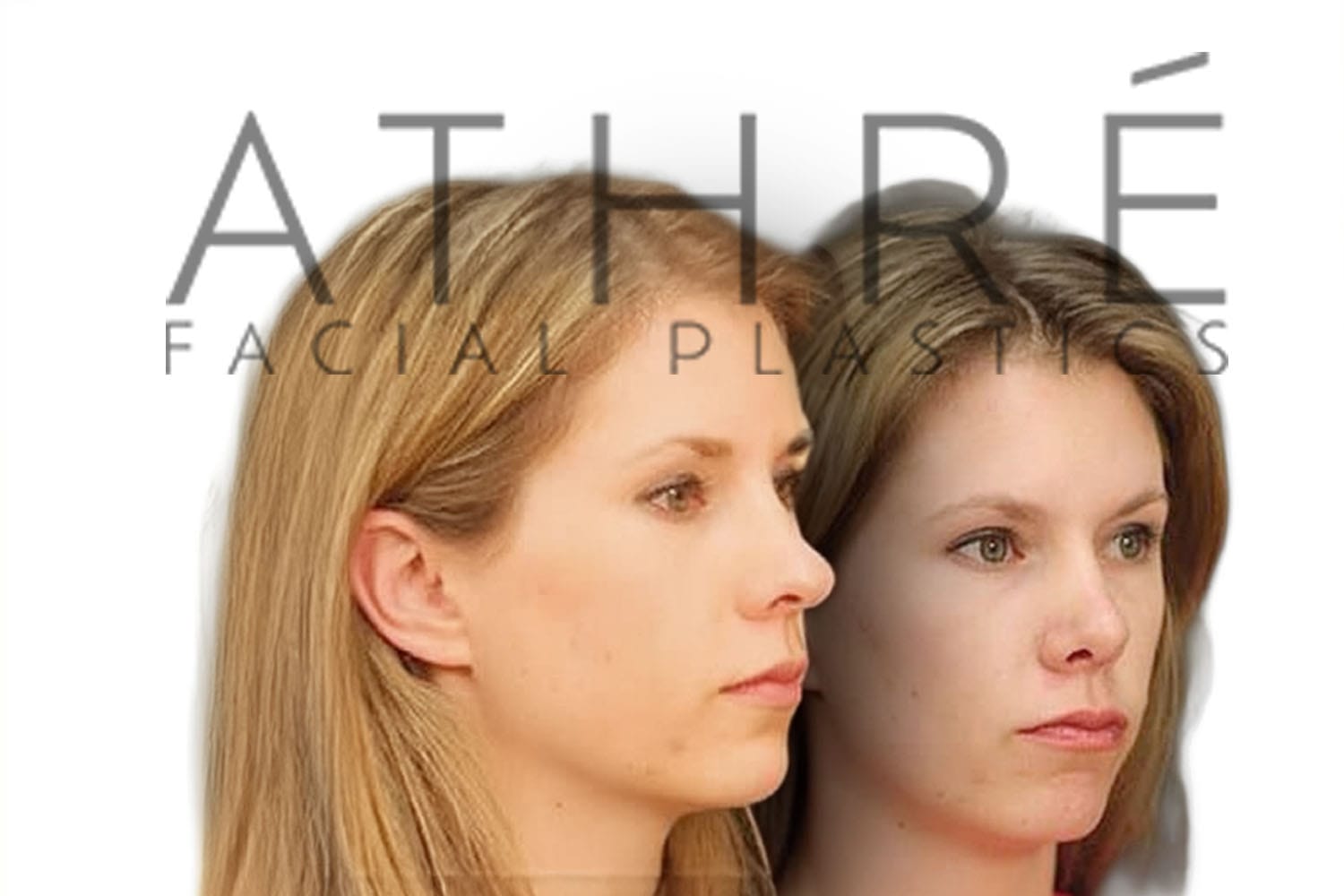
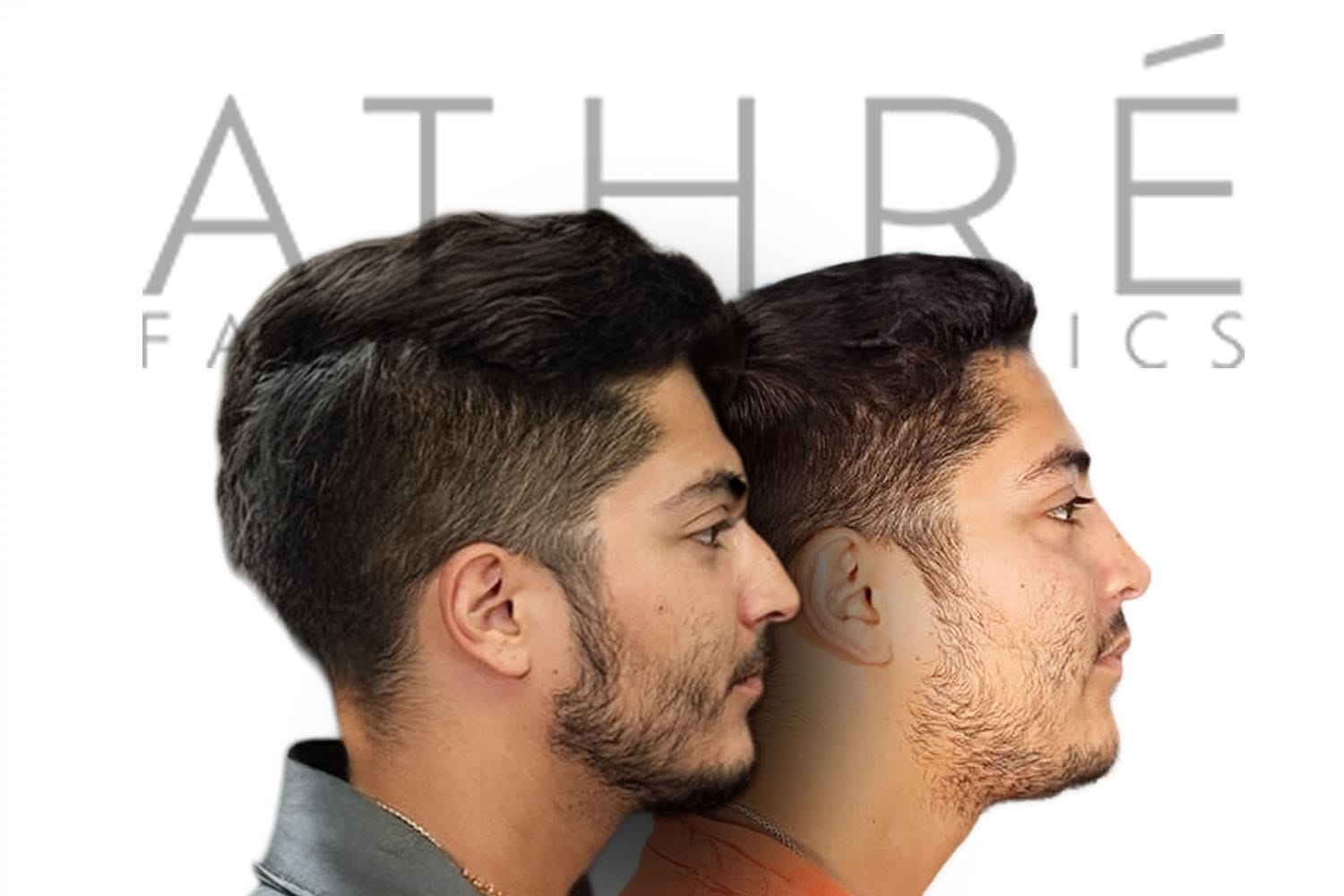
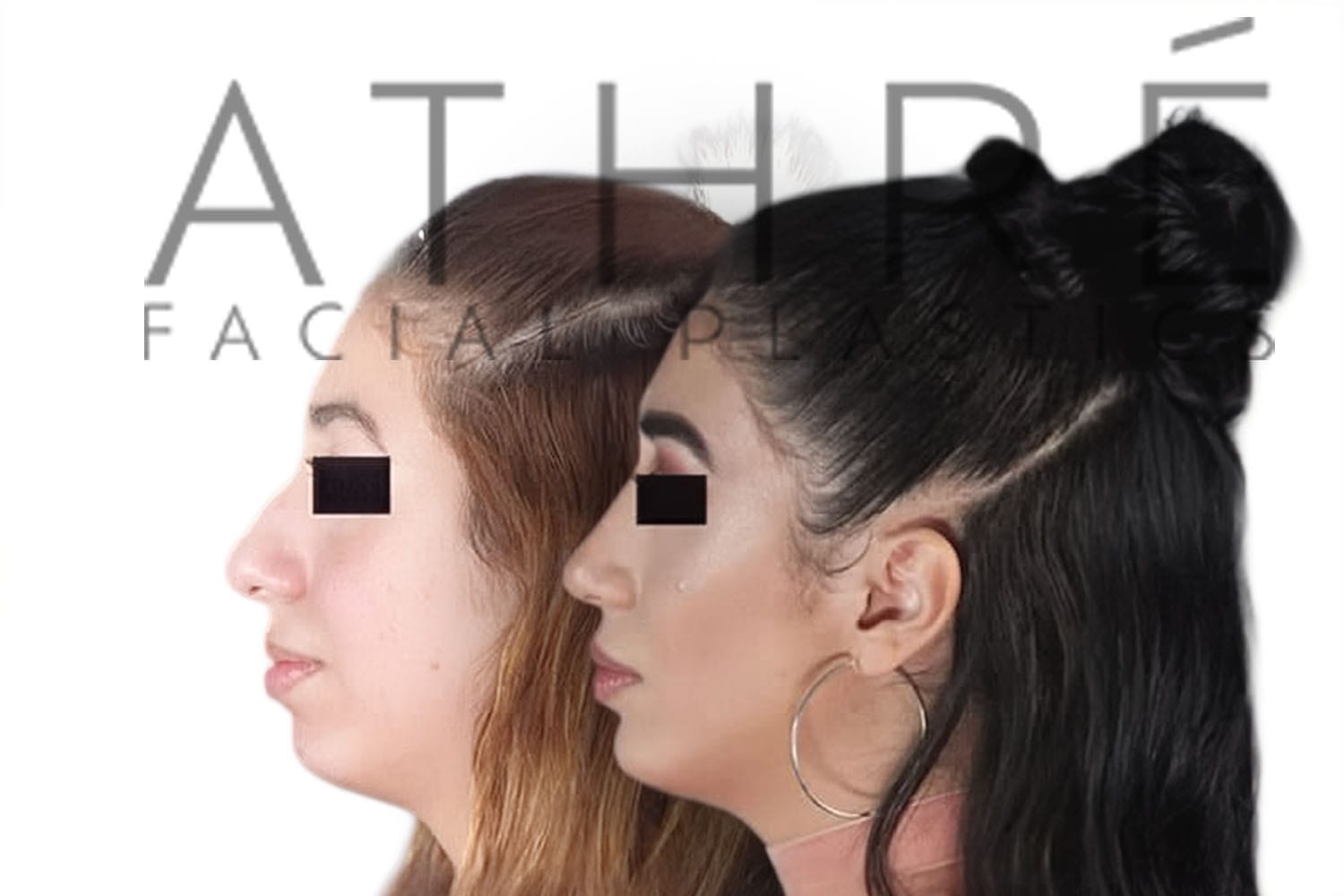
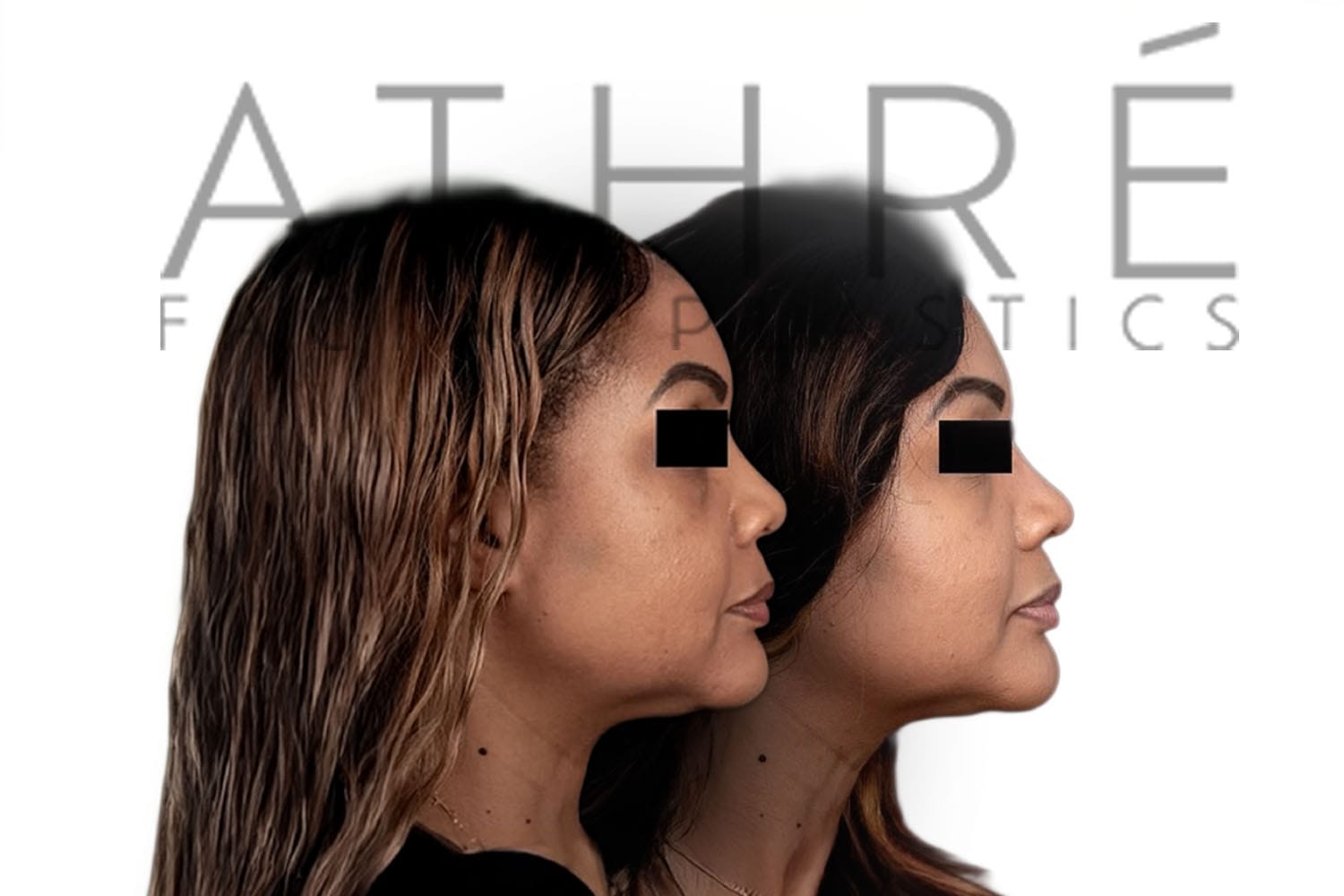
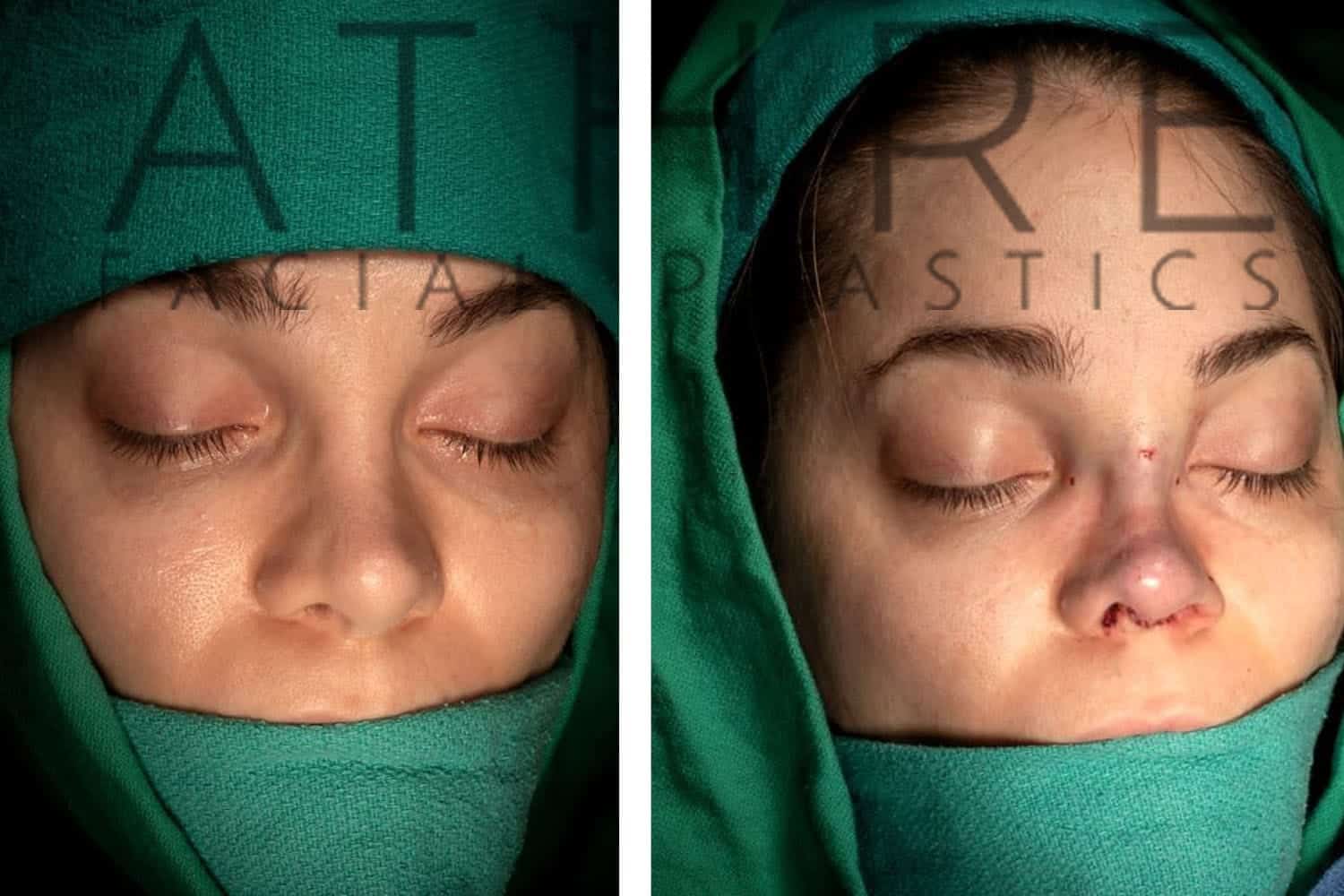
What Can’t 3D Rhinoplasty Imaging Show?
It cannot tell us exactly how you will heal.
It cannot perfectly reproduce the way skin will redrape over a changed nasal framework. It cannot guarantee a particular degree of tip definition. It cannot tell us exactly how long swelling will persist or reproduce every small asymmetry that may remain after surgery.
It also cannot turn every digital change into a surgically achievable one.
That last point is important. Sophisticated software can manipulate an image far beyond what may make sense for the patient’s anatomy. The surgeon still has to determine whether that change can be created safely, whether adequate support can be maintained and whether the proposed result makes sense for that particular face.
This is why I view imaging as one part of the larger rhinoplasty consultation, not as a substitute for examination and surgical judgment.
Why I Am Careful With Frontal-View Simulations
Not every view is equally useful for simulation. Profile changes can often be illustrated clearly because we are looking at relationships such as dorsal contour, projection, rotation and the balance between the nose and chin.
The frontal view is more complicated. Changes in nasal width, tip definition, shadows, highlights and soft-tissue contours are three-dimensional. A computer-generated frontal image can create an impression of precision that may exceed what the simulation can actually predict.
For that reason, I am cautious about frontal-view morphing when I believe it could create a false expectation. I would rather explain the limitation than show a patient something that looks convincing on a screen but does not accurately represent what I believe I can achieve surgically.
EXPECTATIONS MATTER
What If You and Your Surgeon See Different Things?
That may be one of the most useful things imaging can reveal.
Suppose you ask for a very small or highly rotated nasal tip, but I believe that degree of change would look unnatural on your face or would conflict with the structural goals of surgery. It is much better for us to discover that difference during the consultation than after surgery.
The same is true if I create a simulation that I think is balanced and you simply do not like it.
That does not mean either person is wrong. It means we may have different ideas about the desired endpoint.
Plastic surgery requires technical execution, but before that comes communication. If we cannot agree on the direction we are trying to go, the imaging has already told us something important.
What About 3D Imaging for Revision Rhinoplasty?
Revision rhinoplasty is different because the nose has already been operated on.
Previous surgery may have altered cartilage, bone, support, scar tissue and the way the skin and soft tissues behave. In some revision cases, significant deviation or structural changes can make a digital simulation less meaningful.
There are therefore situations where I will not offer 3D modeling.
If I believe the simulation could give a patient a false expectation or suggest a level of precision that I cannot responsibly predict, I would rather not create the simulation at all.
That is not a limitation of the consultation. It is part of using the technology appropriately.
How Should You Compare a Simulation With Real Rhinoplasty Results?
I would not judge the quality of a rhinoplasty by asking whether the postoperative photograph matches the simulation pixel for pixel.
The simulation was created before I operated. The final result reflects your actual anatomy, what I found during surgery, the techniques required to safely create the change and the way your tissues healed afterward.
In some cases, I may even believe the actual surgical result is better than the original simulation.
What matters is whether the result moves in the direction we discussed, remains appropriate for your face, preserves the structural and functional goals of surgery and makes sense when evaluated as a real nose rather than a computer rendering.
That is also why I encourage patients to review a broad range of actual rhinoplasty results rather than focusing only on a simulated image of their own nose.
MY APPROACH
The Best Use of 3D Imaging Is Better Communication
I like technology, but I do not think technology should be the center of a rhinoplasty consultation.
You should be.
The images give us something to look at together. You can show me what bothers you. I can show you what I see. We can explore possible changes and talk about where your goals and my surgical judgment intersect.
Sometimes that confirms the plan we expected from the beginning. Sometimes it changes the conversation. Occasionally it shows us that the change a patient imagined is not the change they actually prefer once they see it in the context of their whole face.
That is why I consider 3D imaging a communication and planning tool rather than a prediction machine.
The goal is not to make your postoperative nose match a computer rendering pixel for pixel. The goal is to understand where we are trying to go before we ever enter the operating room.
FREQUENTLY ASKED
3D Imaging for Rhinoplasty Questions
These are some of the questions I hear most often about computerized imaging and rhinoplasty simulation.
Can 3D imaging show exactly what I will look like after rhinoplasty?
No. The image should be understood as a simulation of a proposed surgical direction, not a guarantee. Research comparing preoperative computer simulations with postoperative rhinoplasty results has found useful agreement, but not perfect correspondence. Research comparing simulated and actual 3D rhinoplasty results helps illustrate why I use imaging as a planning and communication tool rather than a promise.
How accurate is computer imaging for rhinoplasty?
Accuracy varies by the feature being changed, the complexity of the operation and the way the patient heals. Research evaluating preoperative computer imaging has found that it can be useful to patients while still having meaningful limitations in predicting the final result. This study of preoperative computer-imaging accuracy is a good reminder that useful does not mean exact.
Why use imaging if it cannot guarantee the result?
Because its greatest value may be communication. Imaging gives the patient and surgeon something concrete to discuss instead of relying entirely on subjective words such as “smaller,” “straighter” or “more refined.” A survey of facial plastic surgeons found computer imaging was frequently used during rhinoplasty consultations, and most surgeons who used it performed the image morphing themselves. Research on computer imaging in rhinoplasty consultations supports its established role as a consultation tool.
Does 3D imaging improve communication between the surgeon and patient?
It can. A prospective study of patients undergoing rhinoplasty found that 3D simulation increased satisfaction with doctor-patient communication, even though it did not significantly change satisfaction with the surgical outcome itself. The study of 3D imaging and rhinoplasty communication reflects one of the main reasons I find imaging useful.
Why does Dr. Athré perform his own rhinoplasty imaging?
Because the simulation needs to remain connected to the operation. A computer can create digital changes that may not be realistic for a particular patient’s cartilage, bone, skin, soft tissue or previous surgical history. I perform my own imaging so the changes we discuss can be interpreted in the context of what I believe is surgically achievable.
Can 3D imaging show changes from the front and the side?
The technology can generate multiple views, but that does not mean every simulated view is equally useful. Profile changes are often easier to communicate visually. Frontal changes can be more difficult to simulate realistically because nasal width, tip definition, shadows and soft-tissue contours interact in three dimensions. I am cautious about using a simulation when I believe it could create an unrealistic expectation.
Can imaging help determine whether my chin affects the appearance of my nose?
It can help us visualize that relationship. Nasal prominence is perceived in the context of the entire profile, so chin projection can influence how large or small the nose appears. Imaging allows us to explore that relationship before deciding whether any treatment beyond rhinoplasty should even be considered.
Is 3D imaging useful for revision rhinoplasty?
It can sometimes be useful, but I do not automatically perform imaging for revision patients. Previous surgery can alter cartilage, scar tissue, support and nasal alignment in ways that make a simulation less reliable. Published literature has specifically examined digital imaging in secondary rhinoplasty. Research on digital imaging in revision rhinoplasty discusses its role in these more complex consultations.
Can 3D imaging be used after rhinoplasty?
Yes. Three-dimensional photography can also be used to document postoperative contours and objectively evaluate changes over time. Researchers have used 3D imaging to measure rhinoplasty outcomes rather than relying only on subjective visual comparison. Research on 3D measurement of rhinoplasty results demonstrates this postoperative application.
Should I choose a rhinoplasty surgeon based on the simulation I like best?
No. A simulation is easy to manipulate. It is not evidence that a surgeon can create that result. I would look at the surgeon’s actual rhinoplasty results, experience with noses similar to yours, approach to facial balance, communication during the consultation and whether the proposed plan makes sense for your anatomy.