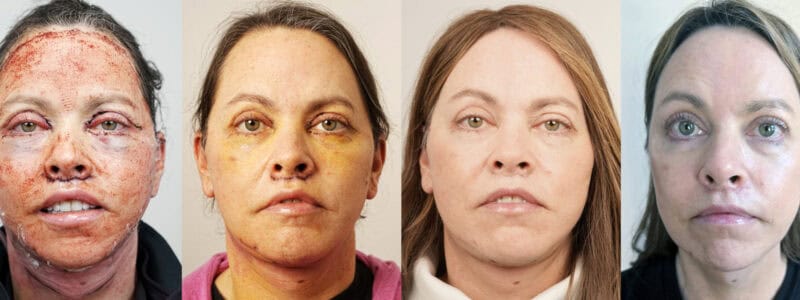
When patients come to my Houston practice asking for a mini facelift, they are usually looking for something very specific. They want their jawline to look more defined, their cheeks to sit a little higher, or their face to look refreshed without undergoing what they imagine is a major operation. Many assume a mini facelift is simply a smaller version of a full facelift, with smaller incisions and a much shorter recovery.
I understand the appeal, but those names can be misleading. A mini facelift is not one standardized operation, and a full facelift does not mean every part of the face needs to be pulled tighter. The more important question is where the facial tissues have descended, how much correction is necessary and whether a limited operation can realistically accomplish what the patient wants.
Earlier in my career, I performed a limited operation called the RT Mini Facelift. I no longer offer that procedure. Following those patients over time changed how I approached facial lifting, and today I generally favor techniques that allow me to reposition the deeper supporting tissues when surgical lifting is appropriate.
I don’t decide how extensive a facelift should be based on a patient’s age or the name of a procedure. I decide based on what has actually changed in the face and neck.
What Is the Difference Between a Mini Facelift and a Full Facelift?
The term mini facelift generally describes an operation with a more limited incision, a smaller area of dissection, or both. Some surgeons use the term for a procedure that tightens the SMAS, the superficial musculoaponeurotic system beneath the skin. Others use it to describe a limited lower-face lift or a modification of a more extensive surgical technique. Because the term is not standardized, two surgeons may offer very different procedures under the same name.
A full facelift generally refers to a more comprehensive operation addressing facial descent through the cheeks, lower face and jawline, often with coordinated treatment of the neck. But even that term doesn’t specify exactly which tissues are released, which technique is used or whether the patient will need additional neck surgery. A full facelift might involve SMAS repositioning, a deep plane approach or another established surgical method.
In my practice, I want to get beyond those labels. I examine the position of the cheeks, the degree of jowling, the amount of skin laxity and what is happening beneath the chin. If the main concern is limited to one region, I consider whether a focused operation can address it. If significant changes involve the cheeks, jawline and neck together, I need a more comprehensive plan.
Why I Stopped Performing the RT Mini Facelift
When I first developed my limited facelift technique, I wanted to offer appropriate patients a way to improve early facial aging without the extent of surgery required for a more comprehensive lift. I worked with the SMAS through a smaller area of dissection, tightened the supporting tissues and removed the excess skin. Patients could see improvement, and the early recovery was generally less involved than after a more extensive operation.
But as I followed some of those patients seven, eight and nine years after surgery, I became less satisfied with the durability of the correction. I began questioning whether the limited mobilization of the deeper tissues was accomplishing enough. The retaining ligaments that anchor facial tissues were still restricting how freely I could reposition the areas that had descended.
That experience was one of the reasons I moved toward deeper tissue release and repositioning. I wanted to correct the anatomical cause of the facial descent rather than rely primarily on tightening tissues that remained tethered underneath. It changed the way I evaluate someone who asks for a mini facelift today.
My decision to stop performing the RT Mini Facelift is based on my own surgical experience. It doesn’t mean that every limited-incision facelift is ineffective or that every surgeon performs a mini facelift the way I once did. Other surgeons may obtain good results with different limited approaches in carefully selected patients. I explain my experience in more detail in Mini Facelift vs. Deep Plane Facelift.
INSIGHTS FROM DR. ATHRÉ
Why I Changed My Approach to Mini Facelifts
I explain the limited SMAS facelift I previously performed, what I learned from following patients over time and why releasing the deeper facial attachments changed my surgical approach.
WHEN THE AGING IS MORE LIMITED
What If You Only Need a Small Amount of Lifting?
Not everyone who notices early facial aging needs a traditional face and neck lift. I sometimes examine patients whose cheeks have begun to descend but who still have good jawline definition and very little neck laxity. Their main concern may be the position of the midface rather than the lower face and neck. In a patient with that anatomy, treating the entire face and neck may be unnecessary.
For selected patients, I may consider an endoscopic deep plane midface lift. This approach uses access through the hair-bearing scalp and specialized instruments to reach and reposition selected deeper tissues. Rather than treating the neck or removing large amounts of skin, the operation focuses on the area that needs correction, particularly the cheeks and midface.
That does not make an endoscopic lift equivalent to every procedure called a mini facelift. It’s a different anatomical approach, and I am careful about its limitations. If the patient has significant jowling or moderate to severe neck laxity, an isolated endoscopic midface procedure will not adequately address those concerns.
I discuss who may benefit from this more focused approach in Mini Facelift vs. Endoscopic Deep Plane Lift. The important point is that a patient with early, localized facial descent may have a surgical option that addresses the problem without treating areas that don’t need correction.
WHEN MORE CORRECTION IS NECESSARY
When Is a Full Facelift the Better Choice?
When facial aging involves the cheeks, jawline and neck together, I am usually considering a more comprehensive surgical approach. In these patients, the cheeks may have descended, jowls may interrupt the natural line of the lower face and loose tissues beneath the chin may make the neck appear heavier or less defined. Treating only a small portion of the face may leave the patient’s most important concerns unresolved.
With a deep plane facelift, I can work beneath the SMAS in selected regions and release the appropriate retaining ligaments. This gives me the ability to mobilize and reposition the deeper tissues rather than relying primarily on tension through the skin. The amount and direction of repositioning are determined by the patient’s anatomy and the appearance we’re trying to achieve.
When the neck also needs correction, I evaluate the platysma, loose skin, superficial and deeper fat and the contours beneath the chin. Some patients require a coordinated deep neck lift to address those structures. Merely extending a facelift incision or pulling harder on the skin doesn’t necessarily correct the anatomical cause of neck fullness or laxity.
Patients sometimes worry that choosing a full facelift means accepting an overdone appearance. I don’t see it that way. The extent of surgery and the degree of visible change are different decisions. A more comprehensive operation can be performed conservatively, with the goal of restoring natural contours rather than creating an exaggerated lift.
A comprehensive facelift should not mean pulling harder. It should mean having enough access and tissue mobility to correct the areas that actually need treatment.
Why the Neck Often Determines How Much Surgery Is Needed
One of the most important things I examine during a facelift consultation is the relationship between the jawline and neck. Patients frequently tell me that they want a small lift because they don’t think their face has aged very much. But when I examine them, I may find that their primary concern is actually loose neck skin, platysmal banding or fullness beneath the chin.
A smaller operation directed toward the cheeks or early jowls may not correct a neck with significant laxity. Even if the lower face looks improved, the patient may still be bothered by the contour beneath the jawline. In that situation, I would rather explain why neck surgery is necessary than offer a limited facelift that cannot accomplish the patient’s goals.
On the other hand, someone may have early cheek descent with very little change in the neck. That patient shouldn’t automatically be offered a comprehensive neck procedure simply because they are considering facial rejuvenation. The examination should determine which areas require treatment, not the assumption that every facelift must address the same structures.
This is why I spend time examining the face from multiple angles. A frontal photograph may show some jowling, but the side and three-quarter views often reveal more about the jawline, neck angle and position of the deeper tissues. I want the surgical plan to account for the entire relationship between these structures.
Is Recovery Always Faster After a Mini Facelift?
A procedure involving less tissue dissection may have a shorter recovery, but I don’t think patients should choose surgery based on a promise of five days instead of two weeks. The term mini facelift doesn’t tell us how much surgery is actually performed, whether the neck is included, or how an individual patient will heal.
Recovery depends on the extent of the operation, the surgical technique, whether other procedures are performed and the patient’s individual healing response. Swelling, bruising, firmness and changes in sensation can occur after both limited and more extensive facelifts. Some patients return to their normal social activities relatively quickly, while others prefer additional time before they feel comfortable being photographed or attending important events.
For a more comprehensive face and neck lift, I generally discuss an initial recovery measured in weeks rather than days. Many patients can return to desk work or ordinary social activities around two weeks after surgery, depending on the treatment plan and their recovery. But looking presentable is not the same as being completely healed. Swelling, tissue settling and scar maturation continue for much longer.
I also want patients to understand that a smaller operation can still produce complications, and a larger operation doesn’t necessarily mean every patient will have a difficult recovery. The correct comparison involves the actual procedures being considered, not an assumed recovery schedule based on their names. Patients can read more about the healing process in our postoperative healing resources.
What About Scars, Longevity and Cost?
Will a Mini Facelift Leave Smaller Scars?
A limited-incision facelift may require a shorter incision, but the incision length varies by technique and by the amount of skin that needs to be repositioned or removed. A full face and neck lift may require incisions around the ear and extending behind it, particularly when the neck has significant excess skin. I plan these incisions carefully around the natural contours of the ear and hairline, but all surgical incisions create scars.
I don’t recommend choosing an operation solely to make the incision shorter. If a shorter incision prevents me from adequately correcting the patient’s primary concern, that tradeoff may not be worthwhile. The better question is what surgery is required and how the incisions can be placed as inconspicuously as reasonably possible.
Does a Full Facelift Last Longer?
My experience with the former RT Mini Facelift led me to favor deeper tissue repositioning, in part because I wanted more durable correction for my patients. But there is no scientifically established rule that every full facelift will outlast every well-performed limited facelift. Longevity depends on the anatomy, the technique, the patient’s healing and the facial changes that continue with age.
I don’t promise that a facelift will last exactly ten or fifteen years. I want to perform an operation that addresses the underlying anatomy appropriately and gives the patient a result they can continue enjoying as they age. When comparing procedures, the quality and stability of the correction matter more than a marketing claim about a predetermined number of years.
Is a Mini Facelift Less Expensive?
A limited operation may cost less because it can involve less operative time and fewer components. But cost should be evaluated alongside what the treatment can realistically accomplish. A smaller procedure may be appropriate when only a focused area needs correction. It may represent poor value if the patient’s main concern involves significant jowling or neck laxity that the planned operation will leave untreated.
At Athré Facial Plastics, I develop the treatment plan after examining the anatomy. The extent of surgery, anesthesia and any additional procedures influence the cost. I would rather explain those factors clearly than recommend a procedure primarily because it sounds less expensive.
Where Does the 4D Facelift Fit Into This Comparison?
A patient can have significant facial descent along with other changes that lifting alone does not fully address. Facial aging also involves loss of volume, changes in skin elasticity and changes in texture. A facelift is primarily intended to reposition descended tissues; it cannot be expected to correct every one of those concerns by itself.
My 4D Facelift™ approach looks at facial rejuvenation more comprehensively. Depending on the individual patient, the plan may combine deep plane lifting with neck surgery, facial fat transfer or an appropriate resurfacing treatment. Not every patient needs all of these components, and I don’t add procedures simply because they belong to a named treatment package.
The important thing is to recognize that a full facelift and comprehensive facial rejuvenation are not necessarily identical. One describes the extent of surgical lifting, while the other considers whether additional concerns such as volume loss and skin quality should be treated at the same time.
MAKING THE DECISION
How I Decide Which Facelift Is Right for a Patient
When someone comes to see me asking for a mini facelift, I don’t begin by telling them they need a full facelift instead. I ask what bothers them and then examine the anatomy. Some patients are unhappy with early cheek descent, while others have substantial jowling or neck laxity. Those concerns require different surgical plans, even when the patients are the same age.
If the cheeks are the primary concern and the neck is still relatively youthful, I may discuss whether a focused endoscopic deep plane approach makes sense. If the jawline and neck have changed significantly, I am more likely to recommend a coordinated face and neck lift. If there is substantial volume loss or deterioration in skin quality, I may also discuss the other components of facial rejuvenation.
There are patients I advise not to undergo facelift surgery at all. If the anatomy doesn’t justify an operation or the concern cannot be reliably corrected by lifting, I would rather explain that during the consultation. I don’t believe someone should undergo surgery simply because they’ve reached a certain age or because a procedure is being advertised as easy and minimally invasive.
My goal is to choose an operation that addresses the patient’s concern while respecting their anatomy, health, expectations and willingness to undergo recovery. Sometimes that means a focused approach. Sometimes it means comprehensive surgery. The decision has to begin with the face itself.
What Comprehensive Facelift Results Look Like in Actual Patients
These photographs are from my facelift before and after gallery. I’ve selected three patients of different ages who underwent comprehensive facial rejuvenation. These are surgical facelift results, not comparisons with mini facelift patients, and they should not be used to attribute the entire change to one particular part of the operation.
Each patient required an individualized plan involving a different combination of procedures. I want to show them here because the areas that need correction, not the patient’s age or a procedure’s name, determine the extent of the surgery.
BEFORE AND AFTER
Actual Facelift Patient Results


Mini Facelift or Full Facelift: Which Would I Recommend?
I don’t believe there is one facelift technique that is appropriate for everyone. My experience performing limited mini facelifts earlier in my career changed the way I approach facial rejuvenation, but it also reinforced an important principle: the operation has to match the anatomy we’re trying to correct.
Some patients have early facial descent that may be addressed with a focused surgical approach. Others have significant changes through the cheeks, jawline and neck that require more comprehensive repositioning. And some patients don’t need facial lifting at all. I want to determine which situation applies before discussing specific techniques, recovery times or costs.
The best facelift isn’t necessarily the smallest or the most extensive. It’s the one designed to correct your anatomy without doing more or less than the problem requires.
FREQUENTLY ASKED
Mini Facelift vs. Full Facelift FAQs
These questions address the differences in treatment areas, scarring, recovery and long-term results, along with how I approach patients considering a limited facelift.
What is the main difference between a mini facelift and a full facelift?
A mini facelift generally refers to a more limited operation, often involving shorter incisions, less dissection or a smaller treatment area. A full facelift usually provides a broader correction of facial descent, frequently including the jawline and neck. Neither term identifies one standardized technique. A 2024 review of limited-incision facelifts explains how these approaches vary in technique, anatomy and potential complications. The specific operation matters more than its name.
Can a mini facelift improve my neck?
Some limited facelift techniques can improve selected neck concerns, but a significant amount of loose neck skin or deeper neck aging may require a different operation. A published study of limited-incision facelift surgery found that the technique was not appropriate for patients with substantial lower-neck skin laxity. A review of deep neck contouring also explains why fat, muscle, skin and deeper anatomical structures must be considered when planning neck rejuvenation.
Does a mini facelift always have a faster recovery?
Not always, although a less extensive procedure may involve reduced swelling or a shorter initial recovery for selected patients. The contemporary review of limited-incision facelifts discusses potential recovery advantages while emphasizing variation among techniques. Recovery depends on the extent of surgery, individual healing, anesthesia and any additional procedures. It should not be predicted solely from the name mini facelift.
Does a full facelift last longer than a mini facelift?
There is no universal rule establishing that every full facelift lasts longer than every limited-incision procedure. The surgical technique, starting anatomy and natural aging process all influence durability. A five-year follow-up study of facelift surgery found that significant improvements remained visible in many patients, although the degree of maintained correction varied between facial regions. This is why I focus on the quality of structural repositioning and the patient’s anatomy rather than promising a fixed duration.
Is a full facelift more likely to look unnatural?
No. A more extensive procedure does not automatically produce a more dramatic or artificial appearance. The result depends on surgical planning, the direction of tissue repositioning, skin tension and individual facial proportions. A 2025 review of modern facelift and neck lift techniques emphasizes tailoring the surgical approach to the patient’s anatomy rather than relying on one universal technique. A comprehensive facelift can be planned to achieve a conservative, natural-looking result.
Does Dr. Athré still perform the RT Mini Facelift?
No. I previously performed the RT Mini Facelift, a limited SMAS-based lifting procedure, but I no longer offer it. My experience following those patients over time led me to favor techniques that allow deeper tissue mobilization when surgery is indicated. That does not mean all limited-incision operations are ineffective. A review of contemporary facelift approaches describes the range of established techniques and the importance of individualized planning.
What if my cheeks are sagging but my jawline and neck still look good?
A focused midface procedure may be worth discussing when the primary concern is cheek descent and there is little lower-face or neck laxity. I may consider an endoscopic deep plane approach for an appropriately selected patient. A review of facelift and neck lift techniques supports selecting procedures according to the patient’s specific anatomical concerns. An isolated midface lift, however, is not a substitute for surgery addressing substantial jowling or neck laxity.
What matters most when choosing between a mini and full facelift?
The most important factors are the location and degree of tissue descent, neck anatomy, skin quality, patient health and realistic goals. A comprehensive review of modern facial rejuvenation surgery emphasizes individualized anatomical assessment and choosing appropriate combinations of techniques. I evaluate the patient first and recommend an operation only when I believe it can address a meaningful concern with an acceptable balance of benefit and risk.