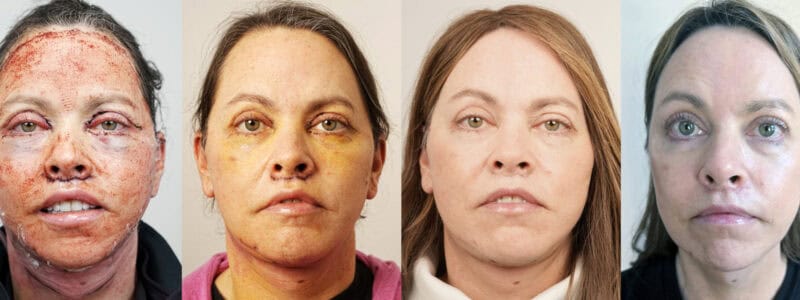
Earlier in my career, I decided to try barbed thread lifting on a patient. The treatment was being promoted as a way to lift the face without traditional facelift surgery, with less downtime, less discomfort and a lower cost. As a facial plastic surgeon, I’m always interested in techniques that might improve what I can offer patients. But I’m also interested in whether those techniques can accomplish what they claim.
I didn’t expect a thread lift to replace a surgical facelift. I wanted to see whether it could provide a meaningful improvement for someone who wasn’t ready for surgery. Could the threads lift the cheeks, improve the jawline or tighten the neck enough to make the treatment worthwhile?
What happened during that experience changed my opinion of barbed thread lifting. The threads were relatively easy to place, but the improvement was disappointing, and the patient experienced complications that eventually required additional treatment. I want to explain what I observed, how thread lifts differ from the facelift techniques I perform today, and why I believe understanding the anatomy is more important than choosing a procedure because it’s advertised as minimally invasive.
A treatment can be less invasive than surgery without necessarily being the better treatment for the problem you’re trying to correct.
What Is a Barbed Thread Lift?
A barbed thread lift is a minimally invasive procedure in which specially designed sutures are placed beneath the skin to engage and reposition selected soft tissues. The threads contain small projections, or barbs, intended to hold the tissue after it has been moved. Some techniques use threads that are anchored to another structure, while others rely on the configuration of the thread and its engagement with the surrounding tissue.
Many modern thread lifts use absorbable materials such as polydioxanone, commonly called PDO. There are also other absorbable thread formulations with different mechanical properties and absorption characteristics. The technique I tried involved barbed threads described in my original account as PDS threads, a form of polydioxanone suture technology.
The idea is appealing. Instead of performing a surgical dissection, releasing deeper facial attachments and repositioning the tissues through a facelift incision, the practitioner places threads through small entry points. The threads are then used to create a degree of tissue elevation. The procedure is generally performed with local anesthesia, sometimes with topical anesthetic as an additional measure, and does not require the same operative exposure as a surgical facelift.
But there’s an important anatomical limitation. Threads can pull on the tissues they engage, yet they don’t ordinarily provide the same degree of controlled release and repositioning that I can achieve during a deep plane facelift. That difference becomes especially important when someone wants meaningful correction of descended cheeks, jowls or neck laxity.
MY FIRSTHAND EXPERIENCE
What Happened When I Performed a Barbed Thread Lift
Before offering the treatment to a patient, I reviewed the instructional material and the technique for placing the threads. I then selected a patient whose facial rejuvenation goals included lifting the brows, improving the position of the midface and cheek fat pads, defining the jawline and tightening the neck. These are concerns I normally evaluate when considering procedures such as an endoscopic brow lift, facelift or neck lift.
For the thread procedure, I used anesthetic measures that included nerve blocks, and I prescribed postoperative pain medication because I wanted the patient to be comfortable during recovery. The placement itself went smoothly. I was impressed by how easily I could introduce the threads and position them within the tissues. From a technical standpoint, the procedure was much more straightforward than surgically releasing and repositioning the deeper facial structures.
However, the actual lifting effect was much less than I had hoped to achieve. The amount of improvement in the midface, jawline and neck did not approach what I was accustomed to seeing after a properly planned surgical lift. The patient’s goals involved several areas of facial descent, and the threads simply didn’t produce the degree of repositioning I wanted for those concerns.
The Complications Were More Concerning Than the Limited Lift
What disappointed me most was the recovery. The patient experienced significant pain and developed contour irregularities following the procedure. She needed considerably more prescribed pain medication than I would ordinarily expect from my typical facelift patients, and discomfort persisted until several of the threads were removed. The contour problems also required additional surgical correction.
That was a difficult outcome, particularly because the entire purpose of considering the thread lift had been to offer a less invasive alternative with an easier recovery. In this case, the patient had more discomfort than I anticipated and ultimately needed further intervention, without obtaining the degree of improvement we had hoped to achieve.
I want to be clear about something: this was my experience with one patient and a particular thread-lifting technique. It is not evidence that every thread lift produces the same complications or that newer techniques cannot provide satisfactory improvement in appropriately selected patients. But it was enough to make me reconsider whether I wanted to recommend the procedure for the kind of facial aging I routinely treat.
The threads were easy to place. The problem was that the improvement did not justify what this patient experienced afterward.
Why a Thread Lift Cannot Do Everything a Facelift Does
When patients tell me they want their cheeks lifted, their jowls reduced and their neck tightened, I have to look at what is actually responsible for those changes. Facial aging is not simply a matter of loose skin. The deeper soft tissues descend, facial volume changes and the retaining ligaments continue to anchor parts of the face to the underlying structures.
Those retaining ligaments are particularly important. They limit how freely the tissues can move, which is why pulling on the surface does not necessarily reposition the entire cheek or lower face. In a deep plane facelift, I work in an anatomical plane that allows me to release the appropriate attachments and mobilize the deeper tissues. I can then reposition those tissues in a controlled way rather than relying primarily on tension applied through the skin.
Barbed threads work differently. They engage tissue along the path where the thread is placed and create a pulling force in the intended direction. That can provide visible improvement in selected patients with relatively mild descent, but it does not give me the same access to the retaining ligaments or the deeper structures that may be responsible for significant jowling and neck aging.
The neck illustrates the limitation particularly well. A patient may have loose skin, platysmal banding, deeper fat or several of these changes together. Placing threads beneath the skin cannot reliably accomplish everything I can address during a carefully planned deep neck lift. The appropriate procedure depends on the anatomy, but I don’t want patients to mistake superficial tightening for comprehensive correction of the neck.
I explain the importance of these structures in my article on facial retaining ligaments and deep plane facelift surgery. Understanding how those attachments work helps explain why different lifting techniques can produce very different results.
Thread Lift vs. Facelift: Results, Recovery and Longevity
The appeal of a thread lift is that it generally involves a smaller procedure, no traditional facelift incisions and less initial recovery than a substantial face and neck lift. For someone with mild tissue descent who understands the limitations, that may be a reasonable tradeoff. But the decision becomes more complicated when the patient expects the result of a facelift without undergoing facelift surgery.
How Much Lifting Can Each Procedure Achieve?
A thread lift may create a modest improvement by engaging and elevating selected tissues. A deep plane facelift allows me to reposition deeper facial tissues after releasing the necessary anatomical attachments. If someone has substantial jowls, descended cheeks and significant neck laxity, I generally favor surgical correction because the problem involves more than what I can reasonably address with threads.
Is Recovery Easier After a Thread Lift?
Recovery is often shorter after a thread lift, but that doesn’t mean the procedure is painless or free of complications. Patients may experience swelling, bruising, tenderness, dimpling or palpable threads. In some cases, discomfort persists or the threads require adjustment or removal. My own patient experienced more pain than I anticipated, which is a reminder that less invasive does not automatically mean less uncomfortable for every individual.
A facelift involves surgical incisions, deeper tissue work and a more substantial recovery. I discuss the expected course with each patient and explain what they can reasonably anticipate during the first several weeks. Our postoperative healing resources provide additional information, but the recovery varies according to the actual procedures performed.
How Long Do Thread Lift Results Last?
Absorbable threads eventually break down, and any mechanical lifting effect can diminish as the tissues continue to change. Some studies have demonstrated improvement over several months and, in selected reports, longer follow-up. However, the evidence for consistently durable results remains less developed than I would want before describing thread lifting as a true replacement for facelift surgery.
A facelift also does not stop the aging process. The face continues to change after surgery, and no surgeon can guarantee that a result will last a specific number of years. But with appropriate structural repositioning, I am addressing the deeper anatomical problem rather than depending on the continued lifting effect of threads placed beneath the skin.
What About the Cost?
A thread lift may have a lower initial price than a surgical facelift. That is a legitimate consideration, but I encourage patients to think about the amount of improvement they are likely to obtain, how long the result may remain satisfactory and the possibility of needing additional treatment. A less expensive procedure is not necessarily better value if it cannot accomplish the patient’s primary goal.
My own patient ultimately required treatment for complications, which changed the entire calculation. That does not mean everyone who has a thread lift will need additional surgery, but it illustrates why I don’t evaluate a procedure on its advertised price alone.
Have Newer Thread Lift Techniques Changed My Opinion?
Thread lifting has continued to evolve since I first tried it. There are different thread designs, materials, anchoring techniques and approaches to patient selection. Some practitioners report satisfactory short-term improvement, particularly in patients with mild facial descent who are not seeking the degree of correction achieved through surgery.
I don’t dismiss every new technique simply because my first experience was disappointing. Technology changes, and I think surgeons should be willing to examine new methods critically. But I also believe the expectations need to match the anatomical capabilities of the procedure. Evidence of improvement after a thread lift is not the same as demonstrating that the technique provides the same result, durability or structural correction as a deep plane facelift.
There is also another issue I consider: what happens if the patient eventually wants facelift surgery? Previous thread placement can create scar tissue and changes in the normal tissue planes. That doesn’t make a future facelift impossible, but it can influence surgical planning, particularly if the patient has undergone several thread-lifting procedures.
For me, the central question remains whether the treatment can accomplish enough of the patient’s goals to justify the cost, discomfort and potential complications. I would be more comfortable discussing a limited result honestly than presenting thread lifting as a simple substitute for surgery when the patient actually has significant facial descent.
CHOOSING THE APPROPRIATE TREATMENT
What Do I Recommend Instead of a Thread Lift?
I don’t believe the answer is automatically a facelift. If a patient has very little facial descent, I may recommend waiting rather than undergoing any kind of lifting procedure. Someone who is primarily bothered by skin texture or facial volume loss may have a concern that is better addressed by a different treatment. I want to understand the problem before recommending a solution.
When the concern involves early midface descent with relatively little neck aging, a focused endoscopic deep plane approach may be worth evaluating in an appropriate patient. That is a surgical procedure, not a thread lift, and it is not suitable for every pattern of facial aging.
For patients with meaningful jowling, lower-face descent and neck laxity, I generally consider a deep plane facelift and appropriate neck surgery. When aging also involves loss of facial volume or skin quality, my 4D Facelift™ approach allows me to address those different concerns in an individualized treatment plan.
None of these operations should be selected simply because they have a particular name. I learned from performing the limited RT Mini Facelift earlier in my career that an operation needs to be judged by the anatomical correction it provides and how its results behave over time. I explain why I moved away from that technique in my article comparing mini facelifts and deep plane facelifts.
What Surgical Facelift Results Can Look Like
These photographs come from my facelift before and after gallery. I’m including them to demonstrate the types of facial changes that can be addressed through a comprehensive surgical plan. They are not comparisons between thread lifting and facelift surgery, and they do not depict the patient who underwent the thread lift I described earlier.
Each patient had different anatomy and underwent an individualized combination of procedures. Some received deep neck lifting, facial fat transfer, eyelid surgery or other facial rejuvenation treatments in addition to the facelift. The results should therefore be understood as the outcome of each patient’s complete surgical plan rather than an isolated lifting technique.
BEFORE AND AFTER
Actual Facelift Patient Results


What I Ultimately Learned About Barbed Thread Lifts
I tried barbed thread lifting because I wanted to evaluate whether it could offer patients meaningful facial rejuvenation with less surgery. The procedure was technically straightforward, but the amount of lifting was disappointing, and the complications my patient experienced made the outcome particularly difficult to justify.
That experience doesn’t mean that every thread lift will fail or that all patients will experience the same problems. The research continues to evolve, and selected patients may obtain modest improvement. But I remain cautious about recommending a treatment that relies on threads for someone whose real concern is significant descent of the deeper facial tissues.
When I recommend facial rejuvenation, I want the operation to address the anatomy responsible for the patient’s concern. Sometimes that means a focused procedure. Sometimes it means a deep plane facelift and neck lift. And sometimes it means advising a patient that surgery isn’t necessary yet.
I am willing to evaluate new technology, but I judge it against what the patient actually needs. The goal is not to find the least invasive procedure at any cost. It is to find the treatment that can provide a meaningful result with risks the patient understands.
FREQUENTLY ASKED
Thread Lift vs. Facelift Frequently Asked Questions
These questions address what current research tells us about thread lift results, complications and the relationship between thread lifting and surgical facial rejuvenation.
Do PDO thread lifts actually work?
They can produce visible short-term improvement in selected patients. A systematic review of absorbable facial thread lifts published in 2025 evaluated 12 studies involving 818 patients and found improvement in several measures of facial appearance. However, the researchers emphasized that reliable long-term efficacy data remain limited. This supports a potential role for selected patients, but it does not establish thread lifting as equivalent to a surgical facelift.
How long do barbed thread lift results last?
Results vary according to the type of thread, technique, tissue characteristics and degree of facial aging. A 2025 randomized study of PDO thread quantity found that initial improvements in tissue displacement diminished by 60 days and that using additional threads did not significantly improve sustained lifting outcomes in the study. Other techniques have shown improvements over longer follow-up periods, so there is no single duration that applies to every thread lift.
Are thread lifts safer than facelifts because they are less invasive?
Thread lifting generally involves less extensive intervention than surgical facelift procedures, but it still carries risks. A 2026 meta-analysis of thread lift complications examined 26 studies involving 2,827 patients and identified swelling, bruising, skin dimpling and visible or palpable threads among reported complications. The researchers also noted considerable variation between studies. This evidence does not establish that all thread lifts are safer than all surgical facelifts; their risks and potential benefits need to be assessed separately.
Can barbed threads cause pain or facial contour irregularities?
Yes. Pain, swelling, bruising, skin dimpling, palpable threads and contour irregularities have been reported. A systematic review of thread lift safety involving more than 14,000 patients identified a range of mostly temporary adverse effects, while acknowledging that some complications may persist or require treatment. My original patient experienced significant pain and irregularities that ultimately required further intervention, but that individual experience should not be interpreted as the expected outcome for everyone.
Can a thread lift make a future facelift more difficult?
It can, particularly after repeated thread-lifting procedures. A 2025 surgical study examining facelifts after thread lifting reported fibrosis, tissue distortion and reduced mobility of the SMAS in patients who had undergone multiple previous thread treatments. These findings came from a small, selected surgical series and do not mean that every patient who has had threads will experience the same difficulty. However, patients considering a future facelift should tell their surgeon about all previous thread treatments.
Can a thread lift replace a deep plane facelift?
Not when the goal requires substantial structural repositioning of the cheeks, jawline and neck. Thread lifts can create limited elevation by engaging tissues with sutures, while a deep plane facelift allows surgical release of selected retaining ligaments and repositioning of deeper facial structures. A review of absorbable thread lift results supports the possibility of improvement in selected patients but notes insufficient long-term efficacy evidence. I evaluate the degree and location of facial descent before recommending surgery rather than assuming that a less invasive procedure can achieve an equivalent result.
What should I do if I have pain or dimpling after a thread lift?
Contact the clinician who performed the treatment for an examination, particularly if pain is persistent, worsening or associated with visible contour changes. Some early irregularities improve as swelling settles, but others may require additional treatment or thread removal. A 2025 review of facial thread lifting complications discusses management options for dimpling, migration, infection and other problems. Severe pain, fever, spreading redness or unexpected facial weakness should be assessed promptly rather than managed with home massage or other unapproved measures.